
Syed Shayan Real Estate Archive
Syed Shayan Real Estate Archive
From Real Estate History
3 Historical Event found
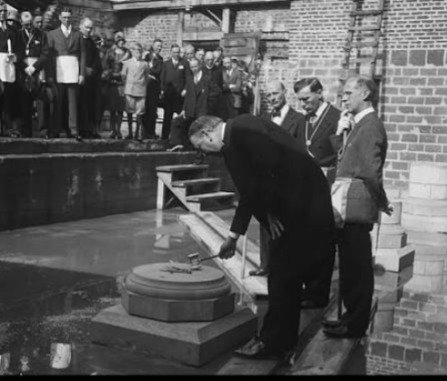
On September 29, 1907, construction of one of the most recognisable landmarks of Washington, D.C., formally began with the laying of the foundation stone of Washington National Cathedral. Officially known as the Cathedral Church of Saint Peter and Saint Paul, the cathedral was planned as a major religious and civic landmark in the American capital. The ceremony at Mount Saint Alban was attended by President Theodore Roosevelt, the Bishop of London and a crowd of around 10,000 people. The project had roots several years earlier. The Protestant Episcopal Cathedral Foundation received a charter from the United States Congress in 1893 to promote religion, education and charity and to establish a cathedral and related institutions. Mount Saint Alban in northwest Washington was eventually selected as the site for the cathedral, giving the project a prominent position within the capital’s developing urban landscape. The foundation stone itself carried historical symbolism. According to Washington National Cathedral’s official records, the stone came from a field near Bethlehem and was set into a larger block of American granite. It carried an inscription from the Gospel of John. The ceremonial stone became the physical starting point for what would become an exceptionally long construction project. The cathedral was designed in the Gothic tradition, drawing heavily on historic European architectural forms. British architect George Frederick Bodley and architect Henry Vaughan were among the key figures involved in the early design and construction process. The project, however, was not completed within a conventional construction period. Economic difficulties, the two World Wars, funding constraints and changes in architectural leadership contributed to a construction process lasting more than eight decades. The building’s long construction history is one of the reasons the date remains particularly significant in architectural and real estate history. Construction began on September 29, 1907, and the final stone was placed on September 29, 1990, exactly 83 years later. Washington National Cathedral describes this coincidence as marking the beginning and completion of the major construction of the building on the same calendar date. From a real estate and urban development perspective, the project demonstrates how a major building can influence the identity and character of a city over generations. The cathedral was not developed simply as an isolated structure. Its extensive grounds, surrounding landscape and associated institutions created a significant urban place within Washington, D.C. The site eventually became part of a wider complex that includes educational institutions and landscaped grounds. The Protestant Episcopal Cathedral Foundation says its institutions today occupy 59 acres known as the Close, a setting used by students, worshippers, visitors and residents of surrounding neighbourhoods. The September 29, 1907 foundation laying therefore represents more than the beginning of a religious building. It marked the start of an 83 year construction journey that ultimately produced a major architectural landmark and helped shape a distinctive part of Washington, D.C.’s built environment. For real estate history, the event offers a useful example of how long term construction, land selection, architecture and civic purpose can combine to create an enduring urban landmark whose significance extends far beyond the original construction project.
Read More >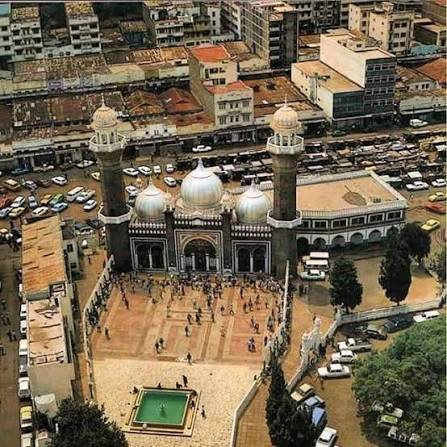
On September 7, 1925, the foundation stone of Jamia Mosque was laid in the heart of Nairobi, Kenya. The event marked the beginning of the construction of a landmark that would eventually become one of the most prominent religious and architectural symbols of East Africa. Today, the mosque stands in Nairobi’s Central Business District and remains an important part of the city’s historic identity. The story of Jamia Mosque, however, goes back to 1902, when Maulana Sayed Abdullah Shah sought land to establish a mosque in Nairobi. According to historical accounts, he was given a map of the city and selected a largely undeveloped, swampy site near its center. He reportedly believed that the location would one day become the center of a great city. His vision proved remarkably accurate, as the mosque now stands at the heart of Nairobi’s busy central district. Formal construction began in 1925, with the mosque designed by Scottish architect William Landels. The design drew heavily from Mughal architecture, particularly the great mosques associated with the Mughal period in the Indian subcontinent. Its architectural inspiration included the Jama Masjid in Delhi and the Badshahi Mosque in Lahore, giving the building a distinctive character within Nairobi’s urban landscape. The construction itself was an extraordinary community effort. Building stones were transported from India to the port of Mombasa and then carried by railway to Nairobi. Indian railway workers reportedly carried the heavy stone blocks from the railway station to the construction site on their shoulders. Funds were raised through a broad appeal across East Africa, with contributions coming from members of different communities. After approximately eight years of work, the mosque was completed in 1933. At the time, it was regarded as the tallest building in Nairobi and one of the largest mosques in East Africa. Its distinctive domes and minarets have remained an important feature of Nairobi’s historic skyline. The story of September 7, 1925 demonstrates how a construction project can evolve far beyond its original purpose. Over a century later, Jamia Mosque stands not merely as a placey of worship, but as a symbol of architectural heritage, community effort and Nairobi’s urban history.
Read More >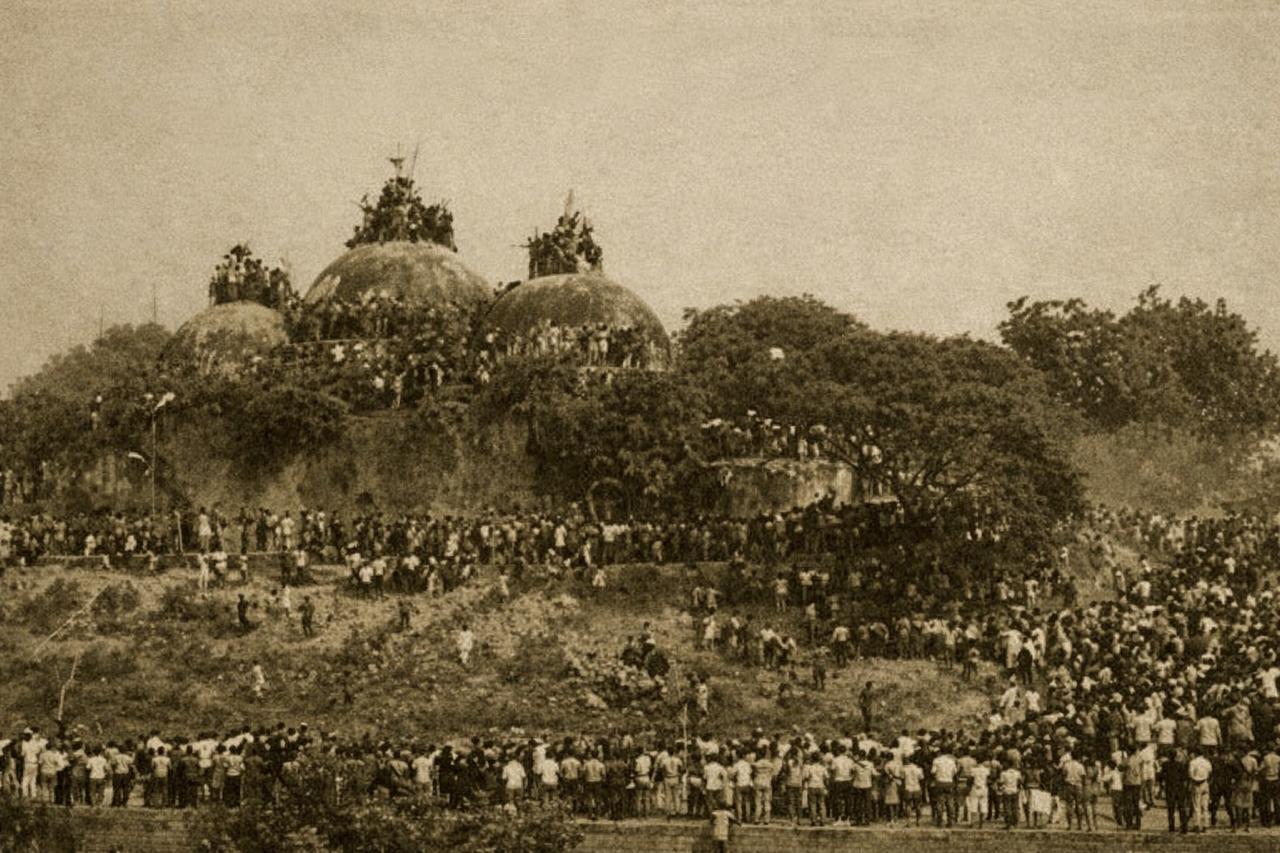
On 6 December 1992, the historic Babri Masjid in the Indian city of Ayodhya was demolished by a large crowd. This event constituted a profound religious trauma for Muslims of the subcontinent and simultaneously became the symbol of a prolonged and complex legal dispute over land and property. Its consequences continue to shape legal reasoning and social consciousness in South Asia to this day. The legal dispute concerning the land and ownership of the Babri Masjid site in Ayodhya had, in fact, commenced several decades before this incident. The first formal legal suit relating to the land was filed in 1950 in the civil court of Faizabad, as Ayodhya at that time fell within Faizabad district. The Hindu parties argued that prior to the construction of the mosque, a Hindu temple existed at the site and that the mosque had been built upon the remains of this alleged structure. The case passed through multiple judicial stages over several decades, during which the events of 6 December 1992 occurred. The matter later reached the Allahabad High Court, which on 30 September 2010 delivered a judgment dividing the disputed 2.77 acres of land into three equal parts. One portion was allotted to Ram Lalla Virajman, the second to the Nirmohi Akhara, and the third to the Sunni Waqf Board. This decision was challenged by all major parties before the Supreme Court of India, where the case proceeded to final adjudication. On 9 November 2019, the Supreme Court of India delivered its final verdict in the dispute, which had spanned nearly sixty nine years. The Court set aside the land division ordered by the Allahabad High Court and awarded legal title of the disputed land to a trust representing the Hindu parties. As a measure of restitution, the state was directed to allot five acres of alternative land within Ayodhya for the construction of a mosque. In the same judgment, the Court unequivocally held that the demolition of the Babri Masjid on 6 December 1992 was an unlawful act and a clear violation of constitutional and legal principles. This case is regarded as one of the longest running and most sensitive land and property disputes in South Asian history. At its core, the litigation revolved around the determination of lawful title to disputed land and the question of whether historical religious use could, in itself, constitute a proprietary right. From the perspective of real estate and land law, this case has been preserved as a defining example of the principle that religious sites are, in legal terms, land and property, and that disputes relating to them are to be resolved through title, evidence, and law rather than through force or collective sentiment. The Babri Masjid Ayodhya case is now firmly recorded as a permanent and sensitive archival reference in the history of land rights in South Asia.
Read More >