Land Laws and Ownership History

19 Historical Event found

Russian Revolution Opens a New Chapter in Land Ownership
On November 7, 1917, the Bolsheviks took power in Petrograd, then the capital of Russia, in an uprising that reshaped the country’s political system and set in motion a profound change in land ownership. The date is recorded in the Gregorian calendar; Russia then used the Julian calendar, under which the event was dated October 25. The revolution became known as the October Revolution. Land was central to the upheaval. For generations, much of Russia’s farmland had been concentrated in large estates, while many peasants had little or no land of their own. The Bolsheviks’ promise to transfer land away from landlords helped them appeal to rural communities, even as their seizure of power unfolded amid war, economic hardship and political instability. The new government’s defining property measure followed on November 8, when the Second All-Russian Congress of Soviets adopted the Decree on Land. It abolished landlord ownership without compensation and put estates, along with crown, church and monastery lands, under local land committees and councils of peasant deputies. The decree also directed officials to inventory and protect buildings, livestock, tools and other assets on confiscated estates. The accompanying peasant mandate went further in its vision: private ownership of land would end, land could not be bought, sold, leased or mortgaged, and use would go to people who cultivated it. Ordinary peasants’ and Cossacks’ land was explicitly exempt from confiscation under the decree’s initial provisions. The arrangement was presented as provisional until a constituent assembly could settle the land question. That distinction matters. The decree’s language announced a sweeping property revolution, but it did not simply hand every former estate directly to individual farmers. Administration was assigned to local bodies, and the rules for allocation and use remained part of a larger political struggle. Subsequent Soviet measures entrenched state control over land; later legislation prohibited land sales, rents and mortgages. The measure addressed a vast area. An entry in the Encyclopedia of Russian History estimates that about 150 million hectares of arable, pasture and forest land were confiscated and distributed among 25 million communal households. That figure conveys the scale of the transformation, while the communal structure shows why the change cannot be understood simply as a transfer to private smallholders. The November 7 revolution therefore belongs in property history as well as political history. It challenged the premise that land could be held as private, transferable wealth and made control of land a question of state power and social policy. Its legacy reached far beyond Russia: the Soviet model influenced debates and land reforms around the world, while the later return of legal private land ownership in Russia came only decades afterward. More than a century later, the events of November 7 and the decree that followed remain a landmark in the global history of housing, land and property rights.
Read More >
On November 5, 1917, US Supreme Court Struck Down Racial Housing Zoning
On November 5, 1917, the US Supreme Court ruled in Buchanan v. Warley that a Louisville, Kentucky, ordinance barring Black people from occupying homes on majority-white blocks was unconstitutional. The decision came 109 years ago and became a landmark in the history of housing and property rights in the United States. The case arose from a real estate sale: white property owner Charles Buchanan agreed to sell a lot to William Warley, a Black buyer. Louisville’s ordinance prevented Warley from living there because most homes on the block were occupied by white residents. The Court found that the restriction interfered with the owner’s right to sell his property and violated the Fourteenth Amendment. The ruling invalidated government-imposed racial zoning, but it did not bring housing segregation to an end. The Library of Congress notes that, after the decision, property owners used private racial covenants to restrict who could buy or rent homes. Buchanan v. Warley remains a consequential date in the history of housing discrimination and civil rights.
Read More >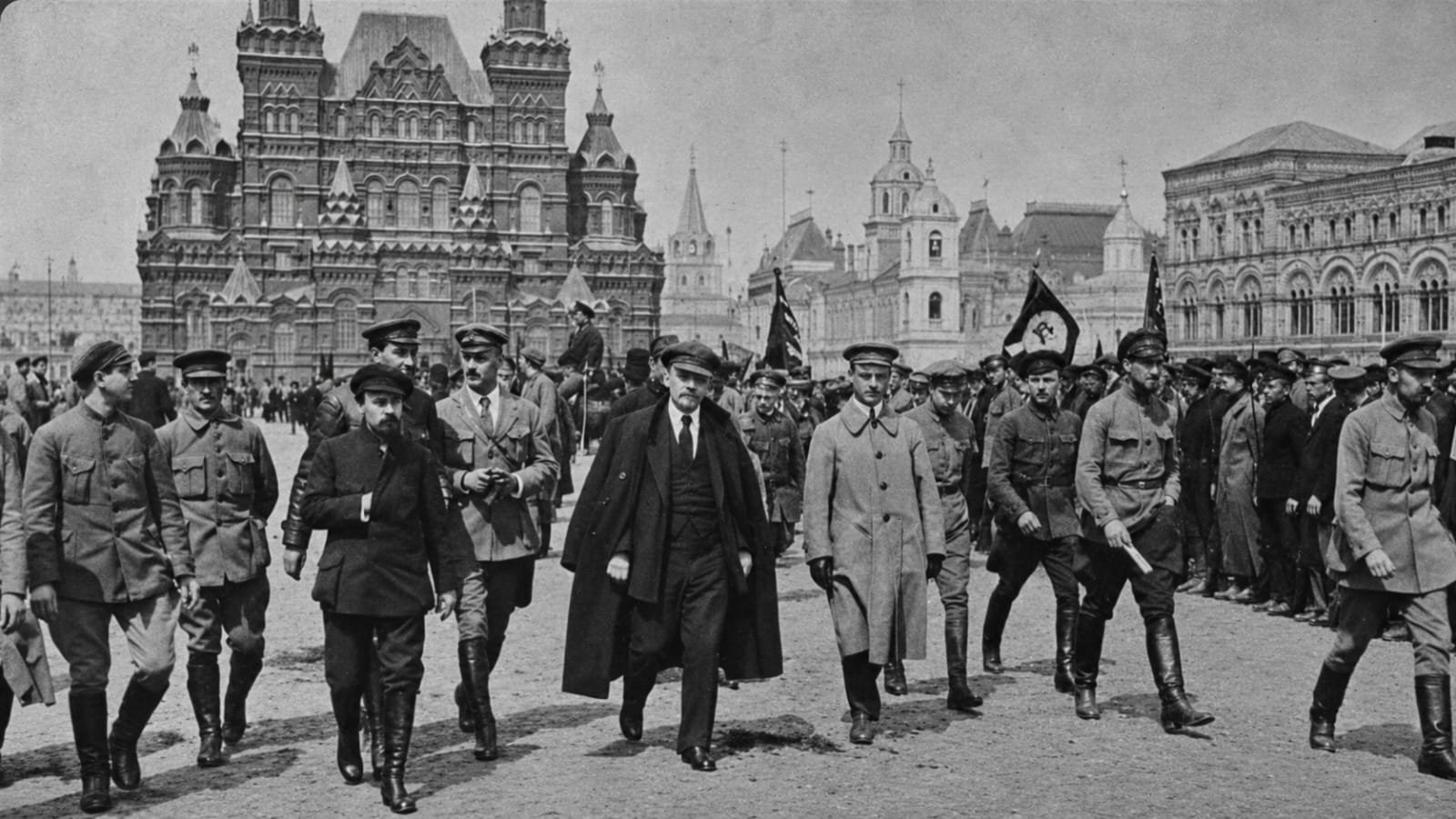
Bolshevik Uprising of November 6, 1917, Set Russia on Course for Radical Land Reform
On November 6, 1917, the Bolsheviks launched an armed uprising against Russia’s Provisional Government in the capital, Petrograd. The revolt changed the country’s political course and helped reshape its system of land and property ownership. According to the Gregorian calendar, the uprising lasted from November 6 to 8; under the Julian calendar then in use in Russia, it became known as the October Revolution. Russia was grappling with the First World War, food shortages and economic hardship. After the February Revolution ended tsarist rule, the Provisional Government took power but failed to resolve major issues, including the war and peasants’ demands for land. In rural areas, peasants had already begun occupying large estates. Bolshevik leader Vladimir Lenin promised to transfer land to the peasants, helping his party win support in the countryside. On the night of November 6, revolutionary forces aligned with the Bolsheviks seized bridges, railway stations, telegraph facilities and other key locations in Petrograd. Prime Minister Alexander Kerensky failed to organise an effective defence. By the following day, the Bolsheviks had taken control of government centres and declared that they had assumed power. Months of political uncertainty gave way to a new period of upheaval and prolonged conflict. A decision on land followed soon after the revolution. On November 8, the Congress of Soviets adopted the Decree on Land, declaring that the estates of large landowners would be confiscated without compensation. Land belonging to the royal family, churches and monasteries was also placed under the control of local land committees and peasant soviets. The decree exempted the small holdings of ordinary peasants and Cossacks from confiscation. The measure ranks among the most significant land reforms in modern history. It set Russia on a path towards replacing private ownership of land with public control and state administration. However, the decree did not immediately grant every peasant legal ownership of a plot. Local committees played a central role in managing land use, while a final settlement was left to the Constituent Assembly. The events of November 6 are tied to the history of real estate and property because the uprising launched a political revolution that fundamentally changed the rules governing land ownership, possession and use. Its impact extended beyond rural Russia, shaping debates about land and property around the world.
Read More >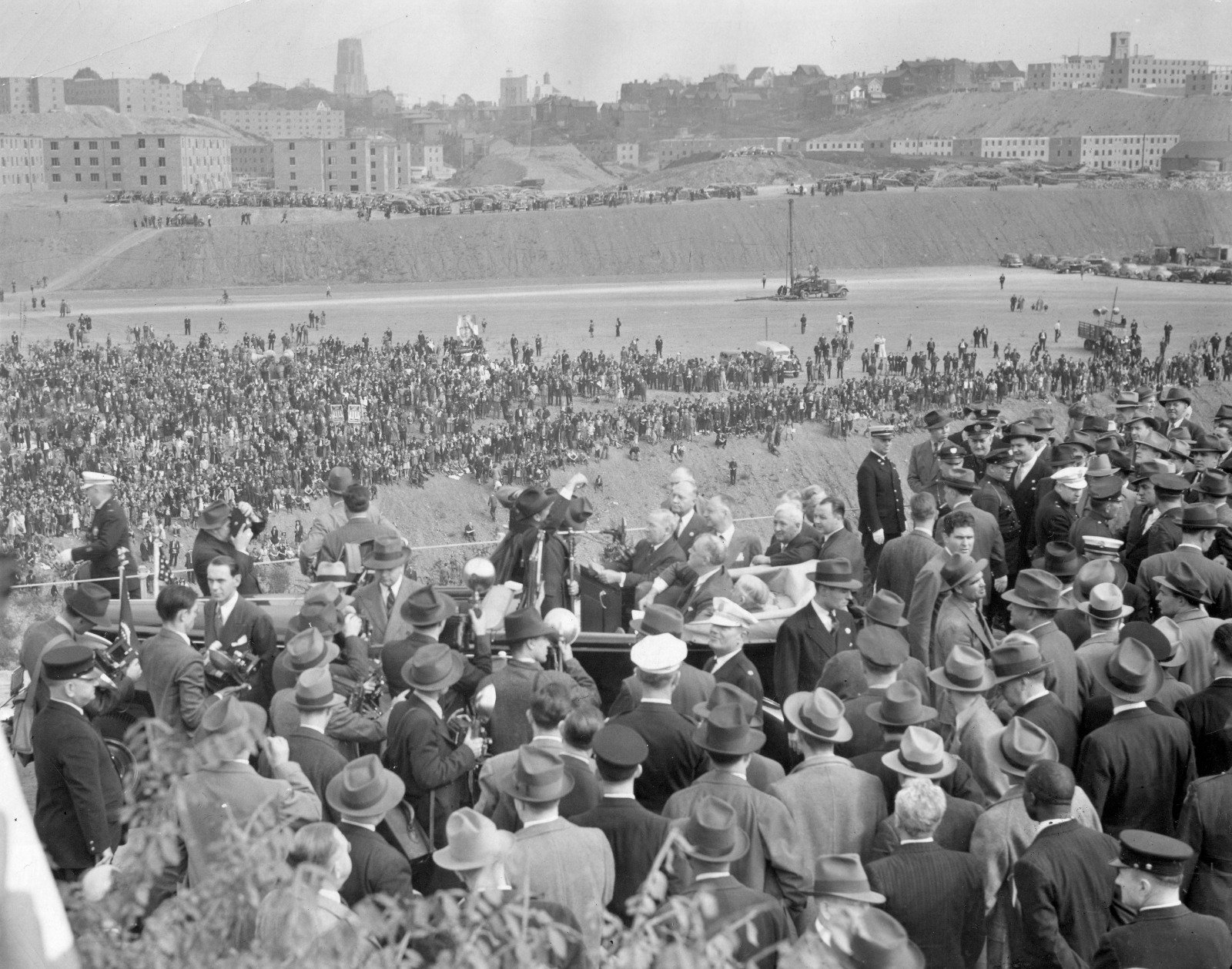
U.S. Establishes a New Federal Framework for Public Housing
U.S. President Franklin D. Roosevelt signed the Housing Act of 1937, marking a major milestone in the history of American housing policy. The legislation established a stronger federal role in providing safe and affordable housing for low income families and laid the foundation for a more organized public housing system. The United States was facing severe economic and social challenges during the 1930s. Many families struggled to afford decent homes, while overcrowded, deteriorating and unsanitary housing conditions had become a major problem in several urban areas. The Housing Act created a framework through which government authorities could provide financial assistance for the development of housing projects aimed at low income households. The legislation also linked housing policy with broader urban development. It supported efforts to address slum conditions and improve residential environments, making housing not only a matter of private property but also an issue of public policy and city planning. One of the significant outcomes of the legislation was the establishment of the United States Housing Authority, strengthening the federal government's involvement in public housing. The framework introduced in 1937 subsequently became an important foundation for the expansion of public housing programs across the United States. From a real estate perspective, September 1, 1937, represents an important turning point because it demonstrated how government housing policy can influence affordable housing, urban development and the wider property market. The legacy of the legislation continues to be relevant to discussions about how governments can address housing shortages and provide decent accommodation for lower income communities.
Read More >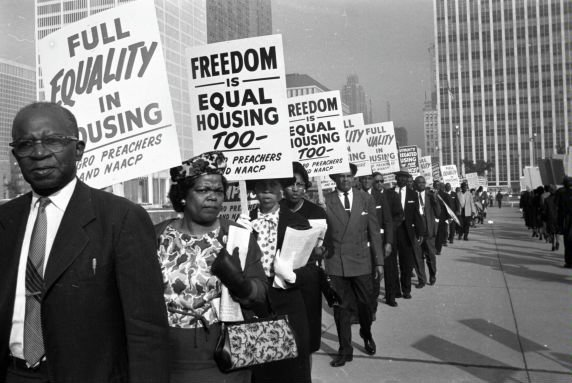
When Housing Became Part of the Civil Rights Struggle
On August 28, 1963, one of the most significant public demonstrations in American history took place as an estimated 200,000 to 250,000 people gathered for the March on Washington for Jobs and Freedom. Alongside demands for employment, equal wages, voting rights and an end to racial discrimination, the movement also called for decent and integrated housing. The event holds a significant place in real estate history because it helped frame housing as more than a question of buildings, property ownership or market value. It brought the issue into the wider struggle for civil rights and economic equality. At the time, racial discrimination in many American cities restricted where families could live, while unequal access to homeownership, rental housing and financial opportunities reinforced social and economic divisions. Among the demands associated with the March was comprehensive civil rights legislation that would guarantee access to public accommodation, decent housing, education and voting rights. The demonstration placed greater political pressure on the country to confront inequalities that had shaped urban communities and housing opportunities for generations. The day is best remembered for Martin Luther King Jr.’s historic “I Have a Dream” speech at the Lincoln Memorial. Yet the significance of the March extended far beyond a single speech. It represented a broader demand for a society in which a person’s opportunities, including the ability to choose where to live, would not be determined by race or social identity. In the years that followed, the civil rights movement and subsequent legislation continued to challenge discrimination in housing and expand the principle of equal access. The struggle helped establish housing as an essential part of the broader debate over equality, citizenship and economic opportunity. August 28, 1963 remains an important reminder that real estate is not only about land, buildings and prices. It can also determine access to opportunity, security and social mobility and the question of where people are allowed to live can become one of the most powerful questions in the history of a society.
Read More >
UK Land Charges Act Became Law, Strengthening Registration Framework for Property Interests
The Land Charges Act 1972 received Royal Assent in the United Kingdom on August 9, 1972, establishing a consolidated legal framework governing the registration of certain charges, interests and other matters affecting land in England and Wales. The legislation consolidated earlier enactments dealing with the registration of land charges and matters affecting property. It maintained statutory registers covering land charges, pending actions and certain writs and orders affecting land, along with an index through which registered entries could be traced. The Act became particularly important to transactions involving unregistered land. Before purchasing such property, buyers or their conveyancers can search the Land Charges registers to determine whether legal interests, restrictions or liabilities have been registered against previous owners and could affect the transaction. According to HM Land Registry, one of the principal functions of the Land Charges system is to protect registrable interests held by individuals or organisations in unregistered land. Failure to register certain interests can, in prescribed circumstances, leave them ineffective against particular purchasers who subsequently acquire the property. The Act extends to England and Wales and remains an important part of the legal infrastructure surrounding unregistered property. More than five decades after receiving Royal Assent, the system continues to play a role in property conveyancing, title investigation and due diligence.
Read More >
Singapore Establishes Urban Renewal Unit, Beginning Its Historic Journey of Modern Urban Development
Singapore established the Urban Renewal Unit under the Housing and Development Board, marking a defining moment in the city-state’s urban development history. The institution would eventually play a central role in transforming overcrowded and poorly planned urban districts into modern residential, commercial and business areas. At the time, central Singapore faced serious housing and infrastructure challenges. Large sections of the population lived in densely occupied settlements, ageing shophouses and informal dwellings that often lacked adequate sanitation, ventilation and essential public services. Rapid population growth and the limited availability of land made coordinated redevelopment an urgent national priority. The newly formed Urban Renewal Unit was entrusted with replanning the central city, clearing unsafe and deteriorating settlements and ensuring that valuable urban land was used more efficiently. Its responsibilities included preparing sites for modern housing, commercial centres, offices, transport infrastructure and essential civic facilities. The objective was not simply to demolish older neighbourhoods, but to create an organised urban environment in which housing, employment, mobility and public services could develop together. The unit also contributed to the planning of new towns and the restructuring of Singapore’s central business districts. A significant part of the programme involved relocating affected households and providing residents with safer and better planned accommodation. The large-scale construction of public housing by the Housing and Development Board supported this transition and enabled thousands of families to move into modern flats with improved utilities and community facilities. As Singapore’s development needs expanded, the Urban Renewal Unit was given broader responsibilities and later evolved into the Urban Renewal Department. It subsequently became the institutional predecessor of today’s Urban Redevelopment Authority, which oversees Singapore’s long-term land-use planning, conservation, development strategy and urban design. The establishment of the unit on August 1, 1964 demonstrated how strong institutions, consistent planning and coordinated public investment could reshape a land-scarce country. Singapore’s experience would later become an internationally recognised example of how urban renewal could support economic growth, improve living conditions and create a modern, efficiently managed city.
Read More >
The Addison Act Laid the Foundation of Council Housing in Britain
Britain enacted the Housing, Town Planning, and related legislation commonly known as the Addison Act. Named after Health Minister Dr Christopher Addison, the law marked an important shift by making the provision of suitable housing for working families a national responsibility rather than leaving it mainly to private builders and limited local initiatives. Britain faced a severe housing shortage after the First World War. Large numbers of soldiers were returning home, while many working families in industrial towns were living in overcrowded and unhealthy properties. The government had promised to create a country suitable for returning servicemen, an ambition that became associated with the phrase “homes fit for heroes.” The Addison Act required local authorities to assess housing needs, prepare construction plans and carry out housing schemes in their districts. The central government also promised financial support, allowing councils to undertake housebuilding on a scale that would otherwise have been beyond their resources. The original national ambition was to support the construction of 500,000 homes within three years. Economic difficulties and reductions in public spending meant that the full target was not achieved. More than 200,000 homes were nevertheless completed under the programme. Its greater historical importance was the establishment of a lasting principle: decent and affordable housing was not simply a private market issue but also a responsibility of the state. The law encouraged the development of council estates with planned streets, gardens, open spaces and access to essential public services. These neighbourhoods provided an alternative to the dense and unhealthy housing found in many older industrial districts. The policy also influenced later housing programmes. By 1939, British local councils had built around 1.1 million homes, while approximately 10 percent of the population lived in social housing. The Act therefore changed not only the ownership of housing but also the planning and physical structure of British towns and cities. July 31, 1919, is consequently remembered as a major date in the history of public housing, planned residential communities and government involvement in the property sector.
Read More >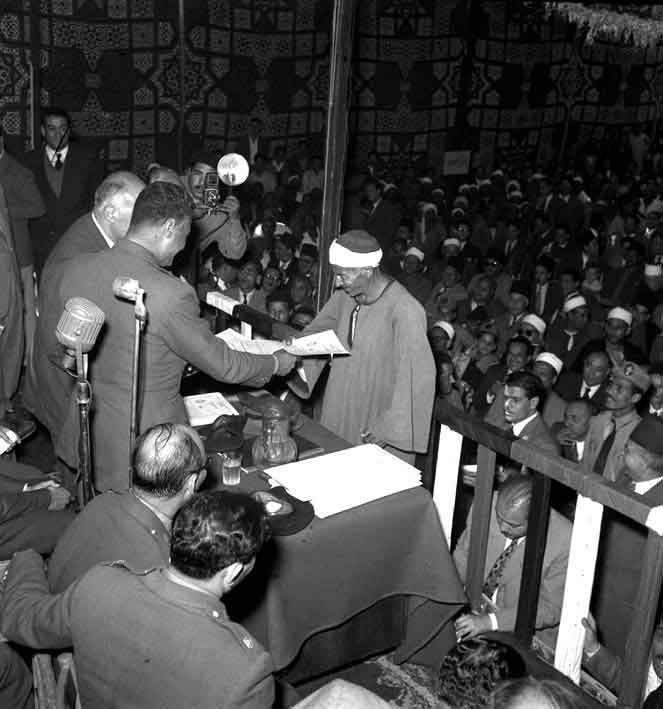
Egypt’s Revolution Laid the Foundation for Major Land Ownership Reforms
Egypt’s Free Officers Movement overthrew the government of King Farouk in an event that became known as the Egyptian Revolution of July. The revolution changed not only the country’s political system but also laid the foundation for major reforms in land ownership, tenancy and the distribution of large agricultural estates. At the time, much of Egypt’s cultivable land was controlled by a small number of wealthy landowning families, while millions of farmers worked as tenants or agricultural labourers instead of owning the land they cultivated. A few weeks after the revolution, the new government introduced Egypt’s first major agrarian reform law. The legislation limited an individual’s agricultural land ownership to a maximum of 200 feddans. A feddan is an Egyptian unit of land measurement roughly equal to one acre, while 200 feddans are equivalent to approximately 84 hectares. Land exceeding the permitted limit was taken over by the state and gradually redistributed among small farmers and landless families. The law also introduced controls on agricultural rents, provided greater protection to tenant farmers and encouraged the formation of agricultural cooperatives for small landowners. These reforms became a major turning point in Egypt’s modern land and property history. For the first time, the state imposed limits on large private landholdings and attempted to distribute ownership among a broader section of the population. The reforms also changed the role of land in rural Egypt. Agricultural property was no longer viewed only as a source of wealth and political power for large landowners, but increasingly became a source of housing, employment and economic security for small farmers. It is important to clarify that the revolution took place on July 23, while the formal land reform law was introduced later, in September 1952. Therefore, July 23 is considered the beginning of this major transformation in Egypt’s land ownership system rather than the date on which the law itself was enacted.
Read More >
China Launches Landmark Reform of Its Urban Housing System
On July 18, 1994, China’s State Council issued a landmark decision to deepen reform of the country’s urban housing system, marking an important shift away from housing provided mainly as an employment linked welfare benefit towards personal ownership and a more market oriented property sector. The policy is widely regarded as an important milestone in the development of China’s modern real estate market. Before the reforms, urban housing was largely constructed, allocated and maintained by government institutions and state owned enterprises. Many workers received apartments through their employers, often at heavily subsidised rents, rather than purchasing homes as privately owned assets. The 1994 decision proposed replacing the system under which the state and public institutions carried most housing costs with one in which the government, employers and individuals would share responsibility. It also encouraged the gradual sale of publicly owned homes to urban workers and supported a transition from direct housing allocation towards monetary compensation. The reform introduced a more diversified housing supply system. Economic housing was intended primarily for low and middle income households, while commercial housing would serve residents able to purchase homes through the market. The policy also promoted housing provident funds, residential savings mechanisms and housing credit systems to help households finance property purchases. The 1994 decision did not immediately eliminate China’s welfare housing model. Many state owned enterprises continued purchasing or subsidising apartments for employees, meaning the old and new systems operated alongside each other during the transition. However, the reform established the policy foundation for private homeownership, residential finance and commercial property development. China advanced the process further in 1998 by ending the direct allocation of housing in kind and separating workers’ housing more clearly from their state employers. The residential towers, privately owned apartments and extensive housing finance market that later transformed Chinese cities can therefore be traced partly to the reform programme launched during this period.
Read More >
The Institutional Beginning of Interpreting Ancient Land Ownership in the Subcontinent
Exactly 242 years ago, on 15 January 1784, the Asiatic Society of Bengal was founded in Calcutta by Sir William Jones. On the same day, the Society convened its first formal meeting. The institution emerged as the earliest organised centre in the subcontinent dedicated to the systematic study of ancient manuscripts, archaeology, and geographical knowledge relating to land ownership and territorial organisation. In the subcontinent, the concept of land ownership was never confined solely to oral tradition. From ancient and medieval periods onward, land related information was preserved through a variety of written and material sources. During the eras of Mohenjo-daro, Harappa, and early Taxila, land ownership and registration did not exist in the modern sense of individual title or legal transfer. Nevertheless, land was not without structure or regulation. In the urban centres of Mohenjo-daro and Harappa, land administration functioned under state control. Entire cities were organised through deliberate planning, grid based layouts, standardised measurements, and clearly defined boundaries. Houses, streets, and urban blocks were constructed according to predetermined plans, demonstrating that land distribution and use were governed by administrative systems rather than customary practice. In this period, land was regarded as the property of the state or city, while individuals held rights of use rather than absolute ownership. In later periods, particularly during the era of Taxila, the state began granting land to religious and educational institutions. These grants were formally recorded on stone inscriptions or copper plates. Such written records of land grants and boundary demarcation formed the earliest foundations of structured land registration, ownership documentation, and systems of transfer in subsequent eras. In ancient South Asia, whenever a ruler or state authority granted land to an individual, family, religious institution, or administrative body, the decision was accorded legal authority by engraving it on copper plates or stone inscriptions. These records functioned as the equivalent of land registers or title documents of their time, detailing boundaries, ownership rights, and royal seals. Established on 15 January 1784, the Asiatic Society of Bengal collected these ancient documents, land grants, boundary inscriptions, and local maps and organised them on a scientific basis. Scholars associated with the Society studied, decoded, and compiled land grants recorded on copper plates and stone inscriptions, demonstrating that principles of land ownership, boundary definition, and transfer had existed in written form across the subcontinent for centuries. [img:Images/otd-15-jan-2.jpeg | desc:These copper plates and stone inscriptions functioned as the official legal records of ancient societies.They documented land ownership, royal decrees, grants, and judicial decisions, as paper either did not yet exist or was not regarded as durable or reliable.Simply put:They were the registries, land records, and formal government documents of their time.] This structured body of geographical and historical knowledge subsequently provided the intellectual foundation for scientific survey initiatives, most notably the Great Trigonometrical Survey. Through this process, accurate land measurement and systematic mapping became possible, laying the groundwork for modern land record systems. The extensive scholarly material assembled by the Asiatic Society provided the British administration with the basis upon which official institutions for scientific land measurement, boundary demarcation, and systematic cartography were established throughout the subcontinent. These historical records and geographical terminologies later informed major projects such as the Survey of India and the Great Trigonometrical Survey. The modern systems of land registration, land settlement, revenue mapping, and digital land records in use today would not have been possible without these ancient material sources and the scholarly work undertaken by the Asiatic Society. According to historians of land and geography, 15 January 1784 marks the beginning of a systematic process through which the territory of the subcontinent began to be formally documented, a development that may be regarded as the earliest precursor to contemporary digital land record systems.
Read More >
9 January 1799 marks the day when, for the first time in history, the state declared rental income derived from real estate as taxable income.
London: In the history of economic thought, 9 January 1799 is remembered as a decisive moment when the British Prime Minister, William Pitt the Younger, formally imposed income tax on rents derived from property. This measure was not introduced as part of a planned economic reform but was driven by the extraordinary financial pressures arising from the ongoing war against the French ruler, Napoleon Bonaparte. Prior to this, Britain had a land tax that was limited strictly to ownership. The 1799 law, however, brought income directly within the scope of state taxation for the first time. This included both rental income from property and the estimated annual value of land. Before 1799, although a land tax existed in Britain, its scope was narrow. It applied only to land ownership and had no connection with the income or rent generated from that land. Whether the land lay idle or produced no profit, the owner was required to pay tax solely on the basis of ownership. The law enacted on 9 January 1799 clearly established, for the first time, the fundamental distinction between owning land and earning from land. Under this law, rental income from property and the estimated annual value of land were formally recognised as income and brought within the framework of state taxation. As a result, property was transformed from a mere asset of ownership into an income generating economic asset. Following this law, real estate ceased to be merely a symbol of family inheritance or social prestige and became a commercial asset that the state began to view as a profit generating unit. For the first time, the government became a direct participant in the income derived from property. Although William Pitt described this tax as temporary and promised to abolish it after the end of the war, and although it was indeed repealed briefly in 1802, its importance for state financial management led to its reintroduction in 1803. This concept later became the foundation of modern income tax, rental income tax, and property tax systems across the world. [img:Images/9-jan-otd-2nd.jpeg | desc:This image shows a printed page of the historic legislation approved by the British Parliament, commonly known as the Income Tax Act of 1799, enacted during the reign of King George the Third. The document formally declares the authority of the state to levy tax on the income of its citizens, a measure introduced in response to the severe financial pressures generated by the ongoing war with France. Through this legislation, rental income and the estimated annual value of land were, for the first time, formally brought within the framework of state taxation, marking a decisive shift in the treatment of property from a mere object of ownership to a measurable economic asset. This page is widely regarded as one of the earliest and most fundamental documentary foundations of modern income tax, rental income tax, and property taxation systems, and it remains preserved within the British national and parliamentary archives.] At the time, the tax applied only to individuals with an annual income exceeding sixty pounds. A lower rate was imposed on incomes between sixty and two hundred pounds, while incomes above two hundred pounds were taxed at ten percent, equivalent to two shillings per pound. By the standards of the era, this was considered a bold and revolutionary step. Through this law, a new philosophy emerged: since the state provides protection for property, builds roads, maintains law and order, and delivers public services, its share in the profits derived from property was considered legitimate. In this way, a social contract took shape between the citizen and the state, under which citizens contributed a portion of their property income to enable defence, wartime needs, and public welfare activities. During this period, three key concepts were articulated for the first time, forming the foundation of the modern global real estate market. First, the concept of rental income, whereby property that generates rent is treated as a business activity and taxed accordingly. Second, the concept of annual value, under which property may be taxed on the basis of its potential annual value even if it is not rented out. Third, the concept of capital value, which established that property itself constitutes an economic force, not merely the income derived from it. The law of 9 January 1799 granted the state the right to require citizens to disclose details of their income and property. For the first time, individuals were compelled to provide formal information about their income and assets to the government, laying the foundation for modern tax returns and declaration systems. Prior to this, property records often remained concealed, but taxation made formal documentation unavoidable.
Read More >
London: Property ownership formally made conditional upon entry in the state register, a landmark legal reform.
In Britain, the understanding of land and property ownership underwent a decisive and lasting transformation with the legal enforcement of the Land Registration Rules 1925 under Statutory Instrument 1925 No. 1093. According to the records of the House of Lords and official legal archives, the final confirmation of these Rules on 5 December 1925 established, for the first time, that legal ownership of land would be determined by entry in the official state register. This marked a fundamental shift, whereby public registration replaced private deeds and papers as the primary and authoritative proof of title. The Land Registration Rules introduced in December 1925 fundamentally altered long standing practices. Prior to their enforcement, ownership was proved largely through the possession of title deeds and historical documents, the loss or destruction of which often resulted in uncertainty and prolonged disputes. The new framework made it clear that the lawful owner of land would be the individual whose name appeared in the government register. Registration thus became not merely evidential but constitutive of ownership. It was further stipulated that no transfer of property would be legally recognised until it had been duly entered in the official register, a measure that significantly reduced fraud, concealed transactions, and disputes over title. As the Indian subcontinent remained under British rule at the time, the same principles were extended to colonial administration. The contemporary systems of registration and transfer of land in Pakistan, carried out through patwaris and registrars, continue to reflect this foundational concept: that ownership derives its legal force from state records rather than from private documentation alone. These 1925 Rules later formed the institutional and legal foundation of what evolved into the modern system of HM Land Registry, refined through subsequent legislative amendments and administrative reforms. (In the British context, HM Land Registry refers to Her Majesty’s Land Registry, the statutory body responsible for maintaining records of land ownership. In functional terms, it performs a role comparable to that of the provincial Boards of Revenue in Pakistan, including the preservation of land records, registration of title, and confirmation of legal status.) It is important to note that, following this model, wide ranging reforms were introduced across the subcontinent to rationalise and standardise systems of land record management. From the late 1920s onwards, particularly between 1927 and the 1930s, land record practices in the subcontinent were reorganised with reference to the British registration system. Although the Registration Act 1908 was already in force, this period clarified and reinforced the principle that official records constituted the primary proof of ownership. As a result, procedures relating to registration, mutation, and official entry were systematised to reduce disputes and ensure greater certainty of title. These reforms laid the groundwork for the land record systems developed in Punjab, Bengal, Bombay, and Madras, elements of which remain visible today in the land administration frameworks of Pakistan and India.
Read More >
The Introduction of the Right to Acquire Land Ownership in the United States under the Homestead Act
On 1 January 1863, a landmark piece of legislation came into force in the United States known as the Homestead Act. For the first time, the law granted ordinary citizens the legal right to file a claim on vacant government-owned land and, upon meeting specific conditions, ultimately acquire ownership. Under the Act, eligible individuals were permitted to claim a defined parcel of public land, establish residence upon it, bring the land into productive use, and maintain continuous settlement for a minimum period of five years. Upon successful completion of these requirements, the government transferred permanent ownership of the land to the claimant. Shortly after the Act’s implementation, the first public legal land claim was filed in Nebraska. This marked the formal beginning of settlement under the Homestead framework. At this stage, ownership was not granted immediately but remained conditional upon the fulfilment of settlement and cultivation obligations. This development is regarded as historically significant because it initiated the systematic westward expansion of the United States. Large numbers of people migrated from the eastern states to newly accessible lands, leading to the establishment of farms, the formation of settlements, and the gradual emergence of towns and cities. As a result of the Homestead Act, millions of individuals became land claimants and, in due course, permanent landowners. Agricultural output expanded, and previously uninhabited regions were transformed into organised and economically productive communities. Over time, markets, roads, railway networks, and urban centres developed around these settlements. Scholars widely regard the Homestead Act as one of the foundational pillars of the American real estate system, as it introduced a structured mechanism for transferring land from state control into public ownership while directly linking land use with economic development. The Act remains a clear illustration of how a single legislative decision can fundamentally reshape patterns of land ownership, settlement, and the broader architecture of a nation’s real estate system.
Read More >Digital Transformation of Pakistan's Property Registration
On October 27, 2022, Pakistan achieved a major milestone in property registration digitalization, significantly reducing processing times and enhancing transaction transparency. The comprehensive digital transformation included online property registration, electronic document verification, and blockchain-based title management systems. This modernization eliminated traditional bureaucratic hurdles, reduced opportunities for fraudulent practices, and created more efficient property transaction processes. The digital platform integrated various government databases, enabling real-time verification of property records and ownership details. This technological advancement represented a crucial step toward creating a more transparent, efficient, and secure real estate market in Pakistan while establishing foundations for future innovations in property technology.
Read More >
Blockchain Technology Enters Real Estate Transactions
On October 26, 2018, blockchain technology began transforming real estate transactions through pilot programs testing property tokenization and smart contracts. This innovation promised to revolutionize property ownership transfers, title management, and transaction recording by creating immutable, transparent digital ledgers. Early adopters explored using blockchain for reducing fraud, streamlining closing processes, and enabling fractional property ownership through tokenization. While still in experimental stages, these initiatives demonstrated blockchain's potential to increase transaction security, reduce costs, and create new investment opportunities in real estate markets worldwide.
Read More >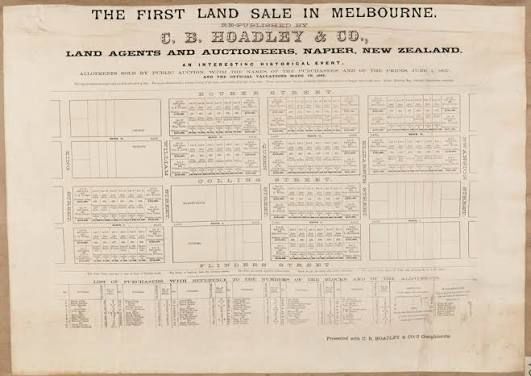
First Recorded Urban Land Auction in Melbourne
On October 10, 1885, Melbourne witnessed one of the most significant property events in its urban history when the city hosted its first large scale public land auction in the growing suburbs south of the Yarra River. At that time, Melbourne was experiencing a remarkable economic and population boom driven by gold rush prosperity, migration, and industrial growth. The auction was organized by the Melbourne Land Syndicate and introduced a new and transparent method of urban lot valuation and public bidding that would soon become a model for real estate transactions across Australia. More than two hundred allotments were offered in what are now known as South Melbourne and St Kilda Road Precinct, accompanied by detailed maps, street layouts, drainage plans, and access routes. Such documentation was revolutionary for its era. By the end of the day, nearly every parcel of land had been sold, generating record revenues for both the colonial administration and private developers. The event set pricing precedents that shaped land valuation practices, speculative trends, and the legal framework for property ownership across the Australian colonies.
Read More >
Implementation of India’s Land Acquisition, Rehabilitation and Resettlement Act (LARR)
In October 2013, India began the active implementation of the Land Acquisition, Rehabilitation and Resettlement Act (LARR) 2013, one of the most transformative land governance reforms in South Asia. Although the Act had been passed in September, by early October the federal government had issued operational frameworks for states to establish valuation committees, compensation formulas, and social impact assessment mechanisms. This new law replaced the colonial era Land Acquisition Act of 1894, which had been widely criticized for enabling forced acquisitions and inadequate compensation. The 2013 Act sought to balance development needs with social justice by ensuring that landowners and displaced families received fair market value, resettlement benefits, and long term livelihood support. The Act introduced landmark provisions requiring public consent, social audits, environmental clearances, and rehabilitation planning before land could be acquired for industrial or infrastructure projects. By October 2013, pilot implementations had started in several states including Maharashtra, Andhra Pradesh, and Punjab, each developing local guidelines for valuation and grievance redressal. This period marked the beginning of a major shift in India’s property governance structure, as state level bureaucracies and district land offices began aligning their procedures with the new national law. The reform not only redefined the process of acquisition but also established a new social contract between the state, investors, and communities.
Read More >
167 Kilometre March from Nashik to Mumbai: A Historic Movement for Land Rights
On 6 March 2018 thousands of farmers began a long protest march from the city of Nashik in the Indian state of Maharashtra. The march later became known as the Maharashtra Farmers Long March. Nearly forty to fifty thousand farmers participated and walked a distance of about 167 kilometres. Covering roughly twenty five to thirty kilometres each day the farmers completed the journey in six days and reached Mumbai on 12 March 2018. The protest was led by the All India Kisan Sabha and its central objective was to draw the government’s attention to the issue of land rights and the growing burden of agricultural debt. Many tribal and poor farmers in Maharashtra had been cultivating forest land for decades. However these lands were officially classified under the Forest Department and the farmers did not possess formal ownership documents. The protesters demanded that under the Forest Rights Act 2006 such farmers should be granted legal ownership or land titles for the land they had cultivated for years. They also demanded relief from agricultural debts. One remarkable incident during the protest occurred in the final stage of the march. When the farmers approached Mumbai a special decision was made. At that time school examinations were taking place in the city and entering during the daytime could have disrupted traffic and caused difficulties for students. Therefore from the night of 11 March to the early hours of 12 March thousands of farmers walked most of the remaining distance during the night and quietly entered the city so that traffic would not be disturbed and students could reach their examination centres without difficulty. After reaching Mumbai the Government of Maharashtra held negotiations with representatives of the farmers and assured progress on implementing the Forest Rights Act and addressing other demands. Following these assurances the protest was peacefully concluded.
Read More >