
Syed Shayan Real Estate Archive
Syed Shayan Real Estate Archive
From Real Estate History

16 Historical Event found

On September 14, 1901, a private residence in Buffalo, New York, suddenly became part of American history when Vice President Theodore Roosevelt took the oath of office as the 26th President of the United States inside the library of the Ansley Wilcox House. The ceremony took place only hours after President William McKinley died following an assassination attempt. Roosevelt took the presidential oath at approximately 3:32 p.m. The house belonged to prominent Buffalo lawyer Ansley Wilcox and his wife, Mary Grace Wilcox. Wilcox and Roosevelt had been friends for years and shared interests in civil service reform and conservation. Roosevelt stayed at the Wilcox residence during the tense hours following McKinley’s death, and the house was ultimately selected as the location for the unexpected presidential inauguration. The building itself has a much longer history than the dramatic event of 1901. Its earliest section was associated with a military post in Buffalo before the property was converted into a private residence. During the late 19th century, the Wilcox family substantially improved and expanded the property, transforming it into an imposing urban residence. According to the National Park Service, the Wilcoxes redesigned both the interior and exterior of the house and converted two first-floor parlours into a large library. That library was later meticulously restored to its 1901 appearance and remains the central space associated with Roosevelt’s inauguration. The property also demonstrates how a private urban residence can evolve into a nationally significant heritage site. After the Wilcox family period, the building went through several changes and was eventually used as a restaurant. During the 1960s, the historic house faced the possibility of demolition, but preservation efforts helped save the property. The building was restored and became a national historic site in 1970. On September 14, 1971, exactly 70 years after Roosevelt’s inauguration, it opened to the public as a historic site. Today, the Ansley Wilcox House preserves not only the memory of a sudden presidential transition but also an important example of historic-property preservation and adaptive reuse in an American city.
Read More >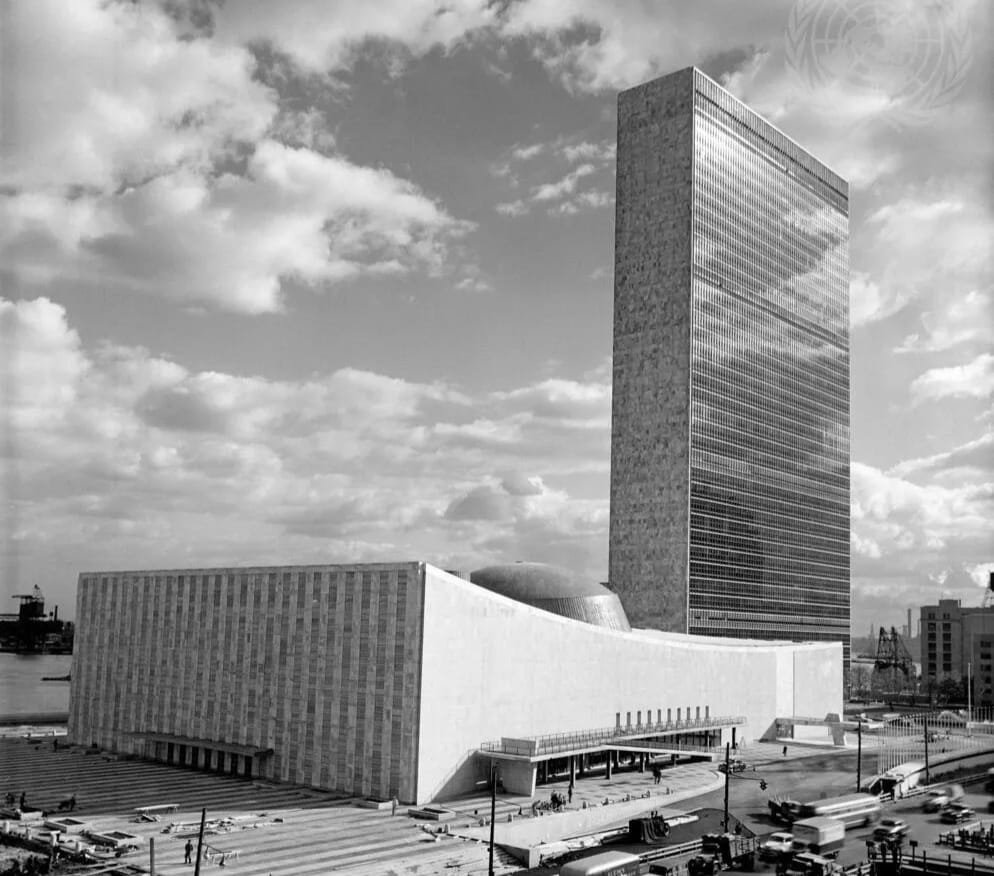
The first offices in the newly built United Nations Secretariat Building in Manhattan were occupied as UN staff began moving from their temporary headquarters at Lake Success, Long Island. The event became significant not only in the history of the United Nations but also in the evolution of modern real estate, urban development and high rise office architecture. The 39-storey Secretariat Building rises about 544 feet above street level. Excavation for the UN Headquarters complex began in September 1948, while erection of the Secretariat Building's steel structure started in April 1949. Within a few years, the tower became one of the most recognisable features of Manhattan's skyline. The real estate story behind the project was equally significant. Before the United Nations established its headquarters there, the East River site was a run down district occupied by slaughterhouses, a railroad garage and other commercial buildings. An $8.5 million contribution from John D. Rockefeller Jr. played a crucial role in securing the site, while New York City later contributed additional property. The Secretariat Building also introduced a striking architectural language to New York. According to the United Nations, it was the city's first skyscraper to feature all glass curtain walls. Its white and green glass exterior stood in sharp contrast to the brick and stone towers that dominated Manhattan at the time. The design helped popularise a style that would later become standard for corporate office towers around the world. The project therefore represented far more than the construction of an international institution. It transformed a former industrial waterfront into one of the world's most important diplomatic addresses and demonstrated how a landmark development could reshape the identity and value of an urban district. August 21, 1950 consequently stands as an important date in real estate history, linking urban regeneration, landmark architecture and the emergence of the modern glass office skyscraper.
Read More >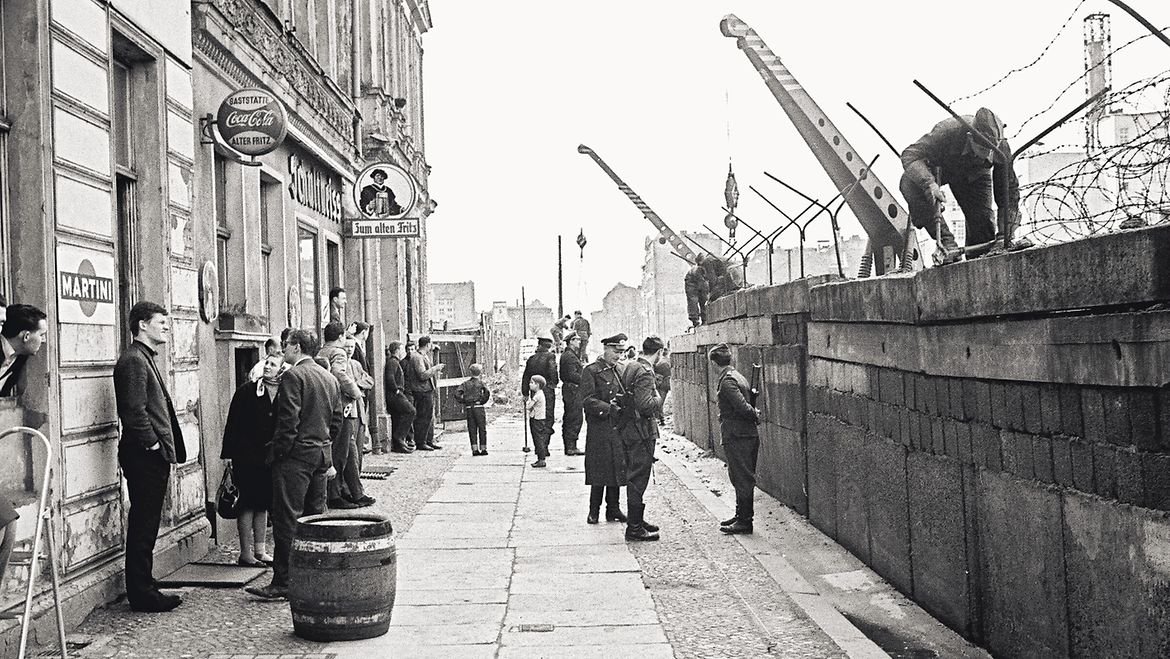
East German authorities began sealing the border between East and West Berlin, an action that would transform not only the political geography of Europe but also the physical structure of one of its most important cities. In the early hours of that Sunday, police, border forces and work crews tore up streets, erected barricades, installed concrete posts and stretched barbed wire across crossing points. Most sector crossings were closed and S Bahn and U Bahn connections between the two sides were interrupted. What began as a sudden barrier of wire and roadblocks was gradually expanded into the Berlin Wall, a 155 kilometre border system that surrounded West Berlin and cut through the city centre. Its impact on urban life was immediate. Streets ended abruptly, public transport routes were severed, neighborhoods were divided and buildings that had once faced ordinary city streets suddenly stood on a major political frontier. Bernauer Strasse became one of the clearest examples. The border ran directly in front of buildings on the East Berlin side, prompting some residents to escape through apartment windows into West Berlin. Within weeks, the buildings were evacuated, residents were forced to move elsewhere and windows and doors facing the border were bricked up. In later years, several buildings were demolished to create a wider and more controlled border strip. For urban and real estate history, August 13 demonstrates how political decisions can instantly alter access to land, housing, streets, transport networks and the relationship between neighborhoods. The Wall remained a defining element of Berlin until November 9, 1989, while systematic dismantling of the border installations began in 1990. August 13, 2026 marks the 65th anniversary of the start of construction, with an official commemoration being held at the Berlin Wall Memorial. The anniversary remains a powerful reminder that cities are shaped not only by architects, developers and property markets; political borders can also redraw the urban landscape and fundamentally change how people use, reach and experience property.
Read More >
On 3 July 1919, Helical Bar and Engineering Company Limited was incorporated in London. The company was originally established to manufacture and sell reinforcing steel for the construction industry, supporting building activity at a time when modern urban development was expanding across Britain. For more than six decades, Helical remained connected to the construction supply sector. However, during the 1980s, the company changed direction and moved into commercial property. After selling its steel reinforcement business in 1986, it transformed into a property development and investment company. Today, Helical plc is recognised as one of London’s leading development focused real estate companies. Its history reflects an important shift in the UK property sector, from traditional construction materials and engineering support to modern real estate development, investment and urban regeneration.
Read More >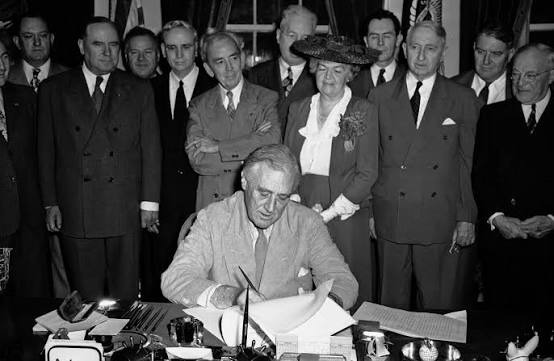
On 22 June 1944, the United States enacted the Servicemen’s Readjustment Act, popularly known as the GI Bill, a landmark piece of legislation that would profoundly transform the country’s housing market, suburban growth and real estate landscape for decades to come. Introduced to support millions of servicemen returning from World War II, the GI Bill offered a wide range of benefits, including educational assistance, unemployment compensation and, most importantly for the property sector, government-backed home mortgage guarantees. These housing provisions dramatically reduced financial barriers to homeownership by lowering down payment requirements and improving access to affordable long-term financing. Before the programme, homeownership remained out of reach for many American families due to limited credit availability and strict lending conditions. The GI Bill changed this reality by enabling millions of veterans to secure mortgages with favourable terms. According to historical records, nearly half of all mortgages issued in the United States during the postwar years were supported through GI Bill guarantees, making it one of the most influential housing finance initiatives in American history. The surge in housing demand triggered an unprecedented wave of residential construction across the country. Developers responded by building large-scale planned communities on the outskirts of major cities. New suburban neighbourhoods emerged rapidly, featuring single-family homes, schools, parks, shopping centres and supporting infrastructure. One of the most notable examples was Levittown in New York, often regarded as a symbol of postwar suburban development and mass-produced housing. The impact of the GI Bill extended far beyond individual homeownership. It accelerated urban expansion, stimulated the construction industry, created millions of jobs and encouraged investment in roads, utilities and public services. The programme helped shape modern suburban America and significantly influenced patterns of land use and community development. Economists and housing historians frequently cite the GI Bill as a key driver of the postwar economic boom. By expanding access to property ownership, it enabled many families to accumulate wealth through real estate appreciation, helping to strengthen the American middle class. The legislation also demonstrated how government-supported housing finance could serve as a powerful tool for economic growth and social mobility. More than eight decades later, the GI Bill remains a landmark example of how housing policy can influence national development. Its legacy continues to be studied by policymakers, urban planners and real estate professionals around the world as a model of how targeted housing finance programmes can reshape cities, expand homeownership and stimulate long-term economic prosperity.
Read More >
Penn Central, one of America’s major railroad companies, declared bankruptcy. Beyond its rail network, the company held extensive interests in land, terminals, hotels and railway-linked commercial properties. Its collapse triggered the restructuring, sale and redevelopment of major transport-related real estate assets across the northeastern United States. Penn Central went bankrupt around two and a half years after the merger of the New York Central Railroad and the Pennsylvania Railroad. At the time, it was the largest corporate bankruptcy in American history. The company operated nearly one-third of the country’s passenger trains and a substantial share of freight rail services in the northeastern United States, meaning its financial crisis also had a severe impact on the regional economy. The bankruptcy was driven by management and business conflicts between the merged companies, redundant rail assets, the movement of industries away from the Rust Belt, and a government condition requiring Penn Central to absorb another already-bankrupt railroad into its system. In 1976, Conrail, a government-established corporation, took control of major assets from Penn Central and other failed railway companies. Unprofitable rail lines and surplus properties were either sold or abandoned, while Conrail later developed into a profitable enterprise.
Read More >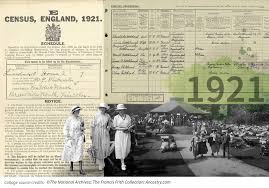
On 19 June 1921, the United Kingdom conducted its national census after delaying it from April because of widespread industrial unrest. The census recorded important details about the population, including age, occupation, household structure and living conditions. Over time, this data became valuable for understanding housing demand, urban growth and population movement across towns and cities. For planners, researchers and policymakers, the 1921 Census offered a clearer picture of how communities were changing after the First World War, helping guide decisions related to housing studies, city planning, infrastructure development and public services.
Read More >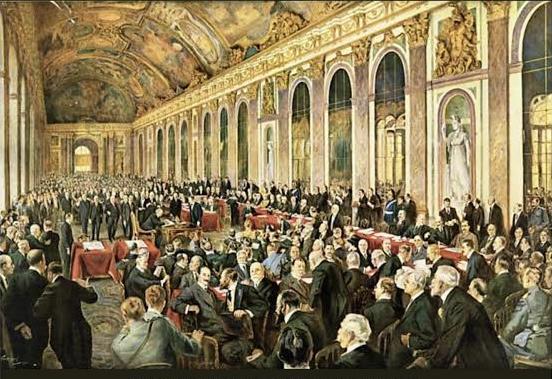
The structure of the world map and globe as they are recognised today is fundamentally rooted in the decisions taken following the Paris Peace Conference, which began on 18 January 1919. Prior to the conference, much of the world was organised under a limited number of vast imperial systems. These included the Ottoman Empire, extending across Asia, Europe, and Africa; the Russian Empire, spanning Eastern Europe and Central Asia; the German Empire, one of Europe’s dominant military powers; and the Austro Hungarian Empire, comprising multiple ethnic and political regions within Central Europe. The First World War brought about the collapse of these empires. In the period following the Paris Peace Conference, approximately fifteen new states and political entities appeared on the world map, replacing the Ottoman, Austro Hungarian, German, and Russian imperial structures. The states and territories that emerged after the conference are listed below, arranged according to the empires from which they originated. 1. Ottoman Empire: Following the First World War, this empire was divided under the Mandate System. Iraq came under British influence. Palestine and Transjordan were placed under British administrative control. Syria and Lebanon came under French administration under mandate arrangements. The Hejaz region, now part of Saudi Arabia, was recognised as an independent political entity. 2. Austro Hungarian Empire: This transformation represented one of the most significant political reorganisations in Central Europe. Austria was reduced to a smaller German speaking state. Hungary emerged as an independent and sovereign country. Czechoslovakia was created through the unification of Czech and Slovak territories. Yugoslavia was formed by consolidating Serbia, Croatia, and Slovenia into a major Balkan state. 3. Russian Empire: The combined effects of revolution and global war led to the emergence of several independent states. Poland was re established, drawing territory in part from Germany and Austria. Finland gained independence in Northern Europe. Estonia, Latvia, and Lithuania emerged as sovereign states collectively known as the Baltic States. 4. German Empire: Germany experienced significant territorial reductions. A corridor was granted to Poland to provide access to the sea. Portions of German territory, including the Sudetenland, were incorporated into Czechoslovakia. Alsace Lorraine was returned to France. Danzig was designated as a Free City. 5. Africa and Asia: Germany’s overseas colonies were redistributed among the victorious powers. Tanganyika was transferred to British control. Namibia was placed under South African and British administration. Cameroon and Togo were divided between France and Britain. Shandong, a region of China, was transferred to Japan. [img:Images/otd-18-jan-2nd.jpg | desc:These four men constituted the central decision making authority at the Paris Peace Conference of 1919, convened in the aftermath of the First World War, and are collectively remembered as the Big Four. David Lloyd George, Prime Minister of Britain, approached the settlement with an eye to preserving the European balance of power, regulating the terms imposed upon Germany, and safeguarding British imperial and strategic interests. Georges Clemenceau, Prime Minister of France, was driven primarily by the imperative of containing Germany and securing France against any future threat. Woodrow Wilson, President of the United States, entered the conference as the advocate of a moralised peace, articulated through his Fourteen Points and the ambition of constructing a new international order. Vittorio Orlando, Prime Minister of Italy, sought recognition of Italy’s wartime sacrifices through territorial and political concessions. Taken together, the decisions of these four figures profoundly reshaped not only Europe but also the political boundaries and systems of governance imposed across the Middle East, Africa, and Asia, laying the foundations for new states, enduring conflicts, and the international order that evolved over the subsequent decades.(Syed Shayan, Editorial Head)] The four principal victorious powers of the First World War were Britain, France, the United States, and Italy, collectively known as the Big Four. Through treaties and the mandate system, these powers assumed control over the colonies and territories of the defeated empires. These mandates were established under the authority of the League of Nations, resulting in vast regions of the Middle East, Africa, and Asia being placed under new systems of governance and newly defined borders, often without the consent of local populations. From a historical perspective, the Paris Peace Conference represented not merely a settlement of war but a reconfiguration of the global balance of power. The victorious states reshaped the emerging international order in accordance with their strategic interests. Although the conference formally concluded the First World War, the creation of artificial borders and the implementation of the mandate system generated enduring instability in Europe and the Middle East. These imbalances contributed to the rise of nationalist and revisionist politics in Europe, ultimately leading to the Second World War. In the Middle East, the continuing conflict between Palestine and Israel, wars involving Egypt and other Arab states, and persistent regional instability constitute a direct historical legacy of the colonial divisions established at Paris. While the conference laid the foundations of the modern world map, it also left unresolved conflicts that continue to influence global politics and human suffering more than a century later.
Read More >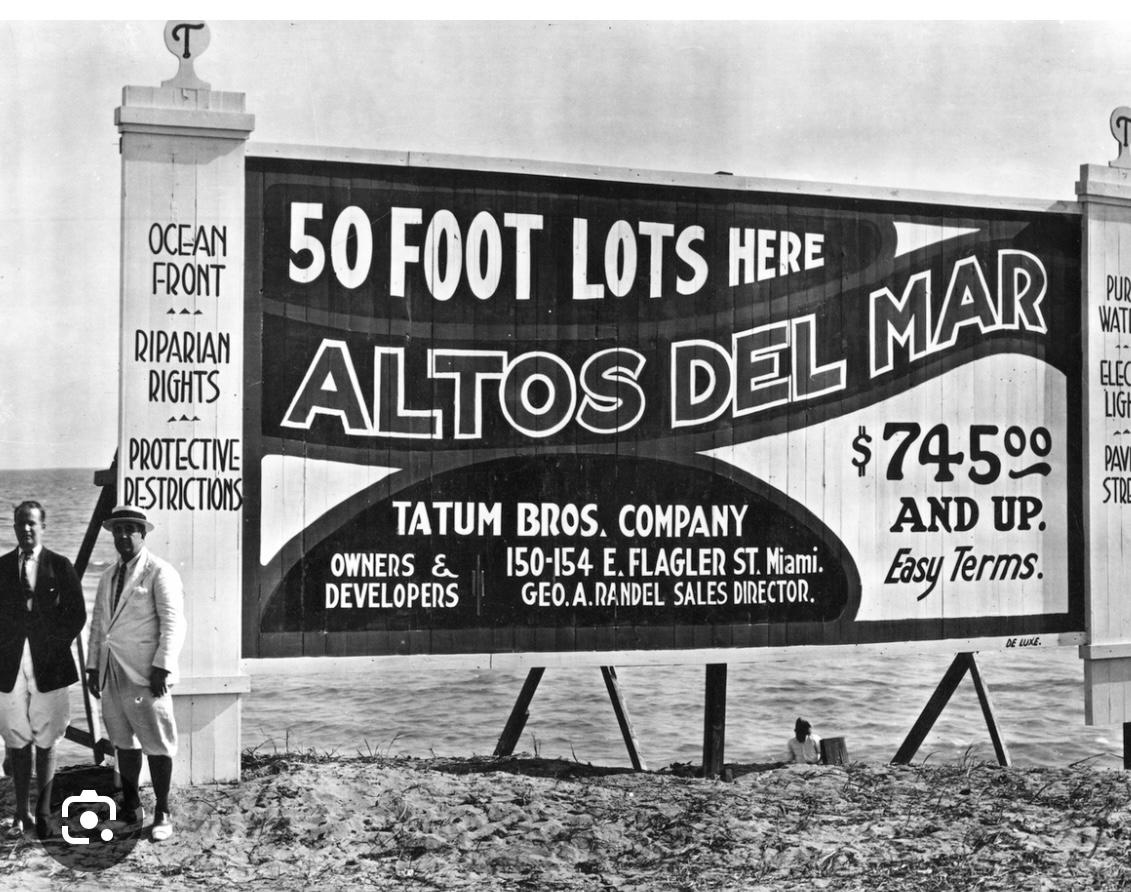
Exactly one century ago, on 23 December 1925, the most famous real estate phenomenon in American history stood at its absolute peak. Across Florida, particularly in Miami and Palm Beach, the purchase of land had transformed into a national obsession. The promise was simple and intoxicating: fortunes could be made overnight. At the height of the boom, even the smallest plots in virtually any district of these cities could double in value within hours. Buyers routinely paid advances without inspecting the land, and in many cases plots were resold for profit even before formal registration was completed. Real estate agents, investors, and ordinary citizens alike were swept into the frenzy, united by a shared conviction that prices would never fall. Contemporary newspaper reports from December 1925, most notably the 23 December edition of The Miami Herald, describe scenes bordering on the extraordinary. Despite the Christmas holidays, thousands queued to purchase land. Railway stations, ports, and land offices were overwhelmed, while civic systems struggled to cope with the sheer volume of speculative activity. Economic historians have since identified this episode as the first great real estate bubble of the modern age. Land values were no longer determined by housing needs or economic fundamentals, but by speculation, rumour, and the pursuit of rapid profit. The boom, however, proved unsustainable. In 1926, a devastating hurricane struck Florida, destroying vast areas and shattering investor confidence almost overnight. Economic strains quickly followed, land prices collapsed with remarkable speed, and the Florida Land Boom, once celebrated worldwide as a symbol of opportunity and prosperity, became a lasting cautionary tale in real estate history. When examined plainly, the underlying story is unmistakably clear. Following the First World War, the United States experienced a surge in wealth. Automobiles became commonplace, railways and advertising compressed distances, and Florida was marketed as a dreamland where sunshine, oceanfront living, and rapidly expanding cities promised universal prosperity. In Miami and Palm Beach in particular, land was no longer acquired for settlement but for immediate resale. Plots were purchased without inspection, without maps, and often without any understanding of location, driven solely by hearsay and expectations of rising prices. A plot acquired in the morning could pass through several owners by evening. Land ceased to function as an asset rooted in utility and instead became a certificate of anticipated wealth, sustained by the collective belief that prices could only rise. The fundamental weakness of the system lay in the absence of genuine end users. Most buyers had no intention of building homes or establishing communities. They were merely waiting for the next purchaser. Once the flow of new buyers slowed, the structure began to falter. By late 1925, rail networks were paralysed, not by building materials, but by the transport of land documents. Banks began to restrict lending, buyers disappeared, and for the first time prices stagnated. These were the early signs of collapse.[img:Images/2nd-image-23-dec1.jpeg | desc:This board is a striking example of the deceptive advertising that characterised the Florida Land Boom. Swamp land and waterlogged areas were promoted as “reclaimed land” and boldly described as “the richest soil in the world.” The purpose of such language was not to reflect the land’s actual condition, but to convince buyers that an immediate purchase would yield rapid profits. In reality, most of these plots were neither properly drained nor suitable for housing or cultivation. Yet slogans such as “buy now at ground floor prices” were used to intensify speculation. This form of misleading promotion played a central role in inflating the Florida Land Boom into a speculative bubble, which ultimately left thousands of investors facing heavy financial losses.] Two decisive developments in 1926 rendered the decline irreversible. First, a powerful hurricane struck Miami, destroying thousands of structures, crippling ports, and exposing the reality that the city had been sold far faster than it had been built, secured, or prepared. Second, confidence among banks and developers evaporated. As payments ceased and instalments defaulted, the very documents once regarded as wealth became liabilities. Countless individuals who had purchased land through borrowed funds lost everything. The outcome was severe. In many areas, land values fell by fifty to seventy percent. Thousands of projects were abandoned, banks failed, and Florida’s economy was set back for years. Crucially, all of this occurred three years before the Great Depression of 1929. For this reason, scholars consistently identify the Florida Land Boom as the first modern speculative real estate bubble, containing all the defining elements later repeated across the world: purchases driven by rumour, the absence of real demand, faith in effortless profit, and the sudden collapse of systemic confidence. The enduring lesson of the Florida Land Boom is unmistakable. Land was stripped of its function as shelter and long-term asset and transformed into a vehicle for rapid speculation. When buyers place their faith solely in the next buyer and abandon underlying use, prices may rise, but they cannot endure. This principle lies at the heart of why the episode is still taught in universities across the United States and beyond, within disciplines such as real estate studies, economics, urban planning, and finance. Students are shown how speculation, market psychology, and the abandonment of economic fundamentals combine to inflate bubbles, and how those same forces ultimately precipitate collapse. Estimates of the financial losses caused by the Florida Land Boom have varied across historical accounts, and no single official figure exists. Nevertheless, economic historians have established a broadly accepted consensus range. Historical records indicate that during the early 1920s, speculative land transactions in Florida reached an estimated total value of six to seven billion US dollars in 1920s terms. When the bubble collapsed between 1925 and 1926, direct and indirect losses are estimated at approximately two billion US dollars in contemporary values. This figure appears consistently in American economic history and is regarded as a confirmed historical estimate. Adjusted for inflation, these losses equate to approximately thirty to thirty-five billion US dollars in present-day terms. It is important to note that the damage extended far beyond declining land prices. It encompassed widespread bank failures, the cancellation of construction projects, loan defaults, and the prolonged paralysis of Florida’s state economy.
Read More >
In the aftermath of the First World War, Europe faced widespread devastation. Millions of homes had been destroyed, while soldiers returned from the front to cities unable to absorb them. In Britain, this moment gave rise to the slogan “Homes Fit for Heroes”, encapsulating a growing belief that postwar reconstruction demanded more than physical rebuilding. Within this context, the French government decree issued on 22 December 1924, alongside Britain’s Wheatley Act of the same year, marked a decisive turning point in the history of housing and real estate. For the first time, the provision of housing was formally acknowledged as a public responsibility rather than a charitable or purely private concern. On 22 December 1924, France issued a formal governmental order that transformed the Loucheur Law from a legislative framework into an operational programme. This decree authorised, for the first time, the allocation of public funds specifically for affordable housing, enabled the acquisition and designation of land for residential development, and vested municipal authorities with clear mandates for construction and implementation. Through this administrative and financial framework, the state assumed the role of housing developer, explicitly recognising access to affordable housing as a public right. In the immediate aftermath of the decree, construction commenced under the model of Habitations à Bon Marché (HBM), representing France’s earliest systematic approach to affordable housing. In subsequent years, this framework evolved into the structured system of Habitations à Loyer Modéré (HLM), establishing regulated, low-rent public housing as a permanent feature of the urban landscape. The importance of this moment has endured. Contemporary debates around low-cost housing and social housing policy continue to draw upon the practical foundations laid by the decision of 22 December 1924. Following the issuance of the decree, land acquisition began in the outskirts of Paris for the development of garden cities and collective residential apartment blocks. Designed around principles of open space, natural light, greenery, and access to essential services, these schemes represented a significant departure from prevailing urban models. For the first time, it was formally asserted that low-income citizens were entitled not merely to shelter, but to dignified and adequate living conditions. This decision also established a new precedent for state intervention. While municipal and cooperative housing initiatives had existed on a limited scale prior to this period, it was within this framework that the state, for the first time at a national level, assumed responsibility for large-scale funding, land allocation, and construction. This model later informed social housing policies across Europe and, eventually, across much of the world. Today, as discussions continue in Pakistan and elsewhere regarding low-cost housing, access to housing for lower-income populations, and the role of state subsidy, their intellectual and practical origins can be traced to the decision of 22 December 1924. That moment reframed real estate from a purely investment-driven asset into an arena of social responsibility, positioning housing as a foundational element of the relationship between the state and its citizens.
Read More >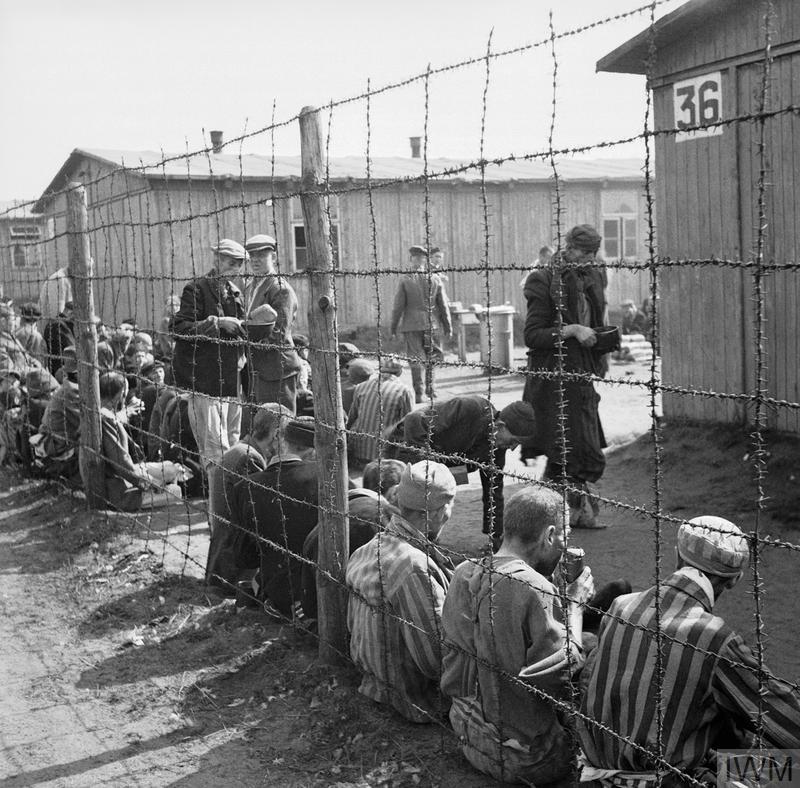
(Berlin) On 3 December 1938, the Nazi government enacted a severe state decree titled “Verordnung über den Einsatz des jüdischen Vermögens” (Regulation on the Use of Jewish Property), through which the forced sale of all residential, commercial and agricultural assets owned by Jewish citizens was formalised in law. Signed by Economics Minister Walther Funk and Interior Minister Wilhelm Frick, the order formed part of Adolf Hitler’s direct policy following Kristallnacht, aimed at removing Jews entirely from Germany’s economic, social and territorial life. Under this decree, Jewish property owners were compelled to sell all their holdings within a fixed period, with only “Aryan” non Jewish Germans permitted as purchasers. As a result, homes, shops and land were transferred at prices far below their actual market value, while a substantial portion of the proceeds was absorbed by the state through taxes and confiscatory measures. Remaining funds were deposited into government-controlled blocked accounts, to which former owners had no free access. A key provision prohibited Jews from acquiring any new real estate, residential rights, mortgages or land. Thus, while they were forced to relinquish their existing property, they were simultaneously denied the right to obtain any alternative accommodation, giving full legal support to the process of Aryanisation. (Aryanisation was the systematic Nazi policy under which Jewish homes, businesses, land, bank accounts and commercial assets were forcibly transferred to non-Jewish German “Aryans”.) This policy became a structured instrument of economic dispossession, depriving thousands of Jewish families of their homes and workplaces and pushing them into ghettos (ghettos being enclosed, prison-like quarters where Jews were segregated from the general population) and forced-labour camps. It represented one of the clearest violations of private property rights and a stark example of state driven expropriation. Following the end of the Second World War, Allied authorities repealed this decree and all anti-Jewish laws in 1945. Post war Germany subsequently enacted restitution and compensation statutes to restore confiscated properties or provide financial redress. Even today, the decree of 3 December 1938 remains a central historical reference point in international discussions on forced expropriation, private property rights and state abuse of authority.
Read More >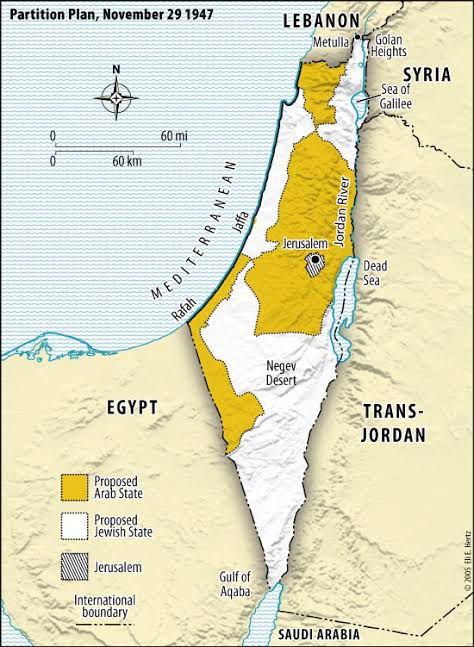
▫This decision is regarded as one of the most consequential developments of its era, shaping the historical geography of land, real estate, urban division, agricultural territory, industrial regions, coastal zones and the boundaries that connected transport routes across the region. ▫The refusal to accept this resolution has shaped the Palestinian experience ever since. On 29 November 1947, during its second session, the United Nations General Assembly adopted Resolution one hundred and eighty one, known internationally as the United Nations Partition Plan for Palestine. Through this resolution, the Assembly recommended the division of British administered Palestine into two separate states, one Jewish and one Arab. The plan also proposed that Jerusalem and Bethlehem be placed under an International Trusteeship in recognition of their religious significance and administrative sensitivity, thereby placing them under international supervision. The resolution received thirty three votes in favour, thirteen against, while ten states abstained. The plan was presented to the General Assembly by the United Nations Special Committee on Palestine, established in May nineteen forty seven. The committee consisted of eleven neutral countries and was mandated to recommend an international solution for the political future of Palestine following the end of the British Mandate. Over several months, the committee conducted extensive field visits, hearings and inquiries across Palestine, and eventually submitted its final report. The report included maps, boundary lines, the proposed division of the territory, and detailed allocations of agricultural land, industrial areas, coastal regions and transport corridors. It is considered one of the most comprehensively documented land division plans of the modern century and represented the first time that the future territorial shape of a region was determined through an international vote. The plan, however, was never implemented. The Arab states and the Palestinian leadership rejected it as unjust, and following the war of nineteen forty eight, Israel took control of far more territory than had been assigned under the resolution. In the years that followed, the nineteen forty nine Green Line, the nineteen sixty seven war, subsequent military occupations, political negotiations and the Oslo process created the borders and administrative arrangements that exist today. These territorial realities do not follow the lines proposed in Resolution one hundred and eighty one. For Palestine, the rejection of the resolution resulted in the loss of the state envisaged for it. The wars of nineteen forty eight and nineteen sixty seven deepened this loss. Almost all land allocated to the Arab state came under Israeli control. The nineteen forty nine Green Line further confined Palestinian territory, while the post nineteen sixty seven arrangements fragmented Gaza, the West Bank and Jerusalem into separate and often disconnected zones. The vision of a unified and sovereign Palestinian state remained limited to documents and maps. In the present moment, after the most prolonged and destructive conflict of recent history, from twenty twenty three to twenty twenty five, both Palestine and Israel stand in a state of devastation. The coastal territory of Gaza has been almost entirely destroyed. It is this shattered landscape that the President of the United States, Donald Trump, has spoken of transforming into a Riviera once the war has ended. (Official records of the United Nations, the General Assembly archives, Encyclopaedia Britannica, BBC Archives and the Al Jazeera Timeline all confirm this event as taking place on twenty nine November nineteen forty seven.)
Read More >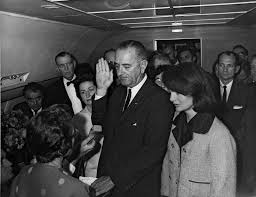
On November 24, 1963, newly sworn-in U.S. President Lyndon B. Johnson addressed the United Nations for the first time following the assassination of President John F. Kennedy. The global community watched closely as Johnson outlined America’s commitments to international cooperation, nuclear arms control, and ongoing development programs under the United Nations' framework. His speech aimed to reassure allies during a period of deep uncertainty while warning against Cold War escalations. Delegates praised the calm and steady tone, viewing it as an attempt to preserve diplomatic continuity during one of the tensest moments in U.S. political history. The address became a defining moment in restoring global confidence after the shock of Kennedy’s death.
Read More >On November 23, 1971, the United Nations General Assembly convened an urgent session in New York to address the rapidly escalating humanitarian crisis in South Asia. Millions of civilians were displaced due to violent conflict, prompting intense debate among UN member states over emergency relief mechanisms, protection for refugees, and potential deployment of neutral observers. European nations insisted on immediate humanitarian intervention, while major global powers remained divided over political implications. The session exposed deep geopolitical fractures but also led to increased international focus on civilian suffering and the urgent need for coordinated global relief.
Read More >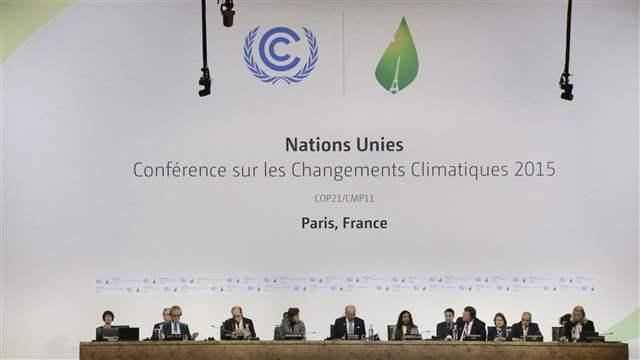
On November 2, 2015, world leaders and climate experts gathered in Paris to finalize the framework for the COP21 Climate Agreement, a landmark initiative aimed at limiting global temperature rise below 2°C. The conference represented a pivotal moment in global environmental policy, bringing together 196 nations to commit to emission reduction targets and sustainable development goals. Discussions revolved around carbon neutrality, renewable energy transition, and financial mechanisms to support developing countries. The event symbolized a turning point in collective environmental responsibility, emphasizing that sustainable growth was no longer optional but essential. The anticipation around COP21 reflected a growing global realization that environmental resilience and resource preservation are fundamental for long-term economic and human security.
Read More >
On October 9, 1874, representatives from twenty-two nations gathered in Bern, Switzerland, to establish the Universal Postal Union (UPU) — a pioneering global framework that standardized international mail exchange. By creating a single postal territory, the UPU laid the groundwork for today’s address systems, property documentation by post, cadastral recordkeeping, and urban communication networks.
Read More >