East Asia: Cities, Land & Power

6 Historical Event found
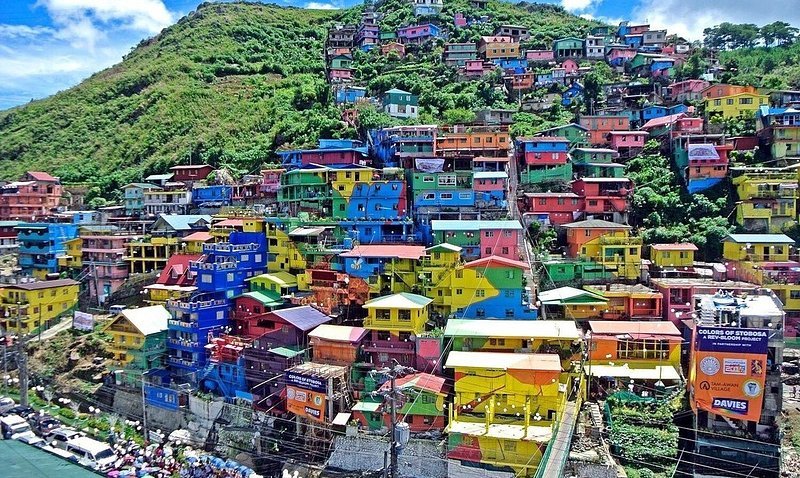
The Philippines Creates a High Level Committee to Guide Baguio’s Urban Growth, Protect Its Forests and Prepare a Coordinated Development Plan
The Philippine government issued Executive Order No. 486, creating a special advisory committee for the development of Baguio City. The initiative was intended to guide the famous mountain city’s growth as an urban centre and tourist destination while protecting the natural landscape and environmental qualities that had made it one of the country’s best known cities. The order described Baguio as a major tourist attraction and the Summer Capital of the Philippines because of its refreshing climate. The government said the city was deteriorating because of inadequate development planning, environmental pollution, continuing forest denudation and other damaging effects associated with industrial development. The order reflected concern that uncontrolled construction, commercial expansion and increasing human activity could permanently damage Baguio’s scenery and ecological character unless growth was directed through a coordinated urban plan. The advisory body was to consist of a chairman, the mayor of Baguio City as co-chairman and three additional members appointed by the president. Its principal responsibility was to advise the president on matters relating to Baguio’s development and to prepare a plan for the city’s future as both an urban centre and a tourism destination. The committee was authorised to request assistance from any government department, bureau, office or agency and was required to submit periodic reports on its work. Baguio already possessed an important planning heritage. A historical study published through the Philippine Institute for Development Studies’ research portal traces the city’s development from the hill station concept through early American town plans and the influential Burnham Plan. The August 1977 order represented another stage in that planning history because it formally connected future construction and economic development with environmental protection, forest conservation and the preservation of the city’s identity. The event remains relevant to Asian real estate and urban history because Baguio faced a challenge that later became common across many rapidly growing tourism cities: how to accommodate hotels, housing, roads and commercial projects without destroying the natural assets that attract residents, visitors and investors in the first place. August 3, 1977 therefore marked more than the creation of another government committee. It reflected an early recognition that sustainable property development requires coordinated land use, environmental safeguards and long term planning. A city’s real estate value depends not only on what is constructed, but also on the forests, open spaces, scenery and cultural character that development policies succeed in preserving.
Read More >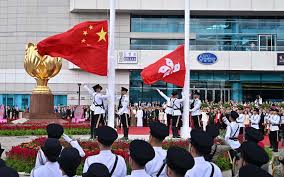
World's Most Important Real Estate Center Hong Kong Officially Became a Special Administrative Region of China
Hong Kong officially returned to Chinese sovereignty and became the Hong Kong Special Administrative Region under the “One Country, Two Systems” framework. This historic transition marked the end of 156 years of British administration and opened a new political, legal and economic chapter for one of Asia’s most important financial and real estate centers. The event holds major importance in real estate history because Hong Kong has long been one of the world’s most expensive and closely monitored property markets. Its real estate sector is deeply connected with land supply, government leasehold policies, housing demand, commercial investment, financial markets and global investor confidence. After the handover, the continuity of Hong Kong’s legal system, land administration and business environment became central to the confidence of property developers, banks, international companies and homebuyers. The “One Country, Two Systems” arrangement allowed Hong Kong to maintain its capitalist system, separate legal framework and free market economy, which helped preserve its position as a major hub for commercial property, luxury housing and international finance. In the years that followed, Hong Kong’s property market experienced both sharp corrections and strong long-term growth, influenced by the Asian financial crisis, changing housing policies, cross-border investment and rising demand from mainland China. For this reason, July 1, 1997 is remembered as a key turning point in Hong Kong’s urban development and real estate history.
Read More >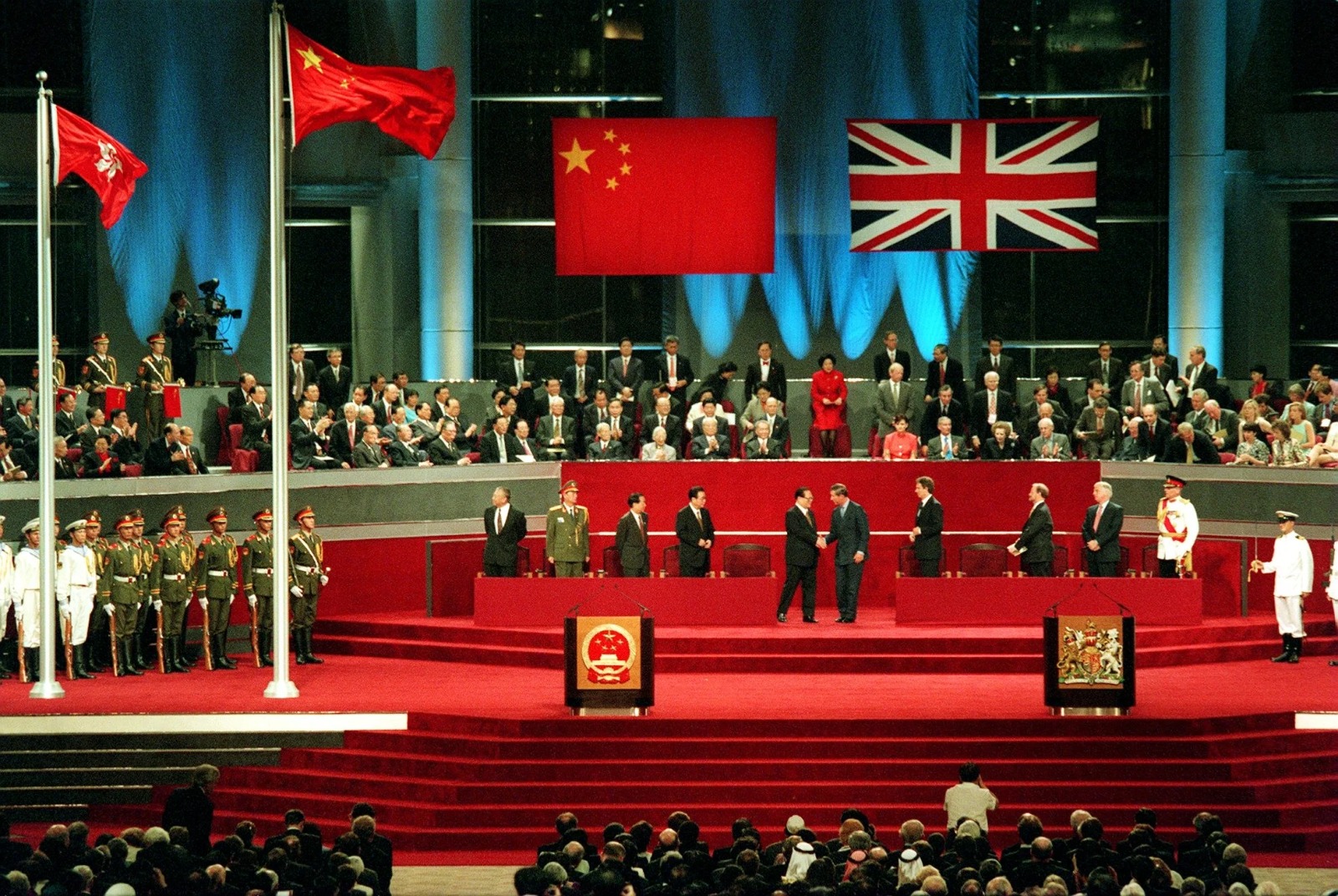
Hong Kong Handover Ceremony, Major Importance in Real Estate History
The historic handover ceremony of Hong Kong began, marking the end of more than 150 years of British administration and the transfer of Hong Kong to China as a Special Administrative Region. This event holds major importance in real estate history because Hong Kong has long been one of the world’s most expensive, dense and closely watched property markets. The handover created a new political and economic environment for land ownership, housing demand, commercial real estate, investor confidence and urban development. At the time, Hong Kong was already a major global financial hub, with limited land supply and extremely high demand for residential and commercial space. Any change in political control was therefore closely linked to market confidence, property values, development planning and the future direction of the city’s economy. In the years after 1997, Hong Kong’s property sector saw both sharp corrections and major long term growth. Residential prices, office demand, retail property and land auctions all remained central to the city’s economic identity. The handover also highlighted how political stability, land policy, investor sentiment and urban planning can directly shape a real estate market. For this reason, June 30, 1997, remains an important date in the real estate and urban history of Hong Kong.
Read More >Shenzhen Government Introduces Bao’an Coastal Urban Greenline Ordinance
On November 20, 1984, the Shenzhen Municipal Government enacted the Bao’an Coastal Urban Greenline Ordinance, a pioneering environmental-urban regulation designed to preserve ecological corridors during the city’s early industrial boom. In the mid-1980s, Shenzhen was rapidly transitioning from a fishing town into China’s premiere Special Economic Zone, attracting factories, migrant workers, and large-scale construction. The ordinance established mandatory ‘coastal greenline buffers’—undeveloped ecological strips separating industrial zones from residential belts. These buffers included tree belts, water-retention ponds, coastal mangrove protection areas, and designated non-construction zones. The policy also required new factories to maintain setback distances from wetlands, integrate pollution-reduction technology, and develop green perimeter walls to reduce dust and noise. Residential districts received green plazas, multi-use community parks, and open-air pedestrian pathways linking neighborhoods to the coastline. The ordinance created one of China’s earliest examples of integrated environmental planning within a fast-growing industrial zone. It significantly reduced ecological degradation, protected Bao’an’s remaining mangrove forests, and preserved natural drainage patterns that later prevented flood disasters during 1990s storm surges. Socially, the green corridors improved liveability for migrant workers, offering recreation spaces that softened the harshness of early factory-heavy districts. By the 1990s, Shenzhen’s coastal greenline became a national model studied by Guangzhou, Ningbo, and Xiamen, influencing China’s long-term eco-urban design strategy.
Read More >
Shanghai Government Implements Pudong Housing Modernization Blueprint
On November 19, 1991, the Shanghai Municipal Government enacted the Pudong Housing Modernization Blueprint one of the most transformative urban redevelopment plans of pre-WTO China. At a time when Shanghai was emerging as the country’s economic engine, housing shortages, dilapidated worker dormitories, and congested alley-neighborhoods threatened the city’s developmental ambitions. The blueprint targeted Pudong’s eastern districts, introducing large-scale mid-rise residential blocks, earthquake-resistant structural designs, improved ventilation corridors, and integrated public amenities including clinics, schools, and neighborhood markets. It became the first major Chinese housing plan to combine industrial relocation with residential improvement: old factories were shifted outward, freeing land for mixed-use districts. The blueprint also marked the introduction of China’s early “unit-based housing reform,” allowing state employees to partially purchase their government-allotted apartments.Large green belts and open spaces were planned to counter population density, while wide arterial roads connected Pudong with central Shanghai, helping the district evolve from a peripheral industrial zone into a major financial and residential heartland.Within five years, Pudong’s new housing estates improved living standards significantly, replacing substandard shared housing with individual family units. This reshaped social life, strengthened household privacy, and fostered a more stable urban workforce.The blueprint became a national reference model, influencing housing reforms across Beijing, Tianjin, Guangzhou, and Chongqing. It was also foundational in preparing Shanghai for becoming a global investment hub in the 2000s, with Pudong’s transformation serving as a symbol of China’s modernization drive.
Read More >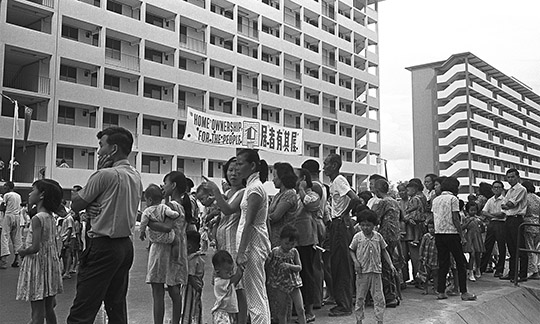
Singapore Expands Public Housing Ownership Model Through Upgraded HDB Scheme
On November 5, 1989, Singapore announced a major expansion to its Housing & Development Board (HDB) home-ownership model, creating policies that allowed low- and middle-income families to purchase improved public flats with government-backed financing. The initiative marked a new chapter in Singapore’s urban housing revolution, aimed at transitioning the nation from rental-based welfare housing to widespread homeownership.The upgraded scheme introduced affordable mortgage finance, longer repayment terms, and subsidized interest rates, helping workers secure property ownership in growing residential districts. It also prioritized community-centered planning with integrated schools, clinics, public parks, transport hubs, and neighborhood commercial centers to ensure balanced urban life. This policy shift drastically reduced informal settlements and lifted Singapore’s home-ownership rates above 85%, positioning the country as a global model of public-sector-driven housing development. Experts praised the reform for creating social stability, reducing inequality, and establishing long-term wealth creation pathways for working families.
Read More >