Global Land Deals & Treaties
Global Land Deals & Treaties
7 Historical Event found

Louisiana Formally Transferred from Spain to France at the Historic Cabildo Building on 30 November 1803
On 30 November 1803, Louisiana was formally transferred from Spain to France during a ceremony held at the historic Cabildo in New Orleans, in what is now the United States. The event preceded one of the largest territorial acquisitions in American history and represents an important development in territorial governance and land administration. Historical Background and Construction The Cabildo was constructed between 1795 and 1799 under Spanish colonial administration, following the Great New Orleans Fire of 1788, which destroyed the previous building on the site. Designed by architect Gilberto Guillemard, the new structure was built to accommodate the municipal government and administrative functions of New Orleans. Located beside Jackson Square in the historic French Quarter, the building became an important centre of municipal governance. Its construction represented the redevelopment of an existing government property within an established urban area. Territorial Transfer and Land Administration On 30 November 1803, Spanish representatives formally transferred Louisiana to French representative Pierre-Clément de Laussat in the Cabildo's principal council chamber, known as the Sala Capitular. Twenty days later, on 20 December 1803, another ceremony took place in the same building, transferring Louisiana from France to the United States. Under the terms of the Louisiana Purchase, the United States acquired approximately 828,000 square miles of territory for US$15 million. The acquisition substantially expanded the country's geographical boundaries and influenced subsequent settlement patterns, land administration, infrastructure development, and urban expansion. Architectural Development and Heritage Conservation The Cabildo continued to serve administrative and judicial purposes following the territorial transfer. The building underwent further architectural changes in subsequent decades, including the addition of a mansard roof in 1847. In 1911, the building opened as part of the Louisiana State Museum, marking its transition from administrative premises to a cultural and historical institution. This transformation demonstrates how historic government properties can be adapted for new functions while retaining their architectural character and historical significance. Real Estate Significance From a real estate perspective, the Cabildo illustrates the relationship between public property development, institutional architecture, territorial administration, and heritage conservation. The broader transfer of Louisiana also provides historical insight into how changes in territorial control can influence land administration and future development. However, the transfer concerned sovereignty over a geographical territory rather than the conventional purchase of individual properties. Today, the Cabildo remains a prominent architectural landmark in New Orleans. Its continued use as a museum highlights the enduring cultural and economic potential of heritage properties, demonstrating the importance of preserving historic buildings and adapting them to changing institutional and urban requirements.
Read More >
The Treaty That Laid the Foundation for Hong Kong’s Rise as a Major Commercial and Real Estate Centre
August 29, 1842, is an important date in the history of Asian urban development and real estate. On this day, Britain and China signed the Treaty of Nanking, ending the First Opium War. Under the treaty, Hong Kong Island was ceded to Britain. A formal administrative structure was subsequently established, followed by systematic planning and development of the city. Hong Kong’s early urban development accelerated as land plots were marked out and sold for settlement. Sheung Wan, Central and Wan Chai became among the earliest developed areas of the new settlement. Commercial activity, the harbour and international trade gradually increased the economic importance of land and buildings across the territory. The Treaty of Nanking did more than establish a new political arrangement. It helped create the conditions for Hong Kong to develop into an important commercial gateway in East Asia. The opening of five Chinese ports to foreign trade also contributed to a broader transformation of regional commerce. Hong Kong expanded further in later decades. Kowloon and Stonecutters Island were ceded to Britain in 1860, while the New Territories were leased for 99 years in 1898. These successive territorial changes provided additional space for urban expansion and reshaped the long term development of Hong Kong’s property market. From a real estate perspective, August 29, 1842, is significant because the political settlement signed on that day helped establish the foundations of a city that would eventually become one of the world’s most important property markets, known for high land values, dense urban development, commercial property and international investment.
Read More >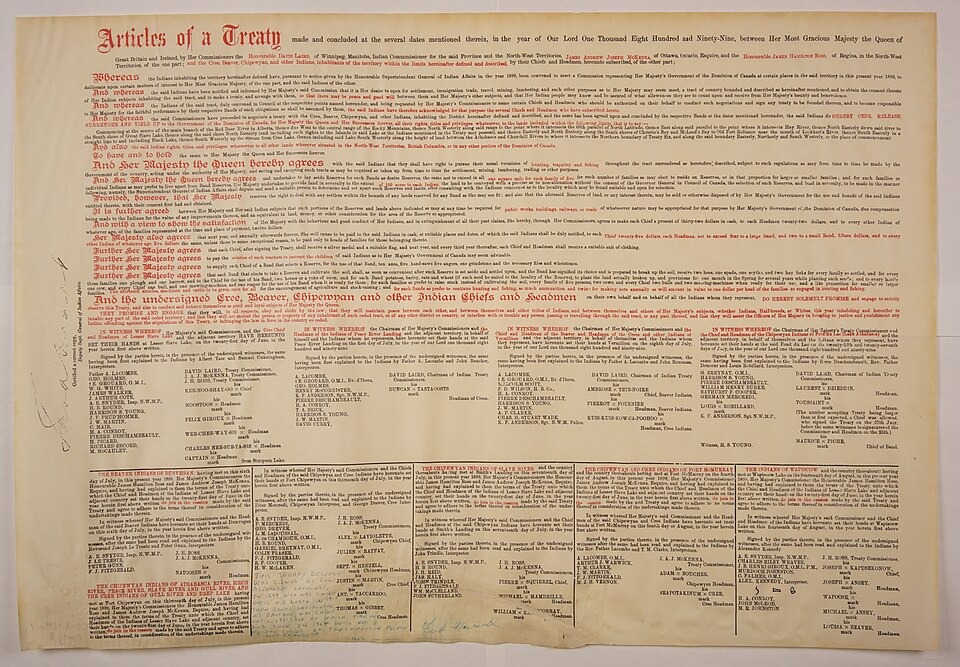
Adhesion to Treaty 8 One of the Largest Land Agreements in Canadian History
An important adhesion to Treaty 8 was signed at Fort Vermilion in northern Alberta, Canada. Treaty 8 had originally been signed on June 21, 1899, at Lesser Slave Lake, but it was later extended through separate adhesions in different northern communities. The Fort Vermilion adhesion was one of those key moments that expanded the treaty’s reach across Canada’s northern frontier. Treaty 8 became one of the largest land agreements in Canadian history. It covered vast areas of present day northern Alberta, northeastern British Columbia, northwestern Saskatchewan and parts of the Northwest Territories. For the Canadian government, the treaty created a legal framework for settlement, land administration, agriculture, mining, forestry and future resource development across a huge northern region. From a real estate and land history perspective, the July 8 Fort Vermilion adhesion is important because it shows how land agreements were not completed in a single moment, but expanded through local negotiations and community based signings. These adhesions helped define reserve lands, treaty payments, hunting and fishing rights, public land control and the future pattern of settlement in northern Canada. The agreement also reflected the growing strategic importance of northern lands at the end of the nineteenth century. After the Klondike Gold Rush and rising interest in minerals, timber and transportation routes, the Canadian state sought to organize land ownership and development in areas that were becoming increasingly valuable. Treaty 8 therefore remains a major reference point in discussions about Indigenous rights, land use, resource development and the legal history of public land in Canada.it was the eighth in a series of 11 formal, "numbered" treaties negotiated between the Canadian Crown and Indigenous peoples in Canada between 1871 and 1921.
Read More >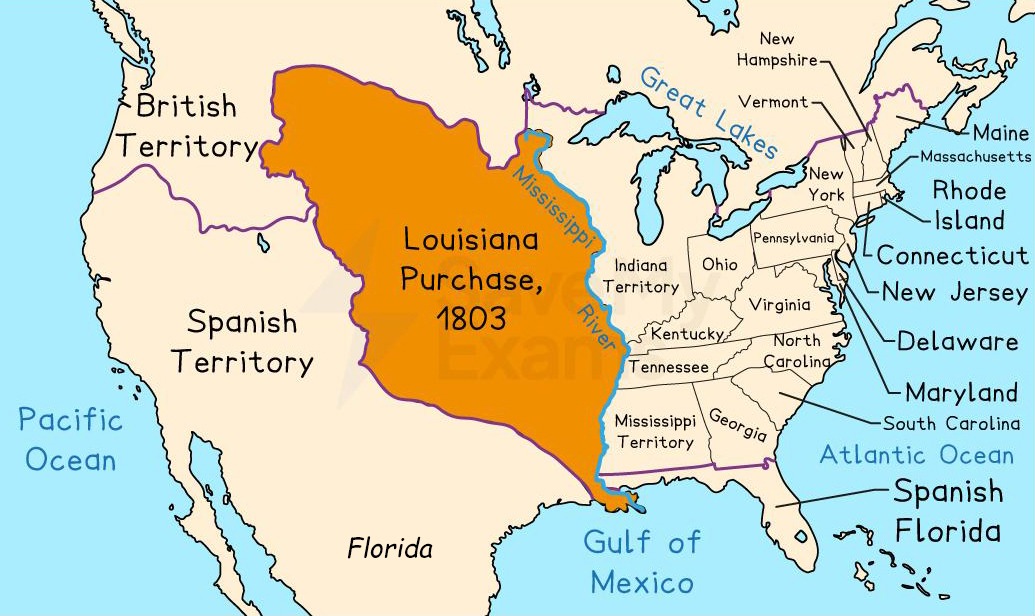
The Louisiana Purchase: the largest land transaction in global real estate history, formally transferred on this day
20 December 1803 stands as a defining date in the global history of real estate and land agreements. It not only reshaped the concept of land acquisition but also introduced a new dimension to state expansion, geopolitics, and the strategic value of land. This event is historically known as the Louisiana Purchase. The Louisiana Purchase was not a conventional commercial transaction within a real estate market. Rather, it was a sovereign-to-sovereign land transfer, involving the sale and transfer of territory from one state to another. The transaction was executed without reference to market valuation mechanisms and was driven entirely by political and strategic considerations. For this reason, it is regarded as the largest land transaction in recorded history and, on technical grounds, may also be described as the largest real estate deal ever concluded. Although the Louisiana Purchase treaty had been agreed earlier, on 30 April 1803 in Paris, the decisive event occurred on 20 December 1803, when France formally transferred practical control of the vast Louisiana territory to the United States of America. The United States was represented by Robert Livingston and James Monroe, while France was represented by François Barbé-Marbois, acting on behalf of the government of Napoleon Bonaparte. The formal ceremony of transfer took place in New Orleans, completing what is widely recognised as the largest territorial transfer in history. As a direct consequence of the Louisiana Purchase, the United States doubled its geographical size in a single act, while France relinquished control of a distant territory in order to concentrate on its European priorities. Under the terms of the agreement, the United States acquired approximately 828,000 square miles of land, equivalent to around 2.1 million square kilometres. By comparison, this area was roughly two and a half times larger than the present land area of Pakistan. The territory was acquired for 15 million US dollars, an amount that equates to only a few cents per acre by modern standards. In the history of global real estate, the acquisition of such an immense territory at such a nominal price, yet with such profound strategic significance, remains without precedent. The significance of the Louisiana Purchase extended far beyond its price or size. The agreement fundamentally reshaped the future geographical, economic, and political structure of the United States. As a result of this territorial acquisition, fifteen American states later emerged from the Louisiana territory, including Louisiana, Arkansas, Missouri, Iowa, North Dakota, South Dakota, Nebraska, Kansas, Oklahoma, Montana, Wyoming, Colorado, Minnesota, New Mexico, and Texas. These regions played a decisive role in strengthening agricultural production, industrial expansion, and internal trade, transforming the United States into a continental power. From a geographical perspective, most of the acquired territory was landlocked, lacking direct access to an ocean coastline. However, the true strategic value of the acquisition lay in the United States gaining full control over the Mississippi River system and its entire basin, which ultimately connects to the Gulf of Mexico. This acquisition established a strong internal geographical backbone for the United States, later enabling westward expansion towards the Pacific coast. Politically, the purchase represented a major decision for President Thomas Jefferson, as the United States Constitution contained no explicit provision for the acquisition of foreign territory. Nevertheless, guided by national interest, future expansion, and control of the Mississippi River, the transaction was completed and later came to be regarded as one of the most prudent decisions in American history. Historically, the territory of Louisiana was a product of European imperial expansion. In 1682, the French explorer Robert de La Salle claimed the Mississippi River basin for France and named the territory Louisiana in honour of King Louis XIV. This claim was not based on the consent of indigenous populations but on a colonial doctrine that treated discovery as the basis of ownership, with land regarded as an expression of sovereign land ownership. France organised the territory as a colonial possession, but following the Seven Years’ War in 1763, Louisiana was transferred to Spain. Later, in 1800, under the secret Treaty of San Ildefonso, Spain returned Louisiana to France, placing the territory legally under French control at the time of sale. In practice, however, neither Spain nor France succeeded in establishing durable and effective administrative control over this vast region. Ongoing Napoleonic wars in Europe, acute financial pressures, and the increasing difficulty of sustaining overseas colonial territories proved decisive for France. Under these conditions, Napoleon Bonaparte chose to sell Louisiana, securing immediate financial resources while simultaneously strengthening the United States as a counterbalance to British power. In this way, a fragile colonial possession was transformed into the largest land transaction in history. This day therefore serves as a reminder of the multi-dimensional strategic thinking of European powers, which often extended control far beyond their practical capacity to govern. Such territorial decisions were shaped not only by military power, but by financial capability, naval security, global trade interests, and long-term political balance. In the case of Louisiana, France chose strategic withdrawal over the maintenance of an unsustainable and costly possession. In this context, 20 December 1803 symbolises the reality that land decisions are rarely about geography alone; they are decisions of time, power, foresight, and statecraft. At times, strategic retreat itself becomes the force that shapes the direction of history.
Read More >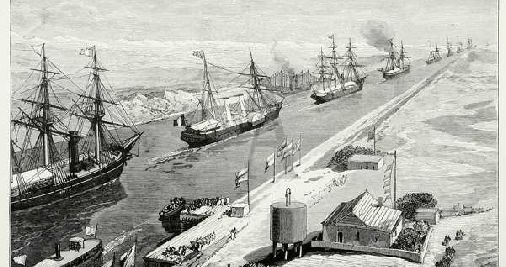
The British Acquisition of Suez Canal Shares: A Pivotal Milestone in the Annals of Global Real Estate and Strategic Infrastructure
In a manoeuvre to fortify its stance upon the realms of international commerce and strategic infrastructure, the British Government has secured effective dominion over one of the world’s paramount maritime passages through the purchase of substantial shares in the Suez Canal Company. This historic transaction was executed under the direct sanction of Prime Minister Benjamin Disraeli, who capitalised upon the fiscal exigencies of the Egyptian sovereign, Khedive Ismail Pasha, to procure 176,602 shares at a sum of 3,976,582 pounds sterling. The financial arrangements were expeditiously facilitated by the Rothschild family in the form of an immediate loan, which played a central role in consummating the accord. Although the acquisition was finalised on 25 November and apprised to the British Parliament on 26 November, it was on 27 November 1875 that sundry British periodicals, including The Times of London and The Manchester Guardian, promulgated the tidings upon their frontispieces. According to these accounts, Britain has thereby become a stakeholder in approximately 44 per centum of the Canal Company, conferring upon it a decisive sway over this vital conduit betwixt Europe and Asia. Authorities in economics and geography opine that this inclusion in the proprietorship of the Suez Canal constitutes a unique paradigm in the sphere of global real estate oversight, wherein not mere terra firma, but a planetary corridor, was acquired. This corridor has profoundly altered the cartography of international trade, the orchestration of port cities, colonial administration, and the global transport schema. As a consequence of this purchase, mercantile routes have been abbreviated by nigh seven thousand kilometres, conveyance expenditures diminished, and British influence extended to unprecedented extents across the Middle East, Eastern Africa, and Southern Asia. Historians aver that this bargain was, in essence, the decree which paved the path for Britain’s de facto suzerainty over Egypt in 1882. It not only transformed the urban schematics of metropolises such as Alexandria, Suez, and Port Said, but also augmented the economic stature of harbour entrepôts like Aden, Karachi, Hong Kong, and Singapore. Experts in global real estate affirm that this acquisition exemplifies how a singular infrastructure edifice may redirect the economic trajectories of entire continents. Per the records of the Syed Shayan Real Estate Archive, the British gazettes of 27 November 1875 characterised this resolution as a decisive stride in British imperial stratagem, the repercussions of which shall resonate through the conduits of global commerce and urban evolution for more than a century henceforth.
Read More >
Maastricht Treaty Creates Unified European Property Market
On November 3, 1993, the implementation of the Maastricht Treaty revolutionized European real estate markets by establishing the framework for a unified property investment zone. The treaty's provisions for free movement of capital and persons enabled cross-border property ownership and investment across EU member states. This led to the emergence of pan-European real estate investment trusts (REITs) and facilitated property acquisitions by citizens from different member countries. The single currency framework later introduced through the treaty further streamlined property transactions, making cross-border real estate investments more accessible and creating new opportunities for commercial and residential property development throughout Europe.
Read More >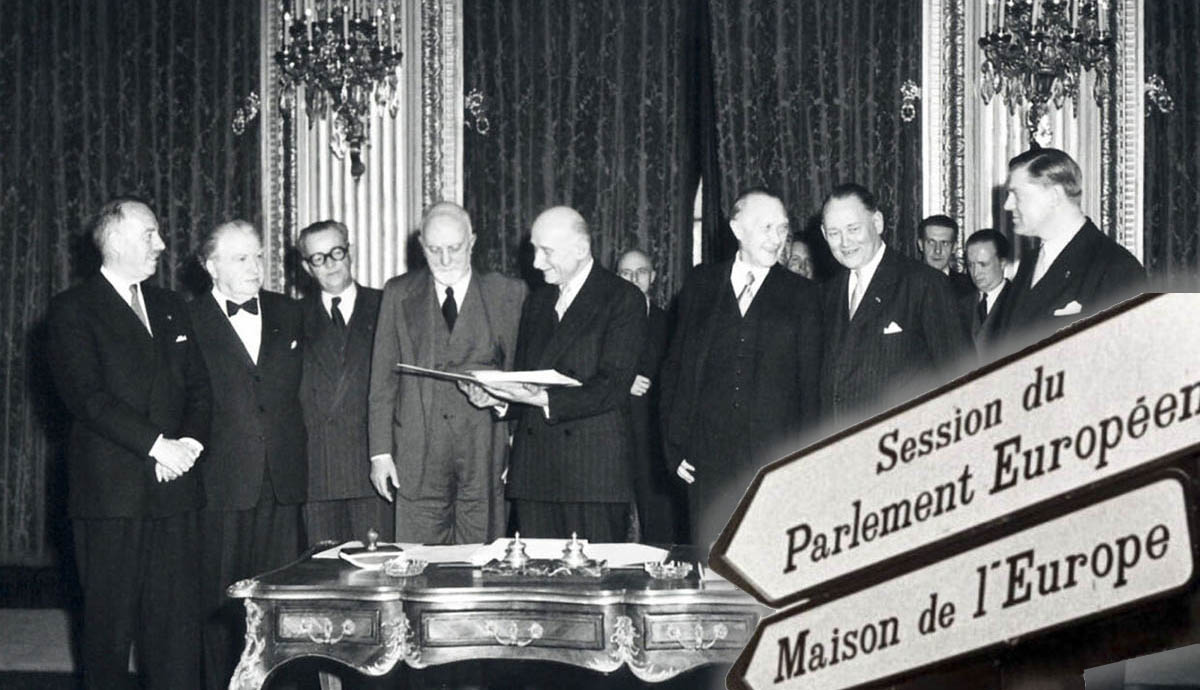
European Union Formally Established Under the Maastricht Treaty
On November 1, 1993, the Maastricht Treaty officially established the European Union (EU), marking a transformative milestone in modern political and economic history. The agreement brought together 12 European nations under a unified structure, fostering economic cooperation, shared governance, and collective security. It introduced the concept of European citizenship, enabling citizens to move, work, and vote freely across member states. The treaty also laid the groundwork for the euro currency, future enlargement of the EU, and common policies in foreign affairs and defense. Emerging from decades of post-war reconstruction, the EU represented a bold step toward preventing conflict and ensuring prosperity through interdependence. The treaty redefined sovereignty by linking national interest with continental cooperation, signaling a new era of integration and global influence for Europe.
Read More >