
Syed Shayan Real Estate Archive
Syed Shayan Real Estate Archive
From Real Estate History
2 Historical Event found
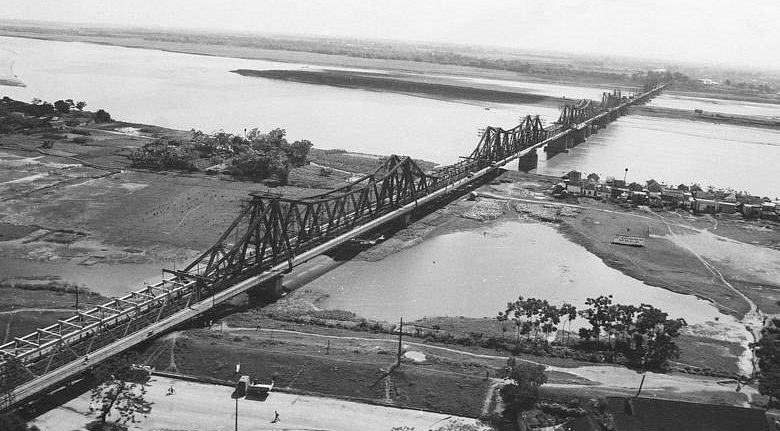
On September 13, 1889, construction officially began on a major steel bridge across the Red River in Hanoi, Vietnam. The structure later became known as Long Bien Bridge and evolved into one of the most important landmarks in the city’s urban, transport and commercial history. The groundbreaking ceremony was held under the administration of Paul Doumer, Governor General of French Indochina. The project was intended to establish a permanent connection between Hanoi and areas on the eastern bank of the Red River, while improving access to northern Vietnam’s emerging trade and transport network. At the time, the river represented a major obstacle to the expansion of the city and the movement of people and goods. The bridge was designed and constructed by the French engineering company Daydé & Pillé. Its main structure featured 19 steel spans supported by 20 piers. A railway track ran through the centre, while roadways and pedestrian paths were provided on both sides. The bridge’s main structure measured about 1,862 metres, making it one of the major steel bridges of its era. Construction presented major engineering challenges because of the Red River’s changing water levels and strong currents. Deep foundations had to be built in difficult river conditions, with some foundations extending roughly 30 metres below the water level. The project was completed in 1902 and was initially named Paul Doumer Bridge after the colonial administrator who initiated the project. Long Bien Bridge played a significant role in Hanoi’s urban development by bringing railway, road and pedestrian connectivity together across the Red River. It strengthened the city’s links with northern Vietnam and helped facilitate the movement of agricultural products, industrial goods and passengers. The bridge later survived wars, heavy use and repeated bombing, becoming closely associated with Hanoi’s modern history. Despite its difficult past and the construction of newer bridges, Long Bien remains an important architectural and transportation landmark. Today, Hanoi’s cultural authorities regard Long Bien Bridge as a historic witness to the capital’s development over more than a century. Its combination of engineering innovation, transport importance and architectural character has made it one of Hanoi’s most recognisable built-environment landmarks.
Read More >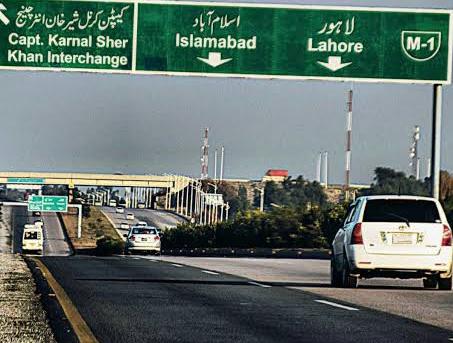
On 10 January 1992, the formal construction of the Lahore Islamabad Motorway M2 was initiated in Pakistan. On this date, the project was officially launched and approved at the government level. This project proved to be the starting point of the modern motorway network concept in Pakistan. The Lahore Islamabad Motorway M2 was the country’s first fully developed motorway, bringing international standards of road construction, safer travel, and long term infrastructure planning into the national development agenda. The Lahore Islamabad Motorway M2 project was launched during the first term of Prime Minister Muhammad Nawaz Sharif. Construction was undertaken by the South Korean company Daewoo Corporation on a design and build basis. The motorway is approximately 367 kilometres in length, with an estimated total cost at the time of around 23 to 25 billion rupees. Although the project remained fundamentally a Government of Pakistan initiative, Daewoo did not act solely as a contractor. It also provided financial support through supplier credit and contractor financing arrangements, which enabled the project to be completed within the planned timeframe. In subsequent years, long term concession agreements were concluded with Daewoo for the operation, maintenance, and rehabilitation of the motorway, under which toll revenues were used to recover costs and investment. The launch of the motorway brought a significant transformation to Pakistan’s real estate geography. Planning for housing schemes, industrial zones, service areas, and commercial centres began along the motorway corridor, leading to a marked increase in land use intensity and land values in surrounding areas. Rural and semi rural zones around motorway interchanges rapidly experienced urban expansion, with residential developments accompanied by warehouses, logistics hubs, and industrial units. Improved accessibility and reduced travel time encouraged investors to move beyond the pressure of major cities and towards long term investment in motorway linked locations. As a result, land gradually shifted from agricultural use to commercial and residential purposes. This process not only increased land values but also played a fundamental role in reshaping population distribution and expanding economic activity. The M2 motorway reinforced the idea that infrastructure is not merely a means of transportation but a key driver of land value appreciation, urban expansion, and economic growth. At the state level, it helped establish the understanding that major highways do more than connect cities. They give rise to new urban centres, industrial zones, and real estate markets. In later years, motorway, expressway, and bypass based development projects across Pakistan were planned using this very model. The Lahore Islamabad Motorway was formally opened for public use in November 1997.
Read More >