
Syed Shayan Real Estate Archive
Syed Shayan Real Estate Archive
From Real Estate History
3 Historical Event found

The Ilica Skyscraper in Zagreb, now the capital of Croatia, was officially inaugurated, marking an important milestone in the development of modern commercial real estate and high rise architecture in the city. Located at the beginning of the famous Ilica Street overlooking Ban Josip Jelačić Square, the building introduced a strikingly modern structure into a central district largely shaped by historic European architecture. It was designed by architects Slobodan Jovičić, Josip Hitil and Ivan Žuljević. Construction began in 1957 and the main building work was completed before its formal opening on August 22, 1959. The approximately 16 storey tower became known as Croatia's first major commercial high rise building. One of its most important architectural features was its modern glass facade, a relatively unusual design solution in this part of Europe at the time. The extensive use of glass and metal created a sharp visual contrast with the traditional buildings surrounding Zagreb's central square. The development combined office and commercial space, making it more than an architectural landmark. It represented a changing approach to urban real estate in which valuable land in the city centre could accommodate considerably more business space through vertical development. Over time, the building became a familiar part of Zagreb's skyline. Its upper level also became associated with panoramic views across the city, further strengthening the tower's place in Zagreb's urban identity. The Ilica Skyscraper remains significant because it illustrates the transition of European city centres toward modern commercial development during the postwar period. Its opening on August 22, 1959, therefore represents not only an architectural event but also an important chapter in the history of commercial property development, changing land use and the vertical growth of Zagreb.
Read More >
On August 20, 1896, the historic Gardoš Tower, also known as the Millennium Tower, was formally opened in Zemun, an area that is today part of Belgrade, Serbia. The structure was built as part of a wider commemorative programme marking one thousand years since the arrival of Hungarian tribes in Central Europe. Standing around 36 metres high, the tower was constructed on Gardoš Hill, a location already associated with the remains of Zemun’s medieval fortress. Its commanding position gave the structure a distinctive place in the surrounding urban landscape and helped establish it as one of Zemun’s most recognisable architectural landmarks. The tower’s location also added to its practical and visual importance. From the hill, visitors can look across the Danube River, the historic streets of Zemun and the wider urban area. Over the years, the structure was also used for observation and monitoring purposes. As the city developed, Gardoš Tower became more than a commemorative monument. It contributed to the historic character and cultural value of the surrounding neighbourhood, where old houses, narrow streets, riverfront areas and traditional urban patterns remain central to Zemun’s identity. From a real estate and urban development perspective, the tower provides a strong example of how landmark architecture can continue to shape the value and identity of an area long after its original purpose has faded. Around 130 years after its opening, Gardoš Tower remains an important part of Zemun’s architectural heritage and one of the most distinctive historic landmarks in the wider Belgrade urban landscape, demonstrating how preserved buildings can continue to influence tourism, neighbourhood character and the long term appeal of historic urban districts.
Read More >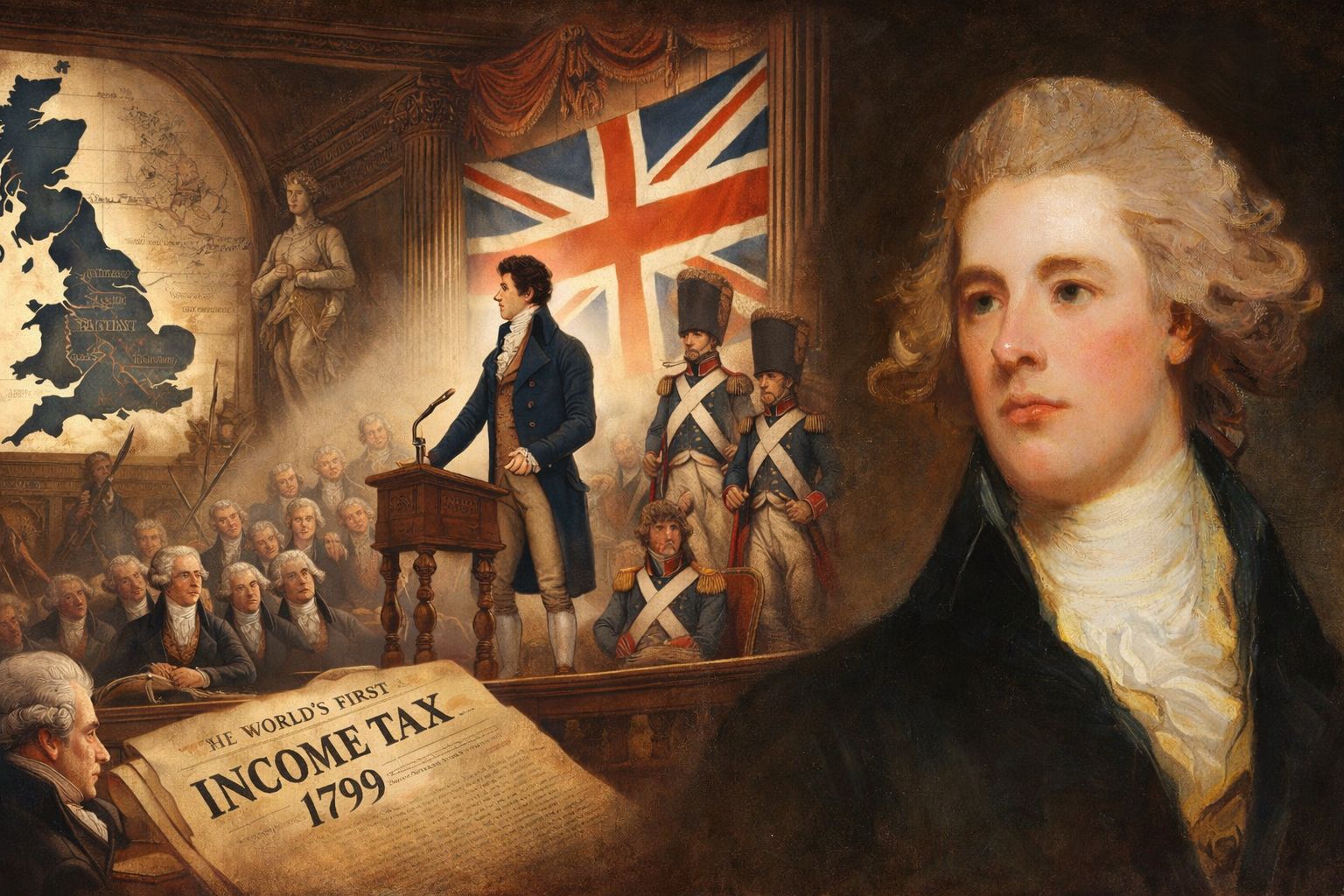
London: In the history of economic thought, 9 January 1799 is remembered as a decisive moment when the British Prime Minister, William Pitt the Younger, formally imposed income tax on rents derived from property. This measure was not introduced as part of a planned economic reform but was driven by the extraordinary financial pressures arising from the ongoing war against the French ruler, Napoleon Bonaparte. Prior to this, Britain had a land tax that was limited strictly to ownership. The 1799 law, however, brought income directly within the scope of state taxation for the first time. This included both rental income from property and the estimated annual value of land. Before 1799, although a land tax existed in Britain, its scope was narrow. It applied only to land ownership and had no connection with the income or rent generated from that land. Whether the land lay idle or produced no profit, the owner was required to pay tax solely on the basis of ownership. The law enacted on 9 January 1799 clearly established, for the first time, the fundamental distinction between owning land and earning from land. Under this law, rental income from property and the estimated annual value of land were formally recognised as income and brought within the framework of state taxation. As a result, property was transformed from a mere asset of ownership into an income generating economic asset. Following this law, real estate ceased to be merely a symbol of family inheritance or social prestige and became a commercial asset that the state began to view as a profit generating unit. For the first time, the government became a direct participant in the income derived from property. Although William Pitt described this tax as temporary and promised to abolish it after the end of the war, and although it was indeed repealed briefly in 1802, its importance for state financial management led to its reintroduction in 1803. This concept later became the foundation of modern income tax, rental income tax, and property tax systems across the world. [img:Images/9-jan-otd-2nd.jpeg | desc:This image shows a printed page of the historic legislation approved by the British Parliament, commonly known as the Income Tax Act of 1799, enacted during the reign of King George the Third. The document formally declares the authority of the state to levy tax on the income of its citizens, a measure introduced in response to the severe financial pressures generated by the ongoing war with France. Through this legislation, rental income and the estimated annual value of land were, for the first time, formally brought within the framework of state taxation, marking a decisive shift in the treatment of property from a mere object of ownership to a measurable economic asset. This page is widely regarded as one of the earliest and most fundamental documentary foundations of modern income tax, rental income tax, and property taxation systems, and it remains preserved within the British national and parliamentary archives.] At the time, the tax applied only to individuals with an annual income exceeding sixty pounds. A lower rate was imposed on incomes between sixty and two hundred pounds, while incomes above two hundred pounds were taxed at ten percent, equivalent to two shillings per pound. By the standards of the era, this was considered a bold and revolutionary step. Through this law, a new philosophy emerged: since the state provides protection for property, builds roads, maintains law and order, and delivers public services, its share in the profits derived from property was considered legitimate. In this way, a social contract took shape between the citizen and the state, under which citizens contributed a portion of their property income to enable defence, wartime needs, and public welfare activities. During this period, three key concepts were articulated for the first time, forming the foundation of the modern global real estate market. First, the concept of rental income, whereby property that generates rent is treated as a business activity and taxed accordingly. Second, the concept of annual value, under which property may be taxed on the basis of its potential annual value even if it is not rented out. Third, the concept of capital value, which established that property itself constitutes an economic force, not merely the income derived from it. The law of 9 January 1799 granted the state the right to require citizens to disclose details of their income and property. For the first time, individuals were compelled to provide formal information about their income and assets to the government, laying the foundation for modern tax returns and declaration systems. Prior to this, property records often remained concealed, but taxation made formal documentation unavoidable.
Read More >