Pakistan’s Creation Set in Motion a Historic Transformation of Homes, Land and Urban Property
Pakistan emerged as an independent state. But viewed through the lens of real estate and urban history, the day also marked the beginning of one of the most extraordinary transformations of land, housing and property ownership in South Asia.
Partition did not merely create new international borders. It separated families from homes, owners from properties and communities from neighbourhoods that in many cases had developed over generations.
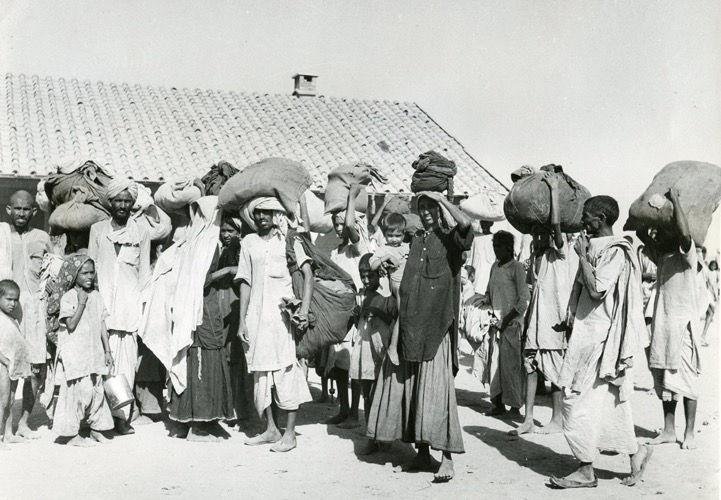
More than 15 million people were displaced during the upheaval surrounding Partition, according to historical material preserved by the Citizens Archive of Pakistan. Muslims travelled towards the newly created Pakistan while large numbers of Hindus and Sikhs left areas that became part of Pakistan.
The movement created an immediate housing crisis.
Thousands of arriving families reached cities and towns without permanent accommodation. Temporary refugee camps were established, including the major Walton camp in Lahore, as authorities and volunteers struggled to provide shelter and basic facilities to the rapidly arriving population.
At the same time, houses, shops, commercial premises, agricultural land and other assets were being left behind by people migrating in the opposite direction.
These properties subsequently became part of what came to be known as evacuee property, creating one of the most complex property-management and redistribution challenges faced by the new state.
Academic research on Pakistan’s early years records that properties abandoned by departing Hindus and Sikhs were redistributed to incoming refugees. The process involved valuable urban and rural assets and ultimately required extensive administrative, legal and institutional arrangements.
For Pakistan’s cities, the consequences were profound.
Karachi, which became Pakistan’s first federal capital, experienced rapid population growth as refugees and migrants arrived. The Karachi Development Authority’s historical account identifies migration and refugee settlement as major forces behind the city’s subsequent growth.
Housing demand increased, new settlements expanded and the relationship between population, land and urban infrastructure changed rapidly.
Lahore experienced a similarly dramatic transition.
Refugees arriving from across the new border required immediate shelter and later permanent housing. Existing residential properties, refugee camps and subsequently allocated properties all became part of a much larger process through which the post-Partition city was reorganised.
The transformation was not limited to major metropolitan areas.
Across Punjab, Sindh and other parts of the newly created country, the movement of populations changed patterns of ownership and occupation of houses, agricultural holdings, commercial properties and neighbourhoods.
For real estate history, 14 August 1947 therefore represents more than the creation of a new country.
It represents the beginning of a fundamental reorganisation of who lived where, who occupied which property, how abandoned assets were administered and how cities accommodated a massive new demand for housing.
The consequences continued for years as Pakistan developed legal and administrative mechanisms for refugee rehabilitation, property claims and the management or transfer of evacuee assets.
Some of the country’s later urban expansion can also be understood against this background. New communities required homes, roads, markets, public facilities and employment centres, increasing pressure on already existing cities and encouraging their geographical expansion.
The story also carries an important lesson for modern urban planning.
Real estate is not shaped only by prices, developers and construction. Political boundaries, population movement and government decisions can alter the ownership and use of land on an enormous scale.
On 14 August 1947, Pakistan acquired political independence.
At the same historical moment, it inherited an immense challenge of housing people, managing abandoned property and rebuilding urban life after one of the largest population movements of the twentieth century.
That makes Partition and Independence one of the most consequential chapters in Pakistan’s real estate and urban development history.
Read More >