
Syed Shayan Real Estate Archive
Syed Shayan Real Estate Archive
From Real Estate History
3 Historical Event found

On 3 July 1919, Helical Bar and Engineering Company Limited was incorporated in London. The company was originally established to manufacture and sell reinforcing steel for the construction industry, supporting building activity at a time when modern urban development was expanding across Britain. For more than six decades, Helical remained connected to the construction supply sector. However, during the 1980s, the company changed direction and moved into commercial property. After selling its steel reinforcement business in 1986, it transformed into a property development and investment company. Today, Helical plc is recognised as one of London’s leading development focused real estate companies. Its history reflects an important shift in the UK property sector, from traditional construction materials and engineering support to modern real estate development, investment and urban regeneration.
Read More >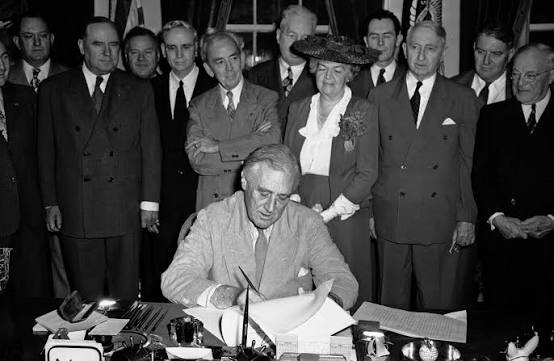
On 22 June 1944, the United States enacted the Servicemen’s Readjustment Act, popularly known as the GI Bill, a landmark piece of legislation that would profoundly transform the country’s housing market, suburban growth and real estate landscape for decades to come. Introduced to support millions of servicemen returning from World War II, the GI Bill offered a wide range of benefits, including educational assistance, unemployment compensation and, most importantly for the property sector, government-backed home mortgage guarantees. These housing provisions dramatically reduced financial barriers to homeownership by lowering down payment requirements and improving access to affordable long-term financing. Before the programme, homeownership remained out of reach for many American families due to limited credit availability and strict lending conditions. The GI Bill changed this reality by enabling millions of veterans to secure mortgages with favourable terms. According to historical records, nearly half of all mortgages issued in the United States during the postwar years were supported through GI Bill guarantees, making it one of the most influential housing finance initiatives in American history. The surge in housing demand triggered an unprecedented wave of residential construction across the country. Developers responded by building large-scale planned communities on the outskirts of major cities. New suburban neighbourhoods emerged rapidly, featuring single-family homes, schools, parks, shopping centres and supporting infrastructure. One of the most notable examples was Levittown in New York, often regarded as a symbol of postwar suburban development and mass-produced housing. The impact of the GI Bill extended far beyond individual homeownership. It accelerated urban expansion, stimulated the construction industry, created millions of jobs and encouraged investment in roads, utilities and public services. The programme helped shape modern suburban America and significantly influenced patterns of land use and community development. Economists and housing historians frequently cite the GI Bill as a key driver of the postwar economic boom. By expanding access to property ownership, it enabled many families to accumulate wealth through real estate appreciation, helping to strengthen the American middle class. The legislation also demonstrated how government-supported housing finance could serve as a powerful tool for economic growth and social mobility. More than eight decades later, the GI Bill remains a landmark example of how housing policy can influence national development. Its legacy continues to be studied by policymakers, urban planners and real estate professionals around the world as a model of how targeted housing finance programmes can reshape cities, expand homeownership and stimulate long-term economic prosperity.
Read More >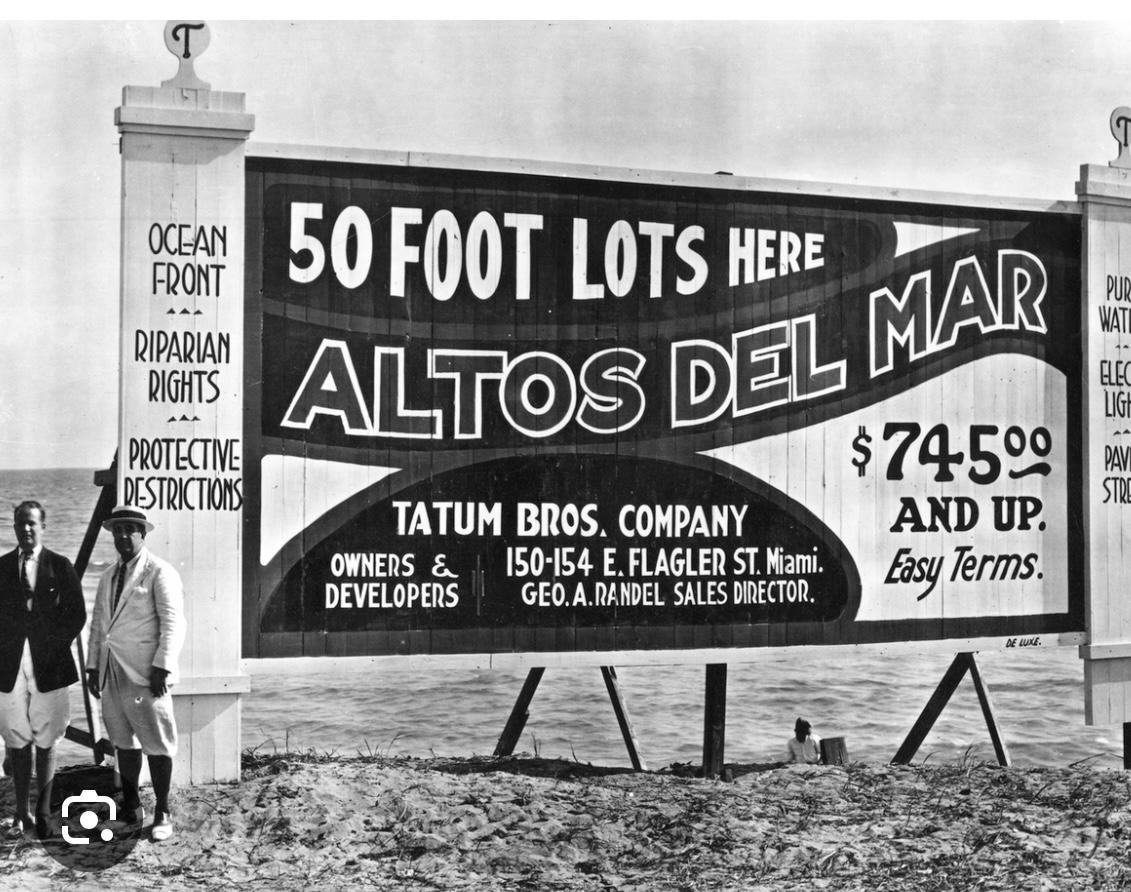
Exactly one century ago, on 23 December 1925, the most famous real estate phenomenon in American history stood at its absolute peak. Across Florida, particularly in Miami and Palm Beach, the purchase of land had transformed into a national obsession. The promise was simple and intoxicating: fortunes could be made overnight. At the height of the boom, even the smallest plots in virtually any district of these cities could double in value within hours. Buyers routinely paid advances without inspecting the land, and in many cases plots were resold for profit even before formal registration was completed. Real estate agents, investors, and ordinary citizens alike were swept into the frenzy, united by a shared conviction that prices would never fall. Contemporary newspaper reports from December 1925, most notably the 23 December edition of The Miami Herald, describe scenes bordering on the extraordinary. Despite the Christmas holidays, thousands queued to purchase land. Railway stations, ports, and land offices were overwhelmed, while civic systems struggled to cope with the sheer volume of speculative activity. Economic historians have since identified this episode as the first great real estate bubble of the modern age. Land values were no longer determined by housing needs or economic fundamentals, but by speculation, rumour, and the pursuit of rapid profit. The boom, however, proved unsustainable. In 1926, a devastating hurricane struck Florida, destroying vast areas and shattering investor confidence almost overnight. Economic strains quickly followed, land prices collapsed with remarkable speed, and the Florida Land Boom, once celebrated worldwide as a symbol of opportunity and prosperity, became a lasting cautionary tale in real estate history. When examined plainly, the underlying story is unmistakably clear. Following the First World War, the United States experienced a surge in wealth. Automobiles became commonplace, railways and advertising compressed distances, and Florida was marketed as a dreamland where sunshine, oceanfront living, and rapidly expanding cities promised universal prosperity. In Miami and Palm Beach in particular, land was no longer acquired for settlement but for immediate resale. Plots were purchased without inspection, without maps, and often without any understanding of location, driven solely by hearsay and expectations of rising prices. A plot acquired in the morning could pass through several owners by evening. Land ceased to function as an asset rooted in utility and instead became a certificate of anticipated wealth, sustained by the collective belief that prices could only rise. The fundamental weakness of the system lay in the absence of genuine end users. Most buyers had no intention of building homes or establishing communities. They were merely waiting for the next purchaser. Once the flow of new buyers slowed, the structure began to falter. By late 1925, rail networks were paralysed, not by building materials, but by the transport of land documents. Banks began to restrict lending, buyers disappeared, and for the first time prices stagnated. These were the early signs of collapse.[img:Images/2nd-image-23-dec1.jpeg | desc:This board is a striking example of the deceptive advertising that characterised the Florida Land Boom. Swamp land and waterlogged areas were promoted as “reclaimed land” and boldly described as “the richest soil in the world.” The purpose of such language was not to reflect the land’s actual condition, but to convince buyers that an immediate purchase would yield rapid profits. In reality, most of these plots were neither properly drained nor suitable for housing or cultivation. Yet slogans such as “buy now at ground floor prices” were used to intensify speculation. This form of misleading promotion played a central role in inflating the Florida Land Boom into a speculative bubble, which ultimately left thousands of investors facing heavy financial losses.] Two decisive developments in 1926 rendered the decline irreversible. First, a powerful hurricane struck Miami, destroying thousands of structures, crippling ports, and exposing the reality that the city had been sold far faster than it had been built, secured, or prepared. Second, confidence among banks and developers evaporated. As payments ceased and instalments defaulted, the very documents once regarded as wealth became liabilities. Countless individuals who had purchased land through borrowed funds lost everything. The outcome was severe. In many areas, land values fell by fifty to seventy percent. Thousands of projects were abandoned, banks failed, and Florida’s economy was set back for years. Crucially, all of this occurred three years before the Great Depression of 1929. For this reason, scholars consistently identify the Florida Land Boom as the first modern speculative real estate bubble, containing all the defining elements later repeated across the world: purchases driven by rumour, the absence of real demand, faith in effortless profit, and the sudden collapse of systemic confidence. The enduring lesson of the Florida Land Boom is unmistakable. Land was stripped of its function as shelter and long-term asset and transformed into a vehicle for rapid speculation. When buyers place their faith solely in the next buyer and abandon underlying use, prices may rise, but they cannot endure. This principle lies at the heart of why the episode is still taught in universities across the United States and beyond, within disciplines such as real estate studies, economics, urban planning, and finance. Students are shown how speculation, market psychology, and the abandonment of economic fundamentals combine to inflate bubbles, and how those same forces ultimately precipitate collapse. Estimates of the financial losses caused by the Florida Land Boom have varied across historical accounts, and no single official figure exists. Nevertheless, economic historians have established a broadly accepted consensus range. Historical records indicate that during the early 1920s, speculative land transactions in Florida reached an estimated total value of six to seven billion US dollars in 1920s terms. When the bubble collapsed between 1925 and 1926, direct and indirect losses are estimated at approximately two billion US dollars in contemporary values. This figure appears consistently in American economic history and is regarded as a confirmed historical estimate. Adjusted for inflation, these losses equate to approximately thirty to thirty-five billion US dollars in present-day terms. It is important to note that the damage extended far beyond declining land prices. It encompassed widespread bank failures, the cancellation of construction projects, loan defaults, and the prolonged paralysis of Florida’s state economy.
Read More >