Makar Sankranti: A Lost Festival of Rural Life in the Subcontinent
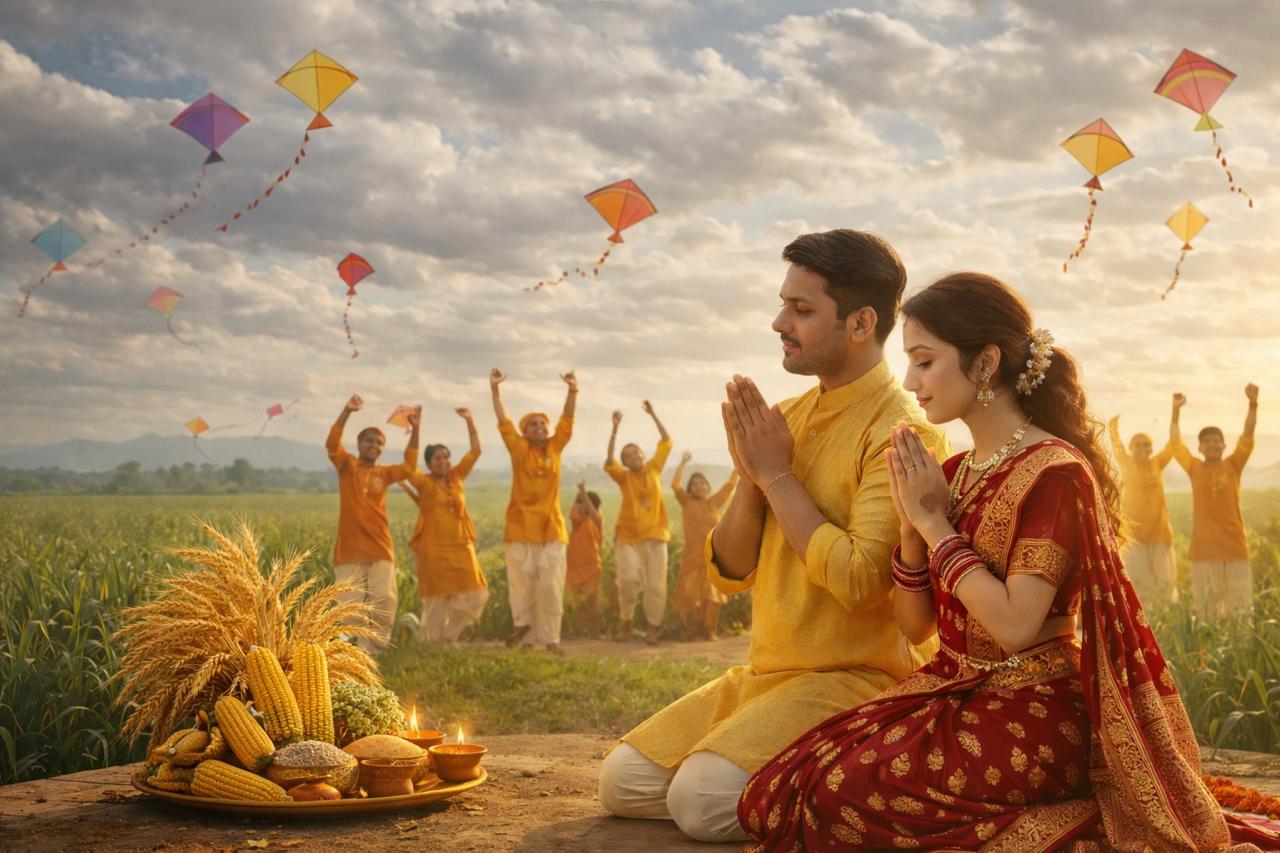
Makar Sankranti was a seasonal festival deeply rooted in the agrarian life of the subcontinent, traditionally observed around 14 January and celebrated with the significance of a day of Eid. In its contemporary form, however, it has largely been reduced to kite flying alone and is now commonly known as Basant.
In the history of the Indian subcontinent, certain dates hold meanings far beyond their place on the calendar. They reflect enduring relationships between human life, land, and economic systems. Makar Sankranti was one such occasion.
For rural society, this day marked a major celebration. It belonged to an era when land was the principal source of production and livelihood. The income of an ordinary household depended almost entirely on one or two harvests each year, making the completion of a crop cycle synonymous with the arrival of prosperity.
Makar Sankranti generally coincided with the completion of the Kharif harvest, including crops such as maize, sugarcane, cotton, and rice, while preparations for the Rabi season crops such as wheat, gram, and mustard would begin. It represented a moment of economic closure and renewal within the agricultural calendar.
At this stage, farmers received the reward for months of labour. Income was realised, food supplies were abundant, and capital accumulated in the form of cash or grain. This period enabled planning for the next agricultural cycle, including land agreements, repayment of debts, and the buying and selling of livestock. As a result, the day fostered genuine happiness, social cohesion, and psychological reassurance within rural communities. From an economic perspective, it effectively functioned as the farmer’s financial year closing.
The importance of 14 January is also well established from historical and astronomical perspectives. On this date, the sun enters the zodiac sign of Capricorn, and daylight hours begin to increase. The retreat of early winter signalled favourable conditions for crop growth. Known as Lohri in Punjab, Tirmoori in Sindh, and by other regional names elsewhere, this celebration served as an expression of gratitude for the fertility of the land and the income it sustained.
As the subcontinent gradually transitioned from an agrarian society to an urban and industrial one, the practical relevance of this festival steadily declined. Income sources shifted from agriculture to salaried employment, industry, and commerce. Along with this transformation, the festival itself changed form. What was once a rural celebration tied to land and seasons became an urban event, now widely referred to as Basant.
In cities, the day is marked by organised kite flying competitions. Corporate groups and multinational companies exchange invitations with clients and associates. People spend long hours flying kites, chanting celebratory slogans, and enjoying seasonal food while dressed in new and bright clothing. Outwardly, the festival continues, but its context has changed entirely.
Basant was originally a seasonal celebration grounded in the natural environment. It emerged under open skies, amid expansive fields and trees, where space, wind, and rhythm shaped daily life. In such surroundings, kite flying felt organic and harmonious, as though colour, air, and earth were participating together in a shared celebration.
When the same festival entered the city, it encountered a fundamentally different environment. Polluted air, dense networks of metallic power lines, endless rooftops, and crowded urban spaces transformed the nature of the activity. What had once been a rural game became a cause of fatal accidents. Gradually, celebration gave way to mourning.
In this sense, Basant did lose its spirit in the urban setting. The primary reason was the absence of cultural compatibility. The festival failed to adapt to its new environment. In rural areas, safety was embedded within the natural setting itself. In cities, that protective balance collapsed, and play turned into risk.
This reflects a broader principle. Every tradition, custom, and practice is shaped by its original environment. When a cultural activity is removed from its natural context, it may continue mechanically, but its essence is lost. The case of Basant illustrates this clearly.
Meaning arises not only from an activity itself but from the environment in which it exists. When something is separated from its natural setting and placed elsewhere, it ceases to be a source of beauty and becomes a potential hazard.
If urban residents were to celebrate Basant in rural areas, in open fields free from metallic wires and overcrowding, it is possible that the original joy, colour, and vitality of the festival could reappear. The problem does not lie in the festival itself, but in the place where it is practiced.
Read More >