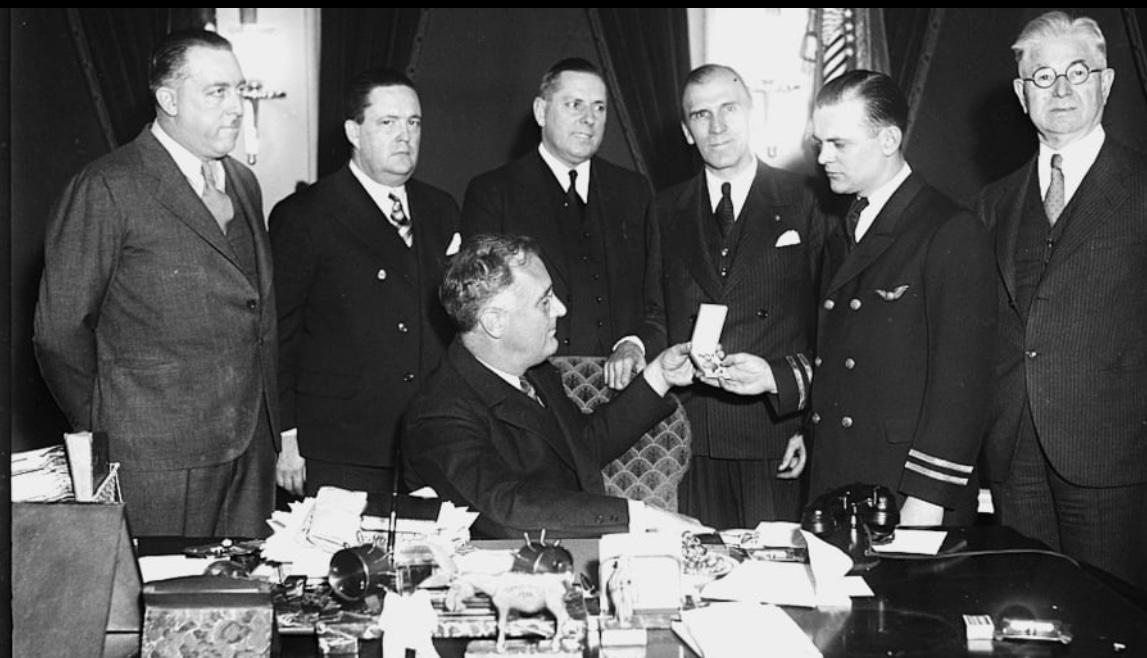
The President of the United States signed the United States Housing Act.
In the global history of real estate and housing, 20 January is remembered as a pivotal date, as it marks the formal signing of the United States Housing Act. Enacted with the signature of President Franklin D Roosevelt, this law, also known as the Wagner Steagall Act, was a cornerstone of the New Deal reforms. It formally linked the relationship between the state and housing to binding legal frameworks. As a result, the state became a direct stakeholder in real estate, and housing was recognised not only as private property but also as a matter of civic responsibility.
Through this law, several principles were recognised for the first time.
First, housing was no longer regarded merely as private property but as a social necessity. The law acknowledged that if the state withdrew from this responsibility, the consequences would not be confined to individuals but would affect the entire economic and urban structure.
Second, a structured and institutionalised concept of public housing and subsidies for low income citizens was introduced. Unsafe and dilapidated housing was deemed incompatible with human dignity, and the state accepted responsibility for addressing this gap.
Third, urban land, apartments, and rental housing were recognised for the first time as social infrastructure. Real estate was taken out of the narrow sphere of pure investment and explicitly linked to public safety and civic responsibility.
Under this framework, land and housing were viewed not as market commodities but as public necessities and social obligations. This shift laid the foundation for modern affordable housing policies, and in the decades that followed, housing models in Europe, Canada, and many developing countries drew guidance from the same philosophy.
Before 1937, housing related legislation in the United States was not based on the concept of direct state provided housing or public housing. Instead, it focused largely on housing finance, loans, and the management of mortgage systems.
In practical terms, this meant that before this law, the role of government was not to build homes or directly provide housing. Its involvement was largely limited to stabilising banks, managing loans, and safeguarding the mortgage system, including ensuring that people could access credit and that financial institutions did not collapse. During the Great Depression, the government intervened to prevent home foreclosures, support the banking system, and secure construction loans. Nevertheless, the prevailing belief remained that housing was a private matter, and that buying, selling, or maintaining a home was the responsibility of the market and the individual.
The decisive shift came on 20 January 1937. Through the United States Housing Act, the government stated clearly for the first time that providing safe housing for low income citizens was not merely the responsibility of individuals or the market, but a direct obligation of the state.
Similarly, if a residential building is unsafe, poses a threat to human life, or undermines urban safety, the state can no longer ignore it on the grounds of private ownership alone. While the law did not mandate direct intervention in every private building, it provided clear legal justification for slum clearance and state intervention by defining dangerous and substandard housing as a public concern. After 1937, unsafe buildings were no longer treated as purely private issues but were brought firmly within the realm of civic and state responsibility.
Read More >