Logo

Syed Shayan Real Estate Archive

Logo

From Real Estate History

Home

Select Date

Religious Real Estate and Land Ownership

1 Historical Event found

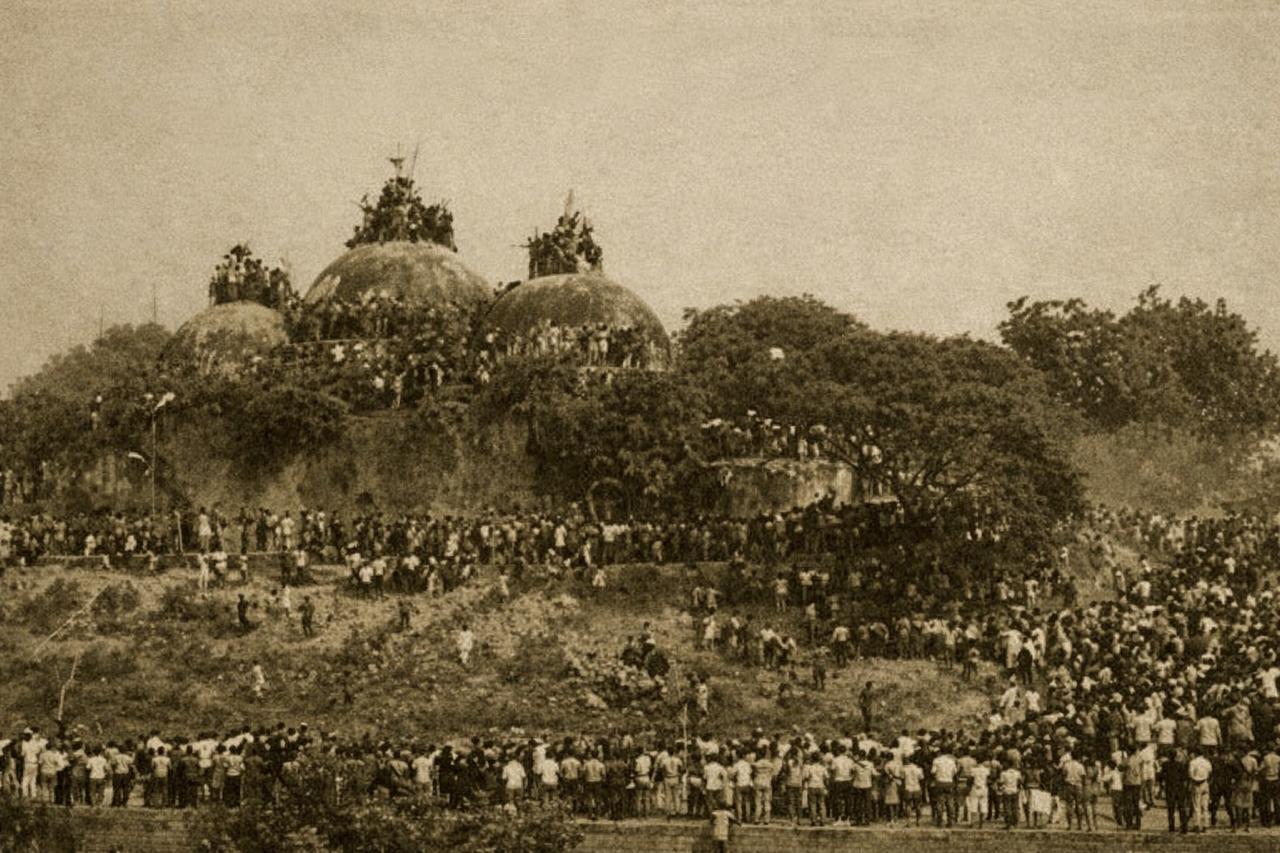
Demolition of the Historic Babri Masjid in Ayodhya

On 6 December 1992, the historic Babri Masjid in the Indian city of Ayodhya was demolished by a large crowd. This event constituted a profound religious trauma for Muslims of the subcontinent and simultaneously became the symbol of a prolonged and complex legal dispute over land and property. Its consequences continue to shape legal reasoning and social consciousness in South Asia to this day. The legal dispute concerning the land and ownership of the Babri Masjid site in Ayodhya had, in fact, commenced several decades before this incident. The first formal legal suit relating to the land was filed in 1950 in the civil court of Faizabad, as Ayodhya at that time fell within Faizabad district. The Hindu parties argued that prior to the construction of the mosque, a Hindu temple existed at the site and that the mosque had been built upon the remains of this alleged structure. The case passed through multiple judicial stages over several decades, during which the events of 6 December 1992 occurred. The matter later reached the Allahabad High Court, which on 30 September 2010 delivered a judgment dividing the disputed 2.77 acres of land into three equal parts. One portion was allotted to Ram Lalla Virajman, the second to the Nirmohi Akhara, and the third to the Sunni Waqf Board. This decision was challenged by all major parties before the Supreme Court of India, where the case proceeded to final adjudication. On 9 November 2019, the Supreme Court of India delivered its final verdict in the dispute, which had spanned nearly sixty nine years. The Court set aside the land division ordered by the Allahabad High Court and awarded legal title of the disputed land to a trust representing the Hindu parties. As a measure of restitution, the state was directed to allot five acres of alternative land within Ayodhya for the construction of a mosque. In the same judgment, the Court unequivocally held that the demolition of the Babri Masjid on 6 December 1992 was an unlawful act and a clear violation of constitutional and legal principles. This case is regarded as one of the longest running and most sensitive land and property disputes in South Asian history. At its core, the litigation revolved around the determination of lawful title to disputed land and the question of whether historical religious use could, in itself, constitute a proprietary right. From the perspective of real estate and land law, this case has been preserved as a defining example of the principle that religious sites are, in legal terms, land and property, and that disputes relating to them are to be resolved through title, evidence, and law rather than through force or collective sentiment. The Babri Masjid Ayodhya case is now firmly recorded as a permanent and sensitive archival reference in the history of land rights in South Asia.

Read More >

Select Date

© syedshayan.com