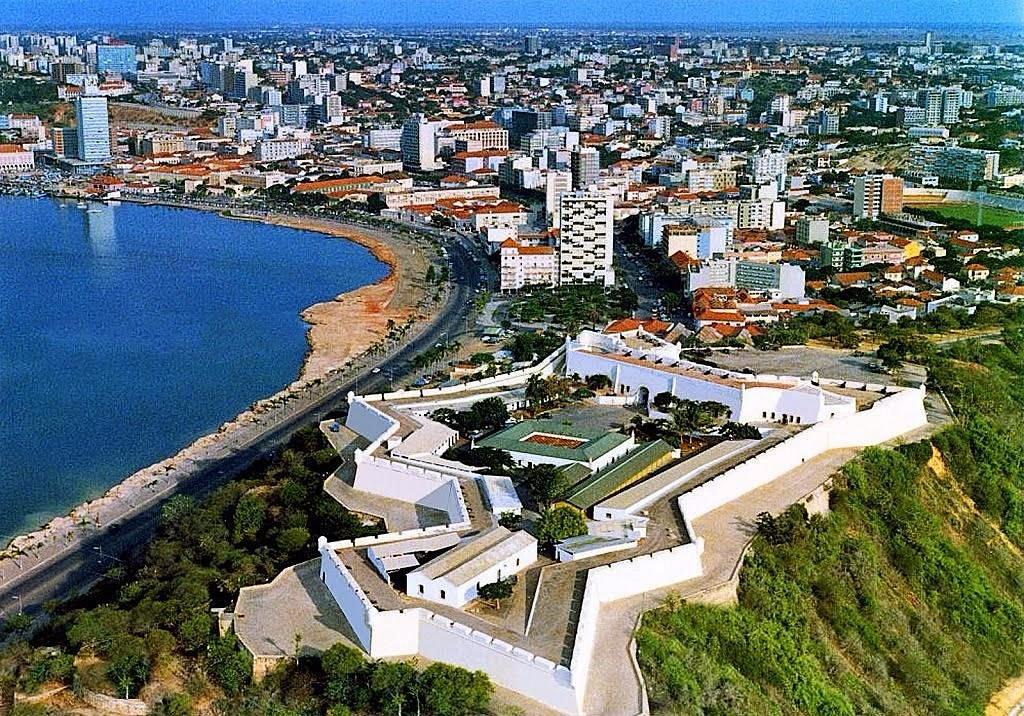
Foundation of Luanda, the City and Capital of Angola
25 January 1575 marks the formal foundation of Luanda on the western coast of Africa by the Portuguese explorer and colonial administrator Paulo Dias de Novais. The settlement was originally named São Paulo da Assunção de Loanda, a designation that was later shortened to Luanda.
At the time of its establishment in 1575, Luanda was a small colonial port settlement inhabited by an estimated three hundred to five hundred people. Its population consisted primarily of Portuguese soldiers, administrative officials, religious missionaries, and local auxiliaries. The settlement comprised a military fort, limited residential structures, warehouses, and basic port facilities. Its construction was undertaken under the direct patronage of the Portuguese state, supported by military expenditure and driven by long term colonial trade interests. In essence, Luanda was conceived as a strategic state investment intended to secure control over Atlantic trade routes. Over time, this modest outpost expanded into a major urban centre.
The Portuguese administration provided the settlement with military protection and a structured system of governance. Gradually, Luanda developed into a principal gateway for trade between Europe and Africa. Warehouses, markets, and residential districts expanded around the harbour, land values increased steadily, and population growth continued. In later centuries, the rise of oil and energy based economic activity further reinforced the city’s importance. As a result, Luanda emerged as one of Africa’s major urban centres and eventually became the capital of Angola.
When Angola gained independence from Portugal in 1975, Luanda was already a fully developed administrative, military, port, and economic hub. Throughout the colonial period, government offices, port infrastructure, road networks, residential zones, commercial activity, and international connections had been concentrated in the city. Consequently, following independence, the establishment of a new capital was neither practically feasible nor economically viable. From the outset, Luanda therefore retained its status as the capital of the newly independent state.
Luanda can be understood through three interconnected dimensions. At the first level, it functions as the political capital of Angola, housing the presidency, cabinet, military command, foreign embassies, and national institutions. At the second level, it serves as the centre of Angola’s oil based economy, with the majority of national oil revenues, foreign corporations, logistics operations, and financial activities linked to the city. This has shaped Luanda into a rapidly expanding yet high cost metropolitan centre. At the third and most enduring level, Luanda remains a historic port city, continuously connected to global trade networks from the sixteenth century to the present.
Read More >