Proclamation of Pakistan’s First Major Land Reforms
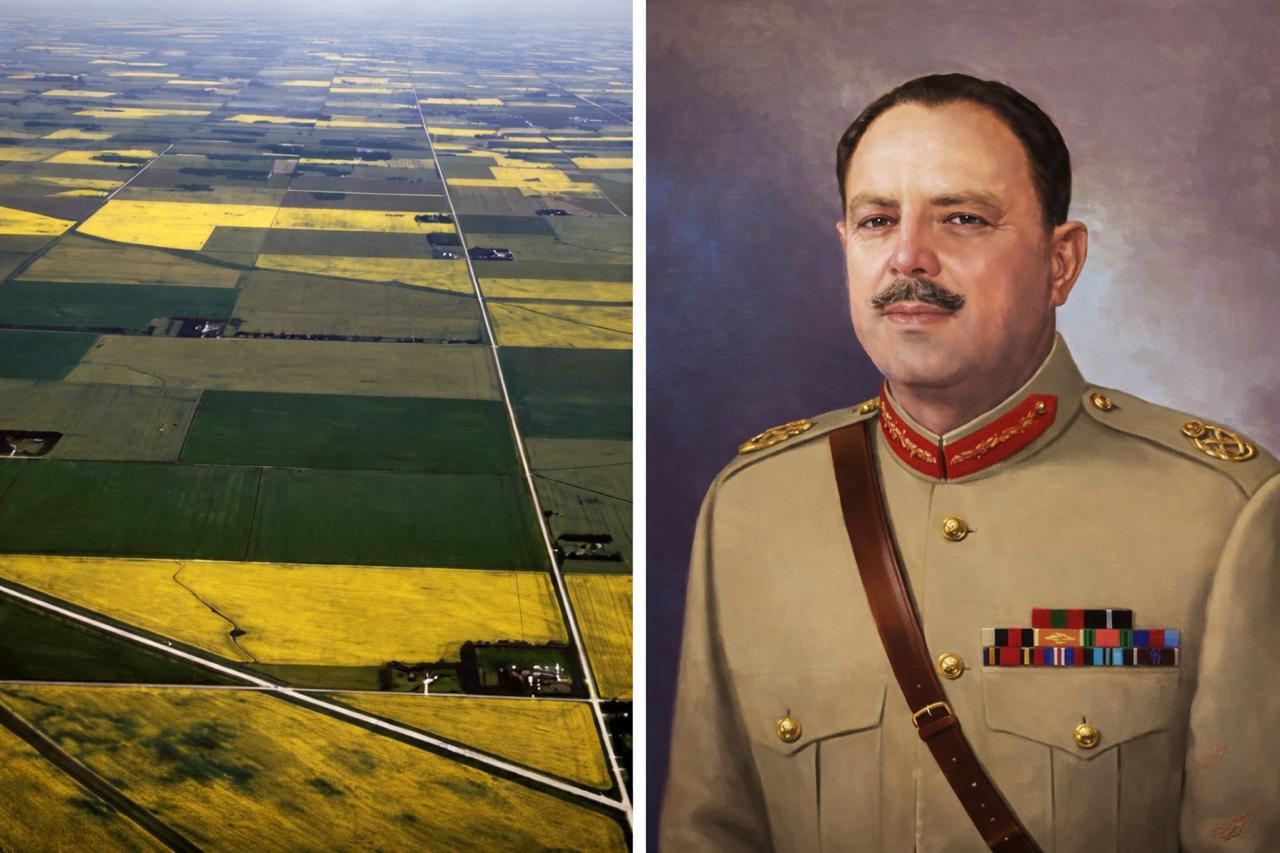
In the agrarian history of Pakistan, 8 January 1959 stands as a moment of enduring significance. On this date, the military government of Muhammad Ayub Khan announced the first comprehensive land reforms in the country’s history. These reforms were designed to curtail the entrenched feudal order and to relocate land ownership from the realm of social power into the authority of law. Their stated purpose was to align agrarian relations with a regulated system of state governance and legal accountability.
The reforms introduced statutory limits on the amount of agricultural land that large landowners could retain, while land held in excess of these limits was designated as surplus and brought under state control for the purpose of redistribution. As a result, millions of acres of land entered public ownership for the first time, establishing a new legal foundation not only for Pakistan’s agrarian system but also for the future regulation of urban real estate.
A clearly defined land ceiling was established under these measures. Ownership of irrigated agricultural land was capped at 500 acres, while the ceiling for unirrigated land was fixed at 1,000 acres per individual or family. All land exceeding these limits was declared surplus and legally transferred to the state. Compensation to landowners was provided through government bonds rather than cash payments. Through this process, large tracts of land passed into direct state ownership, fundamentally altering Pakistan’s agrarian structure.
According to cautious contemporary estimates, the implementation of the 1959 land reforms resulted in the federal government acquiring approximately six million acres of surplus agricultural land across both West Pakistan and East Pakistan under the land ceiling laws. This land was reclaimed from large landholders and formally vested in the state.
Historical records further indicate that only two to two and a half million acres of this total were ultimately distributed among tenants and small farmers. The remainder remained under state control for prolonged periods, owing to legal complexities, exemption clauses, judicial disputes, and administrative delays.
At the political and social level, the reforms were soon perceived in East Pakistan as largely symbolic. Given that the overwhelming majority of the agrarian population there consisted of tenants and landless peasants, expectations of meaningful redistribution were considerable. However, implementation proved limited. Official records, including the Land Reforms Commission Reports 1959–1962, confirm that although surplus land was identified in East Pakistan, a substantial portion could not be redistributed due to legal obstacles, judicial challenges, and statutory exemptions.
This interpretation has been reinforced by scholars such as Ayesha Jalal and Rounaq Jahan, who argue that the reforms failed to dismantle the underlying structures of agrarian power in East Pakistan. As a consequence, a perception took root that agrarian policy was formulated centrally, with insufficient regard for local social and economic realities. In contrast, in West Pakistan, where a powerful landed elite coexisted with an emerging urban middle class, the reforms were widely regarded as incomplete and limited, yet nonetheless acknowledged as the first formal legal intervention by the state to restrain the feudal system. Analyses by Hamza Alavi and S. Akbar Zaidi suggest that, at a minimum, the reforms in West Pakistan succeeded in bringing land within a legal framework and strengthening the authority of the state.
In Pakistan’s historical record, the legislation of 1959 has therefore remained a defining reference point. Shaped by differences in social structure and agrarian composition, it came to symbolise a deepening sense of deprivation in East Pakistan, while in West Pakistan it was received with cautious, though qualified, acceptance.
Read More >