
Syed Shayan Real Estate Archive
Syed Shayan Real Estate Archive
From Real Estate History
2 Historical Event found
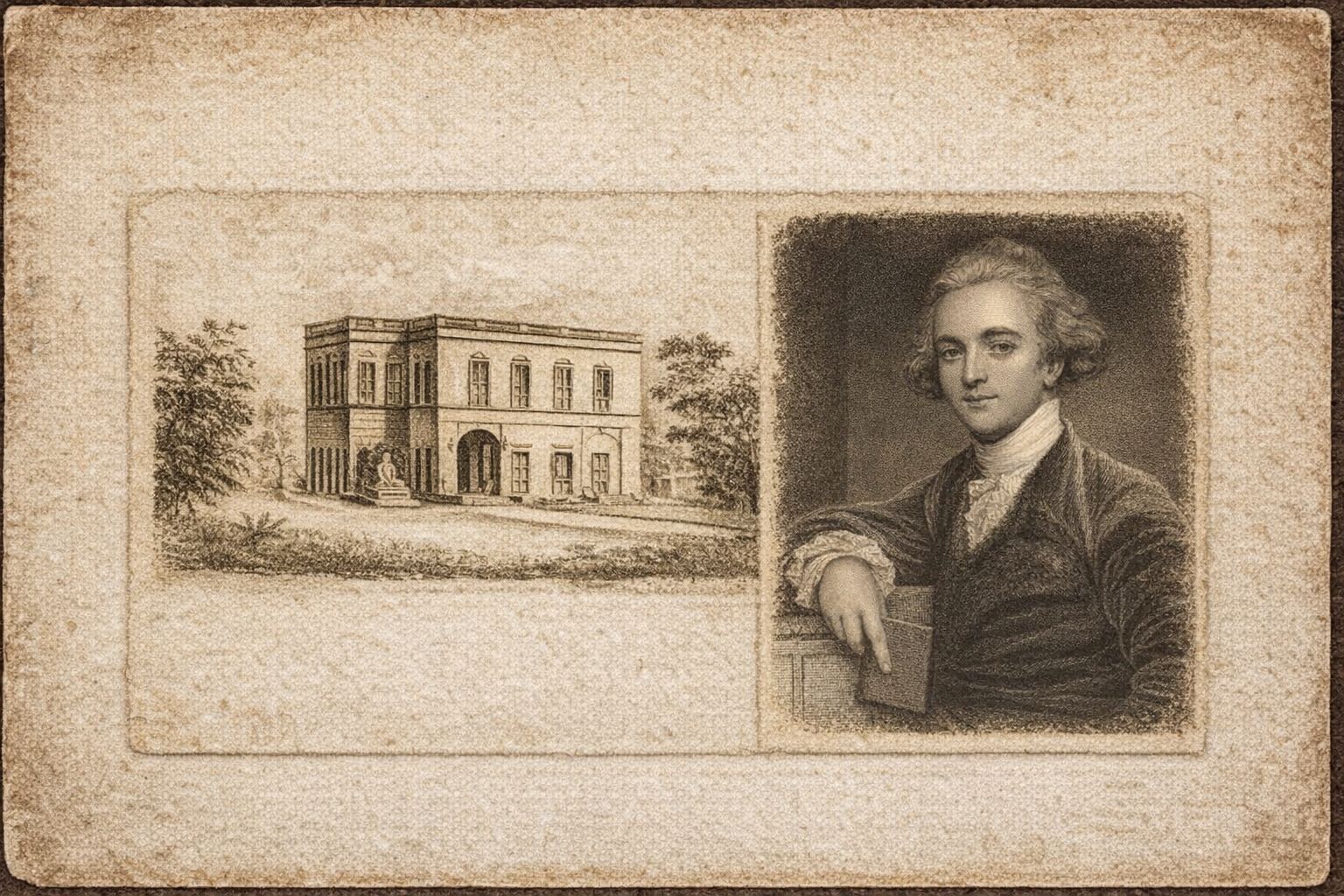
Exactly 242 years ago, on 15 January 1784, the Asiatic Society of Bengal was founded in Calcutta by Sir William Jones. On the same day, the Society convened its first formal meeting. The institution emerged as the earliest organised centre in the subcontinent dedicated to the systematic study of ancient manuscripts, archaeology, and geographical knowledge relating to land ownership and territorial organisation. In the subcontinent, the concept of land ownership was never confined solely to oral tradition. From ancient and medieval periods onward, land related information was preserved through a variety of written and material sources. During the eras of Mohenjo-daro, Harappa, and early Taxila, land ownership and registration did not exist in the modern sense of individual title or legal transfer. Nevertheless, land was not without structure or regulation. In the urban centres of Mohenjo-daro and Harappa, land administration functioned under state control. Entire cities were organised through deliberate planning, grid based layouts, standardised measurements, and clearly defined boundaries. Houses, streets, and urban blocks were constructed according to predetermined plans, demonstrating that land distribution and use were governed by administrative systems rather than customary practice. In this period, land was regarded as the property of the state or city, while individuals held rights of use rather than absolute ownership. In later periods, particularly during the era of Taxila, the state began granting land to religious and educational institutions. These grants were formally recorded on stone inscriptions or copper plates. Such written records of land grants and boundary demarcation formed the earliest foundations of structured land registration, ownership documentation, and systems of transfer in subsequent eras. In ancient South Asia, whenever a ruler or state authority granted land to an individual, family, religious institution, or administrative body, the decision was accorded legal authority by engraving it on copper plates or stone inscriptions. These records functioned as the equivalent of land registers or title documents of their time, detailing boundaries, ownership rights, and royal seals. Established on 15 January 1784, the Asiatic Society of Bengal collected these ancient documents, land grants, boundary inscriptions, and local maps and organised them on a scientific basis. Scholars associated with the Society studied, decoded, and compiled land grants recorded on copper plates and stone inscriptions, demonstrating that principles of land ownership, boundary definition, and transfer had existed in written form across the subcontinent for centuries. [img:Images/otd-15-jan-2.jpeg | desc:These copper plates and stone inscriptions functioned as the official legal records of ancient societies.They documented land ownership, royal decrees, grants, and judicial decisions, as paper either did not yet exist or was not regarded as durable or reliable.Simply put:They were the registries, land records, and formal government documents of their time.] This structured body of geographical and historical knowledge subsequently provided the intellectual foundation for scientific survey initiatives, most notably the Great Trigonometrical Survey. Through this process, accurate land measurement and systematic mapping became possible, laying the groundwork for modern land record systems. The extensive scholarly material assembled by the Asiatic Society provided the British administration with the basis upon which official institutions for scientific land measurement, boundary demarcation, and systematic cartography were established throughout the subcontinent. These historical records and geographical terminologies later informed major projects such as the Survey of India and the Great Trigonometrical Survey. The modern systems of land registration, land settlement, revenue mapping, and digital land records in use today would not have been possible without these ancient material sources and the scholarly work undertaken by the Asiatic Society. According to historians of land and geography, 15 January 1784 marks the beginning of a systematic process through which the territory of the subcontinent began to be formally documented, a development that may be regarded as the earliest precursor to contemporary digital land record systems.
Read More >
In Britain, the understanding of land and property ownership underwent a decisive and lasting transformation with the legal enforcement of the Land Registration Rules 1925 under Statutory Instrument 1925 No. 1093. According to the records of the House of Lords and official legal archives, the final confirmation of these Rules on 5 December 1925 established, for the first time, that legal ownership of land would be determined by entry in the official state register. This marked a fundamental shift, whereby public registration replaced private deeds and papers as the primary and authoritative proof of title. The Land Registration Rules introduced in December 1925 fundamentally altered long standing practices. Prior to their enforcement, ownership was proved largely through the possession of title deeds and historical documents, the loss or destruction of which often resulted in uncertainty and prolonged disputes. The new framework made it clear that the lawful owner of land would be the individual whose name appeared in the government register. Registration thus became not merely evidential but constitutive of ownership. It was further stipulated that no transfer of property would be legally recognised until it had been duly entered in the official register, a measure that significantly reduced fraud, concealed transactions, and disputes over title. As the Indian subcontinent remained under British rule at the time, the same principles were extended to colonial administration. The contemporary systems of registration and transfer of land in Pakistan, carried out through patwaris and registrars, continue to reflect this foundational concept: that ownership derives its legal force from state records rather than from private documentation alone. These 1925 Rules later formed the institutional and legal foundation of what evolved into the modern system of HM Land Registry, refined through subsequent legislative amendments and administrative reforms. (In the British context, HM Land Registry refers to Her Majesty’s Land Registry, the statutory body responsible for maintaining records of land ownership. In functional terms, it performs a role comparable to that of the provincial Boards of Revenue in Pakistan, including the preservation of land records, registration of title, and confirmation of legal status.) It is important to note that, following this model, wide ranging reforms were introduced across the subcontinent to rationalise and standardise systems of land record management. From the late 1920s onwards, particularly between 1927 and the 1930s, land record practices in the subcontinent were reorganised with reference to the British registration system. Although the Registration Act 1908 was already in force, this period clarified and reinforced the principle that official records constituted the primary proof of ownership. As a result, procedures relating to registration, mutation, and official entry were systematised to reduce disputes and ensure greater certainty of title. These reforms laid the groundwork for the land record systems developed in Punjab, Bengal, Bombay, and Madras, elements of which remain visible today in the land administration frameworks of Pakistan and India.
Read More >