When a Supreme Court Order Brought Land Registrations in Sindh to a Halt
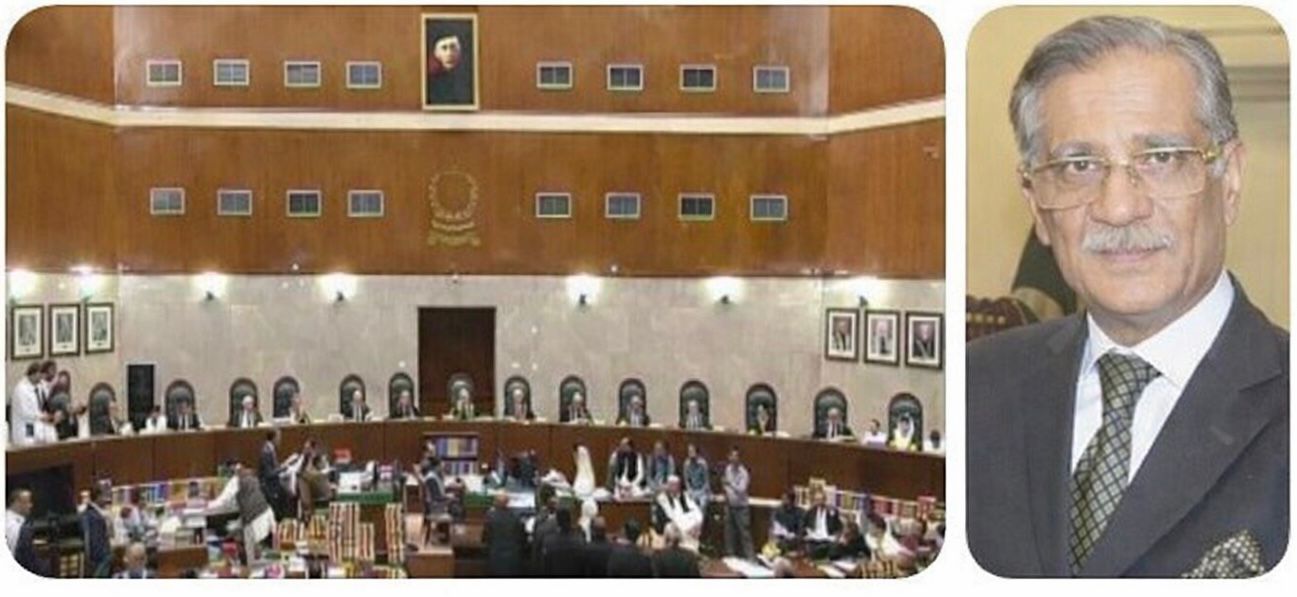
On 11 December 2018, the Supreme Court of Pakistan, under the leadership of then Chief Justice Mian Saqib Nisar, imposed a strict and highly unusual restriction on the transfer, lease, and allotment of land in Sindh. The court directed that until the provincial land revenue record was fully computerised, no allotment, lease, or transfer of government land would be permitted.
The impact of the order was immediate and far reaching. Across Sindh, land transfer activity in revenue offices came almost to a complete standstill. Alongside government land, transactions involving privately owned property were also slowed or suspended, largely due to fear and the absence of clear administrative guidance. In major cities, including Karachi, property buying and selling abruptly stalled. Files remained trapped in revenue offices, investors were forced into prolonged waiting, and uncertainty spread rapidly through the market. This situation persisted not for days or weeks, but for several months, effectively paralysing the real estate system, even though the court’s stated objective was to prevent the misuse of government land rather than to freeze the market altogether.
The stated purpose of the order was to curb illegal occupation of state land, politically motivated allotments, and the long standing lack of transparency within Sindh’s revenue system. In practice, however, these objectives were not achieved. Despite the clarity of the judicial directive, full computerisation of land records did not take place. The provincial government failed to develop a workable implementation framework, and following the retirement of the Chief Justice, the issue gradually slipped out of the government’s priorities. After several months of stagnation, the market partially reverted to its earlier functioning, and the order ultimately came to be remembered not as a reform but as a failed experiment in Pakistan’s real estate history.
As of 11 December 2026, eight years have passed since the order was issued, yet the fundamental question remains unanswered: what was the practical outcome of this directive? The reality is that Sindh’s land record has still not been comprehensively computerised. Some limited and largely symbolic measures were undertaken, but these neither expanded across the province nor evolved into a coherent and legally reliable digital system.
In rural Sindh, the patwari system continues to dominate, relying on manual registers. In urban areas, the record of rights and the registration system remain structurally disconnected. As a result, forgery, double registration, and land disputes persist. Had land records genuinely been computerised, citizens would not still be required to repeatedly visit revenue offices for ownership records, mutations, and transfers, nor would illegal occupation and fraudulent allotments continue to thrive.
The decision also raises a broader institutional question: whether the Chief Justice fully appreciated the ground reality that province wide computerisation of land records is a long, complex, and multi generational process. In a province such as Sindh, where millions of acres of agricultural and urban land are involved, where decades old manual records exist, and where long standing disputes, the goth system, informal settlements, and parallel ownership claims prevail, full digitisation inevitably requires many years rather than a matter of weeks.
From a real estate perspective, the decision suffered from three fundamental weaknesses. First, the court imposed an administrative condition without providing a timeline, allocating resources, or establishing a realistic framework for implementation. Second, while issuing a decision of a policy nature, the court failed to give binding directions to the institutions responsible for execution. Third, when the market froze, no interim legal or administrative mechanism was provided to manage the transition. As a result, neither reform nor systemic improvement followed, and uncertainty deepened.
Legally, the order was limited to government land. Private land transactions did not fall within its scope, and the court did not direct that buying and selling between private individuals should be halted. In practice, however, the outcome was very different. Because the revenue system in Sindh manages both government and private land through the same administrative structure, revenue officials, fearing contempt proceedings, also halted or severely slowed private land transfers. Consequently, the real estate market as a whole effectively came to a standstill
Read More >