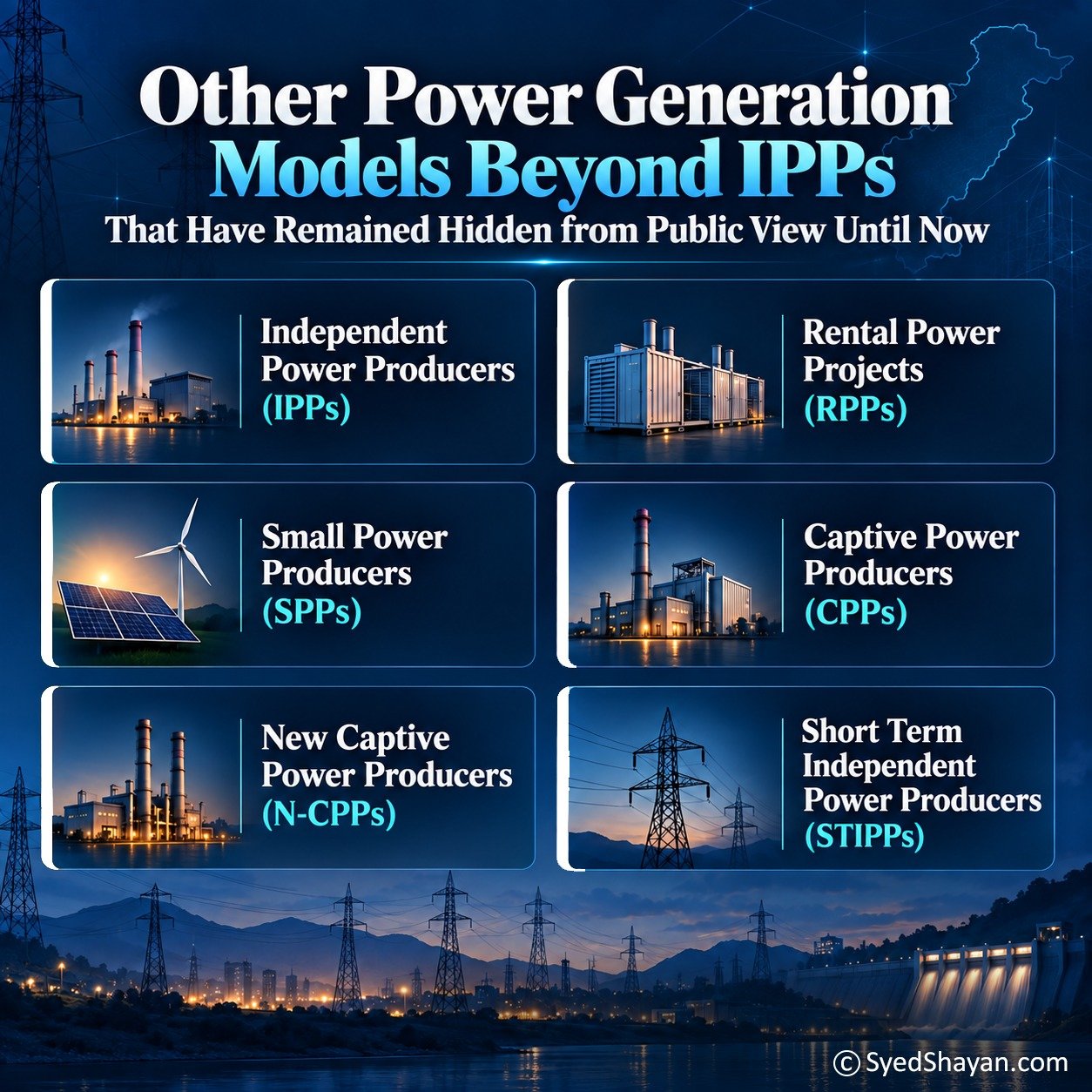
� In addition to IPPs, there were other power models that remained out of public view and for which separate heavy payments were made by the government for electricity generation.🔲 Public Investigative Series | Episode 55Topic: How Will Pakistan’s Electricity System Be Fixed?Title: How Many of These “IPPs” That Generate Electricity in Pakistan Actually Exist?🔺 The investigation revealed that, in addition to IPPs, electricity in Pakistan has also been generated and sold under at least 5 separate models, but in public discussion, almost all of them have generally been understood as IPPs.Written and Researched by: Syed ShayanAfter my investigations so far, I have reached the conclusion that a complicated issue like Pakistan’s electricity system may perhaps not be something that any single individual can fully handle. I began my investigation only with IPPs, meaning Independent Power Producers, but as I continued further on this journey, one layer after another kept unfolding.It has now become clear that there were not only IPPs here, but also RPPs, meaning Rental Power Projects, SPPs, meaning Small Power Producers, CPPs, meaning Captive Power Producers, and then separate electricity-generation models such as New Captive Power Producers and Short Term IPPs also continued to emerge, to which our governments kept paying large amounts of money in the name of purchasing electricity.At one point, I felt as though I should simply raise my hands and give up, wondering how this system could even be understood.Let us first understand that the electricity-generating entities in Pakistan were not limited only to IPPs or government-owned power plants. In our investigation, at least 6 separate models have emerged that, during different periods, generated electricity and supplied it to the national system. The most well-known among them are IPPs, followed by separate arrangements such as RPPs, SPPs, CPPs, N CPPs, and finally STIPPs. The details are as follows.1 Private Electricity-Generating Entities(Independent Power Producers
▫
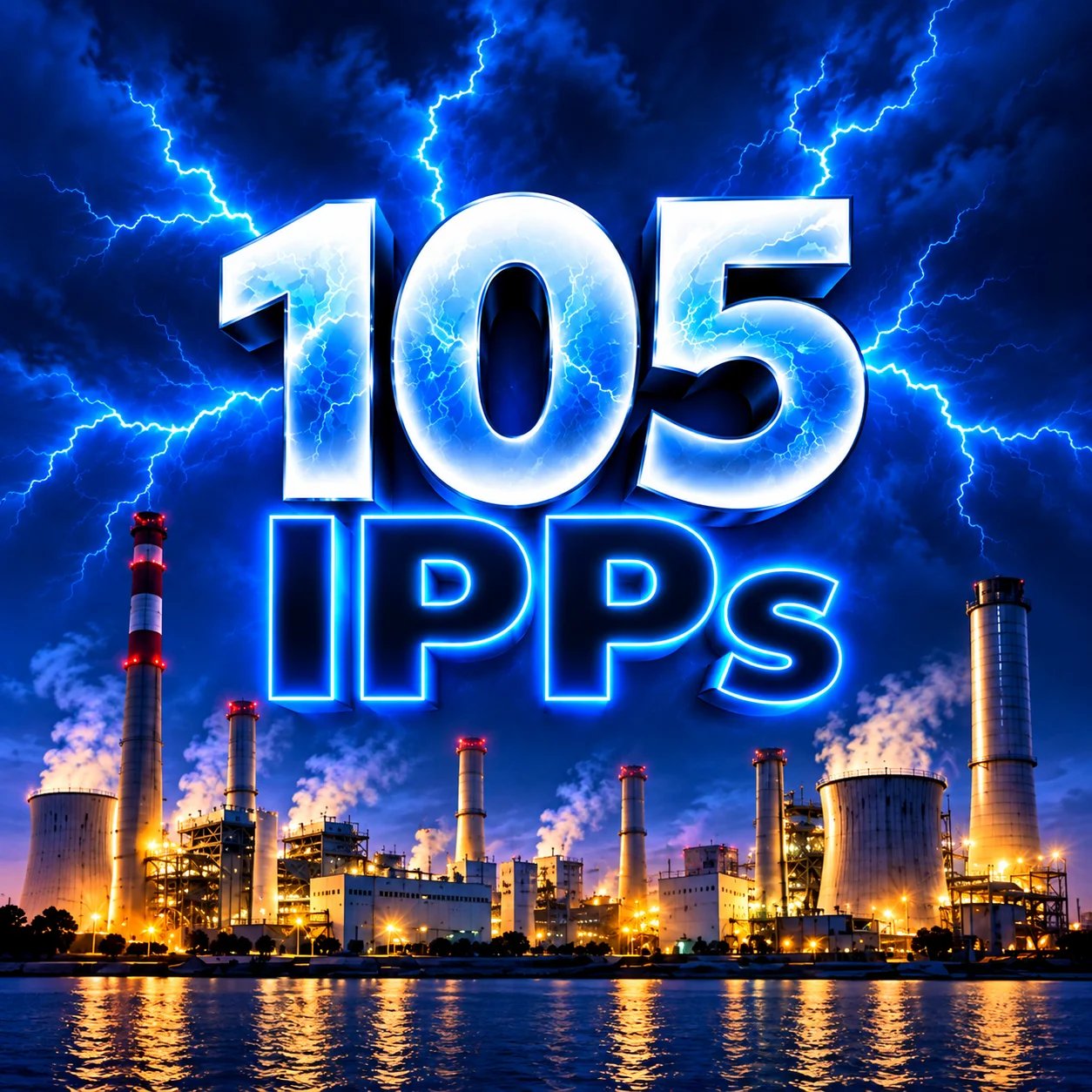
IPPs)Companies that sell electricity to the national grid under long-term agreements. This model expanded rapidly in Pakistan after 1994. Official records from 2026 mention 105 power agreements/producers. This system continues even today.2 Rental Power Projects(Rental Power Projects
▫
RPPs)Plants and power ships that supplied electricity on a temporary or rental basis. A total of 19 projects emerged, with a proposed capacity of approximately 2,734 MW. The Supreme Court cancelled their agreements on 30 March 2012, and this model practically came to an end.3 Small Electricity-Generating Entities(Small Power Producers
▫
SPPs)Mostly relatively small power plants of industrial entities that met their own and nearby industries’ requirements or sold electricity. In 2004, NEPRA stated that there were approximately 360 or more self-generation facilities in the country, with a combined capacity of around 2,000 MW. At that time, generation licences had already been issued to 25 SPPs. This category has not completely ended and still exists in NEPRA’s records.4 Captive Industrial Power Plants(Captive Power Producers
▫
CPPs)Power plants owned by factories and industrial groups, whose primary purpose was to supply electricity to their own industries, although some also sold surplus electricity. This remained a large and continuously changing category, so there is no single fixed historical number for it; NEPRA still shows separate licences for CPPs today.5 New Captive Power Producers(New Captive Power Producers
▫
N CPPs)A separate captive power policy model under which electricity from the new generation capacity of captive plants could be sold to DISCOs. NEPRA’s current list includes at least 10 prominent N CPP plants, including Dadu Energy, Omni Power, Naudero Energy, Lucky Cement, and others. This category has not completely ended, and modifications in some licences continued until 2025.6 Short Term Independent Power Producers(Short Term Independent Power Producers
▫
STIPPs)Existing or available generation capacity was used to supply electricity to the national grid for a short period, generally 3 years. This was not a permanent IPP model but a temporary arrangement intended to meet an immediate shortage.The question is that when the country’s maximum requirement itself is only at this level, why was such a large amount of additional generation capacity established, and why did payments under various agreements, including capacity charges, continue even for electricity that was not being used?And the matter does not end here.On one hand, we are paying large IPPs capacity charges and other payments, while on the other hand, electricity was also purchased during different periods from SPPs, CPPs, RPPs, and other power models. In other words, in a country that continuously complained of load-shedding, expensive electricity, and circular debt, one separate route after another kept being opened for generating and purchasing electricity.Today, the matter of Sitara Energy and Sitara Chemical came to light. And the FIA alleged that, on one hand, electricity from the same group was being sold to FESCO at a relatively higher rate, while on the other hand, the related industrial unit was obtaining comparatively cheaper electricity from FESCO, and that this arrangement caused a loss of approximately Rs. 11.96 billion to the national exchequer.The arrest of Sitara Energy Chairman Mian Idrees has opened another door for me into the complexity of this system. And here, a fundamental question has arisen in my mind:This country is generating electricity, purchasing electricity, paying the price even for not purchasing electricity, buying from small producers as well, buying from captive plants as well, and has also brought in rental plants, but despite all of this, why does the consumer still receive expensive electricity and load-shedding?Sometimes, the entire system appears to me like a pit into which billions and trillions of rupees kept being poured under different names, different agreements, and different policies, but in the end, the consumer still received an expensive bill, circular debt, and electricity in installments.At this point, my investigation into IPPs turned into a much larger investigation. The question is no longer only how much the IPPs earned. The question is: over the past three decades, how many different systems did Pakistan create in the name of electricity, who created them, which people and companies benefited, how much did the national exchequer and the consumer pay, and despite all of this, why was the electricity problem still not solved?(To be continued. The rest in the next episode.)