
By: Syed Shayan

English Version Stats: 3 hr 43 min total reading time by 31 readers
[Urdu version metrics tracked separately]
In the Beginning Model Town Lahore Was Planned to Be Established across the Ravi near Shahdara (Episode 6)
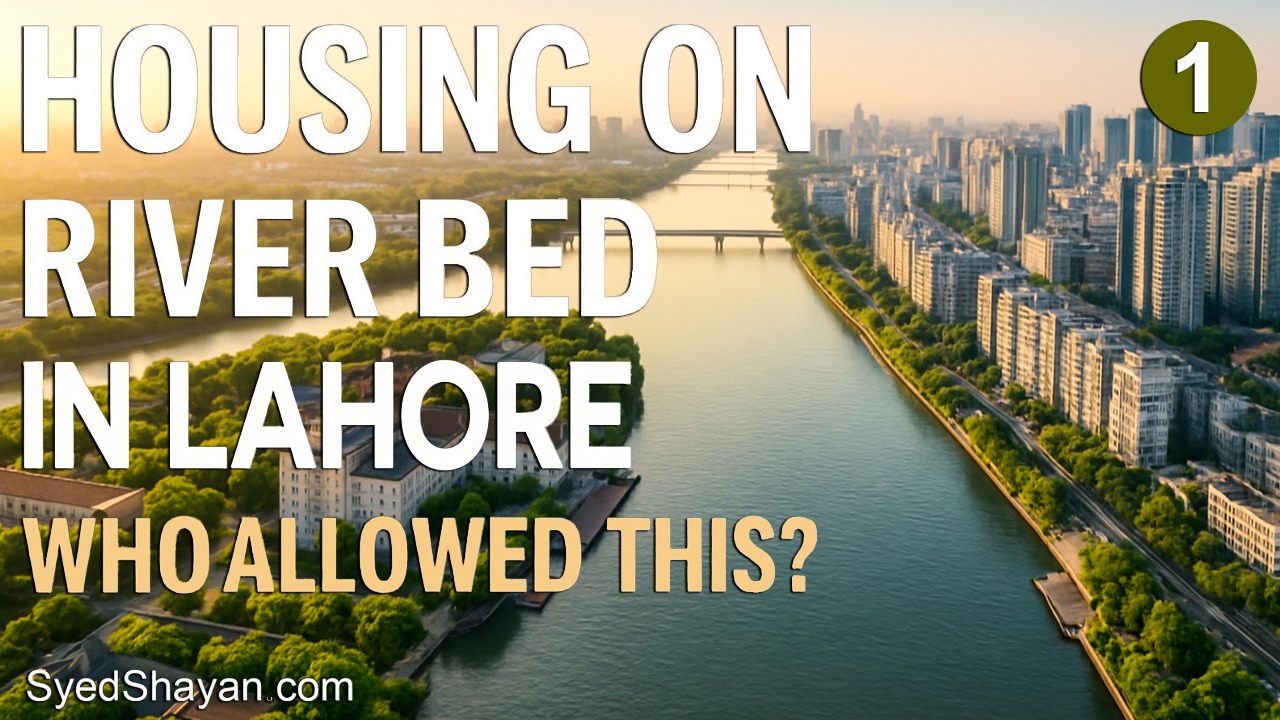
The site initially proposed for the establishment of Model Town Lahore was not the one where the settlement stands today. Dewan Khem Chand’s pamphlet Suburban Town of Lahore (1919) presented the earliest written concept for a modern residential society. Yet according to credible historical research, the first location considered for this project lay across the River Ravi near Shahdara, comprising approximately one thousand acres owned by Seth Sakhi Shah. The site was regarded as attractive due to its proximity to the railway line and the Shahdara Road.
Representatives of the Society offered between Rs 350 and Rs 400 per acre for its purchase, but Seth Sakhi Shah demanded Rs 600 per acre, and negotiations came to a close without success.
Following this, a topographical survey conducted on the recommendation of Sir Ganga Ram revealed that the land fell within the flood plain of the River Ravi and had been inundated several times in the past. The report described its “soil formation unstable,” and the Society accordingly deemed it unsuitable for residential construction.
At that time, the northern bank of the Ravi and the surrounding lands near Shahdara were generally regarded as upland terrace. The terrain was relatively elevated and sandy, yet because of insufficient water supply and its position near the flood plain, it was unsuitable for durable foundations. The constantly shifting course of the river exposed the region to flood spill, as was evident during the major floods of 1908 and 1917.
In view of these conditions, the engineers and administrators of the Model Town project decided to abandon the idea of establishing the colony in that locality. They unanimously concluded that the flood plain of the Ravi was not viable for any long term residential scheme.
After Shahdara was ruled out, several experts proposed an alternative site in the north eastern part of Lahore, between Baghbanpura, Shalimar Gardens, and Gujjarpura. The region possessed certain advantages: its proximity to historic monuments, fertile fields, irrigation channels, and convenient access to the railway station.
By 1920, Baghbanpura lay outside the municipal boundaries of Lahore and was regarded as a semi rural settlement. Around Shalimar Gardens stood several small villages such as Baghbanpura, Daroghawala, Gujjarpura, and Bhogiwal. Most residents were engaged in horticulture and the cultivation of fruits and vegetables. Owing to the nearness of the river and the canal system, the land was fertile and well irrigated.
From an urban standpoint, the Lahore Railway Station, established in 1862, had already facilitated mobility between the city and its outskirts. Small factories and workshops had emerged along the railway line, yet the entire region remained predominantly agrarian, with scattered dwellings, unpaved roads, and no planned residential community.
When the stage of land acquisition arrived, local landlords demanded exceptionally high prices, and disputes of ownership also surfaced. Although some members of the Society considered sites near Mughalpura and Daroghawala, these were later rejected because of their proximity to railway lines and industrial activity, which made them unsuitable for a healthy residential environment.
During this period, in 1920, the construction of the Lower Bari Doab Canal in the southern part of Lahore transformed the surrounding landscape. Dewan Khem Chand, Sir Ganga Ram, and their associates, who had long been searching for an appropriate site for a modern township, were naturally drawn to the newly irrigated lands along the canal. They conducted a detailed survey of the forests of Rakh Kot Lakhpat and its adjoining villages, and soon it became apparent that this region was the most suitable location for Lahore’s future urban expansion.
The land was level and fertile, with a permanent water supply from the canal and immunity from the risk of flooding. From an engineering perspective, it offered an ideal foundation for planned urban development. By the end of 1921, the founders of the Model Town Society unanimously agreed that this would be the site for Lahore’s first modern, organised, and self contained residential settlement.
In November 1921, following the formal registration of the Society, its administrative committee under the leadership of Dewan Khem Chand began official negotiations with the landowners of suburban Lahore, particularly those in Sattu Katal, Kala Khatri, and Choprah. Simultaneously, discussions commenced with the Government of Punjab regarding the acquisition of the historic forest land of Rakh Kot Lakhpat. As a result of these negotiations, between 1922 and 1923, the Society secured approximately 1,700 acres of land, while the remaining area was transferred the following year. The acquisition was achieved partly through lease and partly through direct purchase, bringing the entire tract under the Society’s possession.
To be continued in the next episode.
(This article is excerpted from my forthcoming book
The Birth of Model Town in Colonial Lahore (“برطانوی لاہور میں ماڈل ٹاؤن کا جنم”).
The book will soon be available through the Real Estate Think Tank and the web portal SyedShayan.com. A comprehensive documentary on the same subject is also in its final stage of production. Individuals or institutions wishing to share historical documents, research material, or photographic records are most welcome to contribute. Such material will be invaluable for scholarly reference and historical authenticity. Current or former residents of Model Town who wish to share their memories, photographs, or reflections for this historical book or documentary may contact
mail@syedshayan.com
Facebook.com/SyedShayanOfficial
Syed Shayan )