
🔳 The government’s decision to confer civil awards and medals on 18 individuals from the power sector all at once, including the Federal Minister for Power and senior officials, feels like rubbing salt into the nation’s wounds. This has happened at a time when the entire country is under severe public stress because of expensive electricity, capacity charges, load-shedding and a struggling economy, while social media is filled with public anger and protest.
Public Investigative Series | Episode 28
Topic: How Can Pakistan’s Electricity System Be Fixed?
Title: A Shower of Civil Awards and Medals on the Federal Minister and Officials of the Power Sector
🔺 When institutions avoid providing facts, the responsibility of reaching the truth falls upon the public. Written and Researched by Syed Shayan
Growing Darkness, Shining Medals
In the 2026 civil awards, as many as 19 individuals from the power and energy sector were conferred with different national honours and medals.
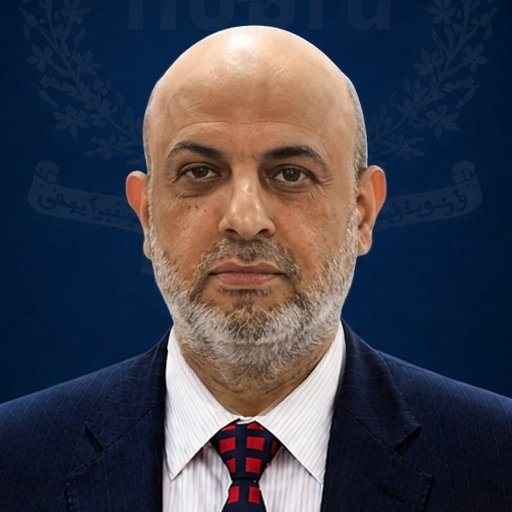
Among them, Federal Minister for Power Sardar Awais Ahmad Khan Leghari was awarded the Hilal-e-Imtiaz, Prime Minister’s Adviser on Energy and Privatisation Muhammad Ali was awarded the Hilal-e-Imtiaz, and Power Division Secretary Dr Muhammad Fakhar-e-Alam Irfan was awarded the Sitara-e-Imtiaz.
On the recommendation of the Prime Minister, the President of Pakistan also approved civil awards for 15 members of the National Task Force on Power Sector Reforms. These included 10 Sitara-e-Imtiaz awards and 5 Tamgha-e-Imtiaz awards. In the official APP report, the individual names of these 15 members were not provided; only the total number and award categories were mentioned.
If non-political names connected with the electricity sector are also included, the total count reaches at least 19, because Engineer Jamaluddin Ahmed was also awarded the Hilal-e-Imtiaz. According to current reports, this award was given in recognition of his long professional services and technical expertise in the fields of electricity and engineering, not on the basis of any political consideration.
For this reason, this article limits its discussion to those 18 awards that have raised public questions and objections.
According to the government citation, Federal Minister for Power Sardar Awais Ahmad Khan Leghari was awarded the Hilal-e-Imtiaz in recognition of “outstanding services and reforms in the power sector”. The citation specifically referred to energy sector reforms during financial year 2024-25, a reduction of Rs 780 billion in circular debt, an electricity facilitation package for industry, and the restructuring of NTDC within 9 months.
The government’s position also states that the restructuring of NTDC led to the creation of new entities, improved transparency and better performance. On this basis, the President of Pakistan conferred the Hilal-e-Imtiaz upon him.
Prime Minister’s Adviser on Privatisation and Energy Muhammad Ali was awarded the Hilal-e-Imtiaz in recognition of his services in the energy sector and public administration. According to official ceremony reporting, his role was particularly appreciated in the context of privatisation, power sector reforms and the energy sector reform agenda.
Power Division Secretary Dr Muhammad Fakhar-e-Alam Irfan was awarded the Sitara-e-Imtiaz, according to official ceremony reporting, in recognition of notable services in various fields. However, in the available news reports, no detailed citation was found for him similar to the one issued for Awais Leghari. It was only reported that, as Secretary Energy/Power Division, he was among the recipients of the Sitara-e-Imtiaz.
For the information of readers, let me first explain that Pakistan has a total of 21 civil awards, and their official order is as follows:
1. Nishan-e-Pakistan
2. Nishan-e-Shujaat
3. Nishan-e-Imtiaz
4. Nishan-e-Quaid-e-Azam
5. Nishan-e-Khidmat
6. Hilal-e-Pakistan
7. Hilal-e-Shujaat
8. Hilal-e-Imtiaz
9. Hilal-e-Quaid-e-Azam
10. Hilal-e-Khidmat
11. Sitara-e-Pakistan
12. Sitara-e-Shujaat
13. Sitara-e-Imtiaz
14. President’s Award for Pride of Performance
15. Sitara-e-Quaid-e-Azam
16. Sitara-e-Khidmat
17. Tamgha-e-Pakistan
18. Tamgha-e-Shujaat
19. Tamgha-e-Imtiaz
20. Tamgha-e-Quaid-e-Azam
21. Tamgha-e-Khidmat
If these civil awards are divided into 4 broad levels, then in general order, “Nishan” is the highest, followed by “Hilal”, then “Sitara”, and finally “Tamgha”.
These awards are given under 5 different categories or series: Pakistan, Shujaat, Imtiaz, Quaid-e-Azam and Khidmat.
For example:
As this classification shows, Nishan-e-Pakistan is counted among the highest civil honours, while Tamgha-e-Khidmat falls among the relatively lower-ranking awards.
Now let us examine the extraordinary decision by the Government of Pakistan to confer 19 civil awards and medals on people connected with the power sector at one time. This happened at a moment when the power sector is facing severe public criticism because of expensive electricity, capacity charges, circular debt, load-shedding and industrial decline.
The government’s narrative is that Sardar Awais Ahmad Khan Leghari was awarded the Hilal-e-Imtiaz because, during financial year 2024-25, he introduced reforms in the energy sector, reduced circular debt by Rs 780 billion, introduced an electricity facilitation package for industry, and carried out the restructuring of NTDC.But the question is this: if these were truly historic reforms, where is the real relief in the electricity bills of ordinary consumers? Where are the visible signs of improvement in Pakistan’s power sector? Where exactly are these reforms? Has electricity actually become cheaper? Has circular debt genuinely come down? Has the burden of IPP capacity payments been reduced? Have line losses and electricity theft fallen significantly?
If the situation is examined carefully, the ground realities tell a very different story.
When the current Federal Minister for Energy assumed charge, the circular debt of the power sector was being reported at approximately Rs 2.4 trillion to Rs 2.68 trillion, that is, between Rs 2,400 billion and Rs 2,680 billion. By June 2025, it was shown as having been reduced to Rs 1.614 trillion, or Rs 1,614 billion. But in the very next financial year, this debt again increased, reaching Rs 1.837 trillion in February 2026 and Rs 1.798 trillion in March 2026.
This is where the real question arises: how can a reduction of Rs 780 billion be presented as the success of permanent reforms?
According to available reports, the government secured financing of approximately Rs 1.225 trillion, or Rs 1,225 billion, nearly $4.3 billion, from a consortium of 18 banks to reduce the circular debt of the power sector. The purpose of this financing was to settle dues owed to IPPs and power producers, while repayment is to be made over 6 years through 24 quarterly instalments.
In the government’s narrative, this was described as one of Pakistan’s major financing and refinancing arrangements. But the reality is that if old circular debt was paid through fresh bank borrowing, and repayment of this new borrowing is to be recovered from consumers through a Debt Service Surcharge of Rs 3.23 per unit, then calling it reform would be highly misleading.
It means that circular debt has not been eliminated; its form has merely been changed. High-cost liabilities were restructured through bank financing, and the burden of repayment was ultimately transferred to electricity consumers through their bills.
If one loan is taken to repay another loan, the liability on the national economy does not disappear. Therefore, describing the Rs 780 billion reduction as pure “energy reform” is misleading. A more accurate statement would be that the government shifted a major part of circular debt into bank borrowing, refinancing and consumer bills.
Today, every electricity consumer is paying an additional Rs 3.23 per unit so that this loan can be repaid over the next 5 to 6 years.
The question is this: if the reforms were truly successful, why did circular debt rise again after June 2025? And if one of the largest bank borrowings in the country’s history was used to reduce this debt, should that be called performance, or merely financial repackaging?
According to the latest available reports, the current figure for power sector circular debt alone is approximately Rs 1.764 trillion, or Rs 1,764 billion, as reported in May 2026 with reference to the IMF report.
The plain truth is that circular debt has neither been completely eliminated nor have its root causes been addressed. Only the method of payment has been changed, while the burden continues to be recovered from the public through electricity bills. Real reforms will only be counted when electricity becomes cheaper, line losses and electricity theft decline, DISCO inefficiency is addressed, the pressure of IPPs and capacity payments is reduced, and ordinary consumers feel genuine relief in their bills.
I believe that when the public is suffocating under heavy electricity bills, prolonged load-shedding and the burden of capacity charges; when people are protesting on the streets and across social media; and when lower-middle-class households have been pushed by economic pressure to the point of suicide, conferring official medals and civil awards on 18 individuals from the power sector is like pouring oil on a fire.
Will anyone in the government care to explain whether this reflects ignorance of public sentiment, outright insensitivity, or a message from the corridors of power that no matter how much the public protests, everything here will continue as usual?
The government should have shown wisdom and chosen a more appropriate time for such a sensitive matter. If the power sector had improved, if people had received relief in electricity bills, and if load-shedding had declined, then granting such awards in that favourable environment would not only have been understandable, but the public may also have viewed them with appreciation.
In my view, the Federal Minister for Energy and the relevant officials should themselves have come forward and stated that until Pakistan’s electricity system genuinely improves; until consumers receive transparent bills based only on the units they actually use; until unnecessary taxes, additional surcharges, line losses, electricity theft and capacity payments are fully brought under control; and until the excess amounts recovered from the public because of flawed policies are audited against IPPs and the real burden placed on the national exchequer is disclosed to the nation, we do not consider ourselves deserving of any such honour.
Because civil awards and medals are not mere pieces of metal. They are symbols of national dignity and collective respect. Whether it is France’s Légion d’honneur or Britain’s Order of Merit, such honours command respect because they are backed by strict moral standards and merit. Today, Pakistan too must ask itself whether its national awards stand for outstanding performance, or merely for proximity, patronage and favouritism.
There are many examples in the world where great personalities have refused major awards on principled grounds. One prominent example from the fields of environment, energy and climate policy is Greta Thunberg. In 2019, she refused to accept the Nordic Council Environment Prize, saying that the climate movement does not need more awards and colourful ceremonies; what it needs is for governments, politicians and powerful institutions to take scientific facts seriously and act on them. That is why the world remembers her today not merely as an award-winning figure, but as a firm and principled personality.
[To be continued in the next episode.]