Formal Land Acquisition and Notification for New Delhi in British India
On 21 December 1911, during the period of the British Raj, a formal notice for the acquisition of land for New Delhi was published in the Punjab Gazette. This notification was issued only nine days after the proclamation of 12 December 1911, when King George V of Britain announced the transfer of the capital of British India from Calcutta to Delhi.
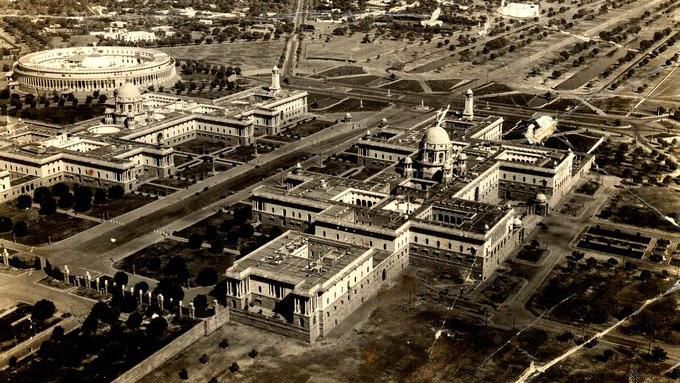
Through this notification, the systematic acquisition of several thousand acres of agricultural land situated to the south west of present day Delhi formally commenced. These lands were subsequently developed into the core of New Delhi, upon which were constructed the Viceroy’s House now known as Rashtrapati Bhavan, the Parliament House originally called the Council House, the Central Secretariat comprising the North Block and South Block, as well as other major administrative and defence buildings that symbolised imperial authority. To connect these monumental structures, a grand ceremonial avenue later known as Rajpath was laid out, and for commemorative purposes the India Gate memorial was erected. Under the same planning framework, Connaught Place was designated as the principal commercial district of New Delhi, where banks, insurance offices and retail commercial activities were concentrated. In parallel, residential areas such as the Lutyens’ Bungalow Zone, Civil Lines and Karol Bagh emerged as planned neighbourhoods for the Viceroy, senior colonial officials, members of the civil services and the urban middle class. All these measures were undertaken under the provisions of the Land Acquisition Act of 1894, enabling the legal acquisition of land for public and governmental purposes and laying the organised urban and real estate foundation of the new imperial capital of British India.
Following the announcement of the capital’s relocation, the British administration moved swiftly to advance the land acquisition process by issuing the Punjab Gazette notification of 21 December 1911, under which land values were fixed as of that date to ensure that agricultural landowners received compensation prior to the transfer of possession. As a result, lands belonging to Malcha, Raisina and other neighbouring villages were acquired, areas upon which the Parliament House, the Presidential Estate and numerous other key government buildings now stand.
This historical event occupies a significant place in the history of real estate, as it marked the formal legal commencement of the largest land acquisition undertaken during the British period in the subcontinent and the construction of a new imperial capital. It not only transformed urban planning and land values but also exerted lasting influence on land use patterns and the spatial hierarchy of cities in the decades that followed.
Read More >












.jpeg)
.jpeg)
.jpg)





.jpg)