
What Will Become of Maryam Nawaz Sharif’s “Red Line”?
The case involving the alleged abduction, sexual assault and ransom of two foreign women in Lahore cannot be viewed merely as a matter concerning the family of Deputy Prime Minister Ishaq Dar.
The family connections involved also extend to the family of Punjab Chief Minister Maryam Nawaz Sharif.
The relationship is straightforward: Asma Nawaz, daughter of Nawaz Sharif and younger sister of Maryam Nawaz, is married to Ali Mustafa Dar, the son of Deputy Prime Minister and Foreign Minister Ishaq Dar. The Sharif and Dar families are therefore connected through marriage.
In the Lahore case, Raza Dar has been named among the principal accused. Several media reports have described him as Ishaq Dar’s grandson, while some more cautious reporting has referred to him as a close relative of a senior political figure. Police arrested him along with several other suspects in connection with allegations of kidnapping, ransom and sexual assault involving two foreign women. The allegations remain subject to investigation and judicial proceedings.
For this reason, the case has become more than a criminal investigation involving particular individuals.
It has also become a major test case for the Punjab government and Chief Minister Maryam Nawaz Sharif.
The Sharif and Dar families have been politically close for decades and are now also connected through marriage. It is therefore natural that public and political circles will ask whether the law can operate with complete independence when someone reported to be connected to one of the country’s most influential political families is accused in such a serious case.
The fundamental question is simple:
When a member of a powerful family is accused in a grave and sensitive criminal case, does the law move in exactly the same way as it would against an ordinary citizen?
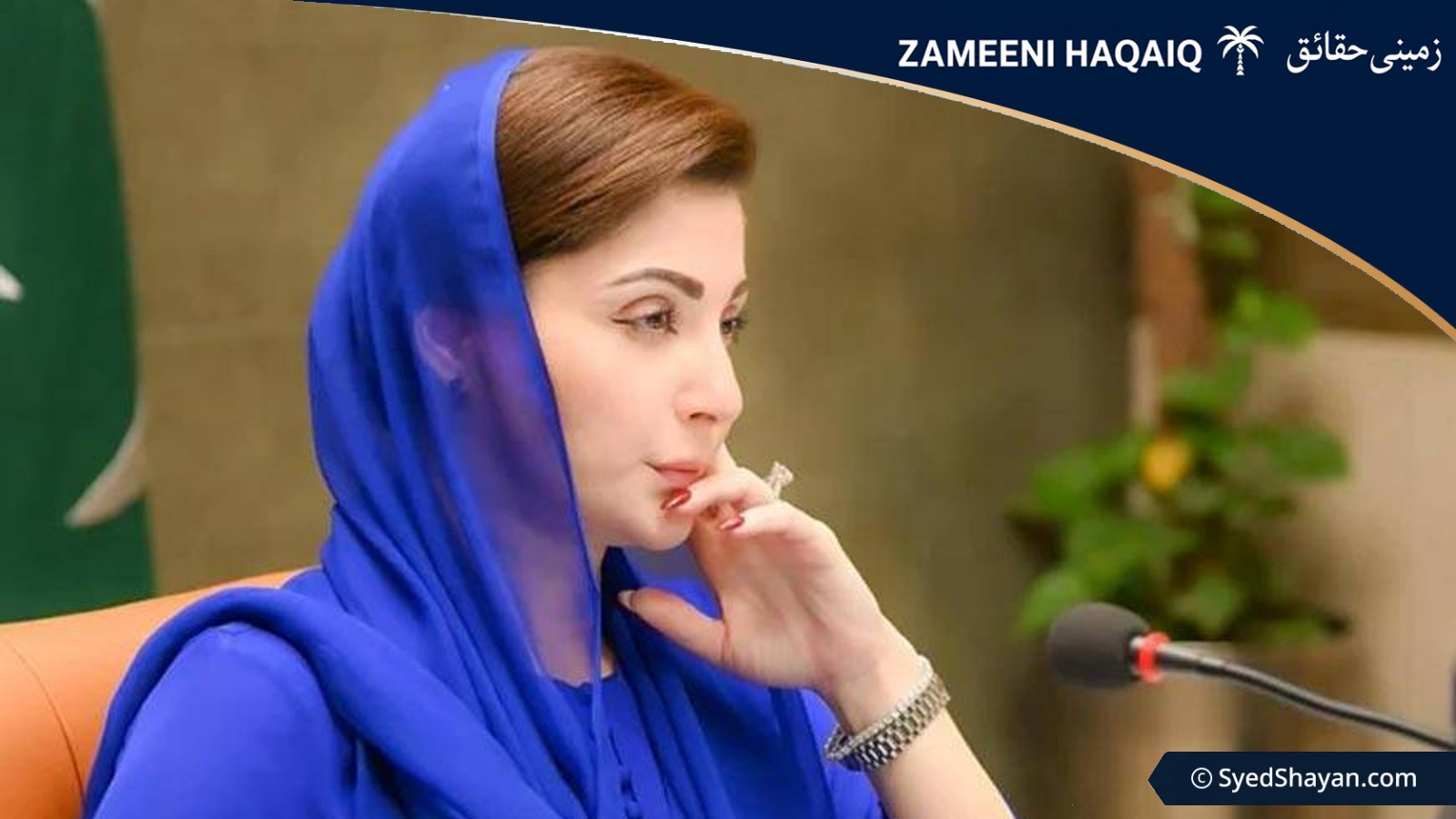
Maryam Nawaz Sharif has repeatedly spoken about women’s protection and the supremacy of law.
She has specifically described women as her “red line”, saying that violence or cruelty against women would not be tolerated by her government.
This case therefore presents a particularly significant test of that commitment.
Will the Punjab government demonstrate complete neutrality?
Or will public perceptions develop that the political and family influence surrounding powerful individuals can affect the course of law?
Women’s Protection Has Been a Central Part of Maryam Nawaz’s Political Narrative
Women’s safety and rights have consistently formed an important part of Maryam Nawaz Sharif’s public political messaging.
Her government established Pakistan’s first Virtual Women Police Station in Punjab, enabling women to approach police through telephone calls, video calls, apps and online platforms without necessarily visiting a conventional police station in person.
The provincial government has also promoted emergency and panic-button facilities intended to provide women with rapid access to police assistance.
Maryam Nawaz has repeatedly stated at public forums that harassment and violence against women should not be tolerated, whether at workplaces, in public spaces or elsewhere.
Her administration has sought to make women’s protection one of the identifying themes of the provincial government.
At the level of political messaging, these commitments have appeared strong.
But the real test of any government’s principles does not come through ordinary cases alone.
It comes when a high-profile and politically sensitive case emerges and the accused are perceived to have connections with influential individuals.
That is where impartial enforcement determines whether a “red line” is merely a political slogan or a principle that cannot be crossed.
This Case Places the “Red Line” Under Direct Scrutiny
The Lahore case has therefore brought Maryam Nawaz’s earlier statements and the actions of her government into direct comparison.
Police have publicly stated that suspects linked to influential individuals would be treated like any other accused person and that the investigation would proceed without “fear or favour.”
That commitment now has to be demonstrated through the entire legal process.
If the investigation proceeds independently, evidence is handled transparently, due process is respected and the case is allowed to reach its legal conclusion without interference, it would strengthen the Chief Minister’s claim that women’s safety genuinely represents a red line for her government.
If, however, there is credible evidence of political interference, deliberate weakening of the case or preferential treatment, critics and the opposition would inevitably argue that the principle applies differently when influential families are involved.
The important distinction is that such interference should not be assumed without evidence. The test is whether the institutions handling the case are allowed to work independently.
Equal Law Is the Real Test
Unfortunately, one of the longstanding perceptions within our society is that the machinery of the state often appears most powerful when dealing with an ordinary citizen — a motorcyclist, street vendor or someone without political connections.
Arrests can be immediate, enforcement can be highly visible and the authority of the law can appear overwhelming.
But when allegations involve members of the elite, the public often fears that investigations may slow down, legal provisions may be softened or private settlements may be attempted.
Whether that perception is justified in any particular case must be established through evidence.
But precisely because such mistrust already exists, high-profile cases carry an additional responsibility for the state.
The Punjab government must ensure that the accused’s family connections — whatever their political significance — have no bearing on the investigation or prosecution.
As of the latest publicly reported court proceedings, the principal suspects including Raza Dar had been moved from police remand into judicial custody, while the investigation continued.
The Political Consequences Could Be Significant
Maryam Nawaz Sharif is one of the most prominent figures in Pakistan’s current political landscape, and her future political ambitions are frequently discussed.
A case involving foreign nationals will also naturally receive greater international media and diplomatic attention than many ordinary criminal cases.
How the Punjab government handles such a sensitive case will therefore be judged against the Chief Minister’s own public commitments on women’s protection and the rule of law.
Resolving the case strictly on merit — without favouring either the complainants or the accused and while respecting the legal rights of everyone involved — could strengthen her image as a leader willing to allow institutions to function even when politically uncomfortable relationships are involved.
The principle must therefore be straightforward:
Maryam Nawaz’s “red line” cannot apply only when the accused are weak or politically unconnected. If it is genuinely a red line, it must apply equally to everyone.
Young voters, particularly women, follow such cases closely through social media and digital news platforms.
PML-N has repeatedly presented Maryam Nawaz’s leadership and policies through the narrative of women’s protection.
If the public sees credible evidence that justice has been compromised in a high-profile case, that narrative could suffer serious political damage.
But if the government demonstrates that family relationships and political influence cannot interfere with due process, the opposite could also happen.
Maryam Nawaz could emerge politically stronger by demonstrating that her commitment to protecting women and enforcing the law extends even to cases involving people connected to politically powerful families.
Ultimately, however, neither political narratives nor family relationships should determine the outcome.
The evidence, the investigation and the courts must do that.
And that is precisely why this case represents such an important test of whether the Chief Minister’s “red line” is a political slogan — or a principle that truly applies without distinction.