

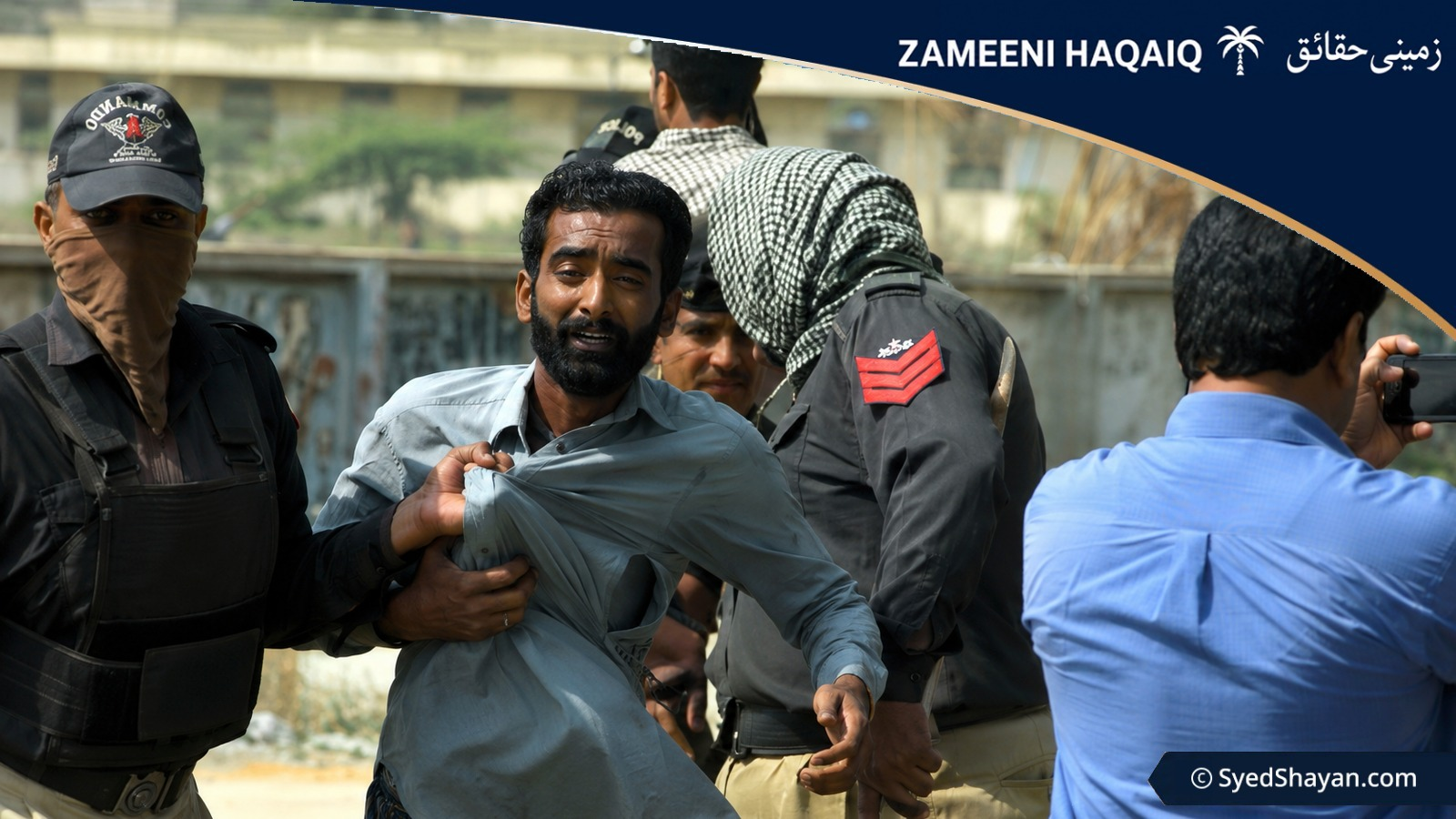
A Major Operation Against Powerful Land Grabbers Is About to Begin in Punjab Following the Crackdown on Major Criminal Networks
▫
A new body called the “PPPA” has also been established on the pattern of the “CCD”.
On October 31, the Punjab provincial cabinet, chaired by Chief Minister Maryam Nawaz in Lahore, approved a new ordinance for the protection of property rights across the province.
Announcing decisive action against land-grabbing mafias, the Chief Minister said that no one would now be allowed to deprive lawful owners of their land and property, and that the government would ensure the protection of every citizen’s ownership rights.
Earlier, the Chief Minister had announced the establishment of the Crime Control Authority (CCA) in the province, and she has claimed that the crime rate in Punjab has since declined by 70 percent.
The new law, called the Punjab Protection of Ownership of Immovable Property Ordinance 2025, was approved after considerable discussion.
The purpose of this significant decision is to protect the rights of genuine owners of land and property across the province and to eliminate land-grabbing mafias.
During the cabinet meeting, Chief Minister Maryam Nawaz said, “Ownership belongs to the rightful owner; a state like a mother always stands with the weak.” She made it clear that the government’s objective is to protect people’s land and permanently end abuses committed by powerful groups.
Under the ordinance, a District Dispute Resolution Committee will be established in every district under the chairmanship of the Deputy Commissioner.
The committee will consist of six members and will be required to become operational within 30 days and decide cases within 90 days.
A special tribunal will also be established to hear appeals against the committee’s decisions. It will be headed by a retired High Court judge and will also be required to decide appeals within 90 days.
Once a decision is issued, illegal occupation will be removed within 24 hours. To make the process transparent, the enforcement operation will be broadcast live.
The entire system is also being digitised so that a complete record of every proceeding can be preserved.
According to legal experts, the law represents a major step toward the speedy resolution of land disputes and the delivery of justice, and could help bring an end to cases that have remained pending for years.
In reality, several members of the Punjab Assembly had expressed reservations about the bill over the past several months.
Their position was that powers relating to land and property disputes should be given to local representatives or elected members of the assembly in order to strengthen the principle of public representation.
These lawmakers also argued that elected representatives understand the problems and land disputes of their constituencies better and should therefore have been given a central role in the District Dispute Resolution Committees.
According to them, placing the Deputy Commissioner in charge takes the decision-making process back into the domain of the bureaucracy and weakens political representation.
The government, however, has maintained that because land and revenue disputes are primarily legal and administrative in nature, entrusting them to impartial officials with administrative and quasi-judicial experience is a more effective and transparent approach.
This disagreement continues to be debated in certain political circles.
In my view, the Deputy Commissioner is not merely an administrative officer. The office also carries significant powers in matters relating to land and revenue.
Under the Land Revenue Act 1967, the Deputy Commissioner, while acting as Collector, deals with matters relating to land ownership, mutations, possession, leases and various other revenue disputes.
The Deputy Commissioner may also hear appeals against decisions made by Assistant Commissioners or Tehsildars.
The office has its own revenue court functions and can order corrections in land records or direct action against illegal occupation of government land.
During British rule, the Deputy Commissioner was considered the head of administration, judicial authority and revenue administration at the district level.
Under the British India system, the Deputy Commissioner was regarded as the central figure of district government and simultaneously exercised powers as Collector of Revenue, First-Class Magistrate and District Magistrate.
Initial hearings in matters involving land records, revenue, taxation, agricultural disputes, possession and tenancy were generally conducted within this administrative and revenue framework.
In some cases, the Deputy Commissioner also dealt with minor criminal matters, while more serious matters and appeals could proceed to higher judicial forums such as the High Court or the Chief Court of Punjab.
In this way, the Deputy Commissioner in British India was not only the administrative head of the district but also exercised important quasi-judicial powers, and the office played a central role in both district administration and dispute resolution.
Considering these long-standing judicial and revenue powers, the Punjab government’s decision to place the District Dispute Resolution Committee under the chairmanship of the Deputy Commissioner can be regarded as a practical and appropriate step.
The system could not only speed up decision-making but also bring administrative understanding and legal balance to the process.
It could reduce the burden on the courts, shorten years-long delays in land litigation, and provide citizens with a more effective and immediate platform for protecting their ownership rights.












سید شایان نے رئیل اسٹیٹ کے بارے میں انتہائی باریک بینی سے معلومات فراہم کر کے واقعی قابلِ تعریف کام کیا ہے۔ وہ ہر چھوٹی سے چھوٹی تفصیل جانتے بھی ہیں اور اسے عام فہم انداز میں شیئر بھی کرتے ہیں۔ آپ کی محنت، علم اور مستقل مزاجی قابلِ تحسین ہے۔ اسی طرح لوگوں کی رہنمائی کرتے رہیں