

WASA’s FIR Notices on New Water Bills Spark a Fresh Debate in Lahore
The notices pasted by WASA on newly issued water bills in Lahore have triggered a fresh debate.
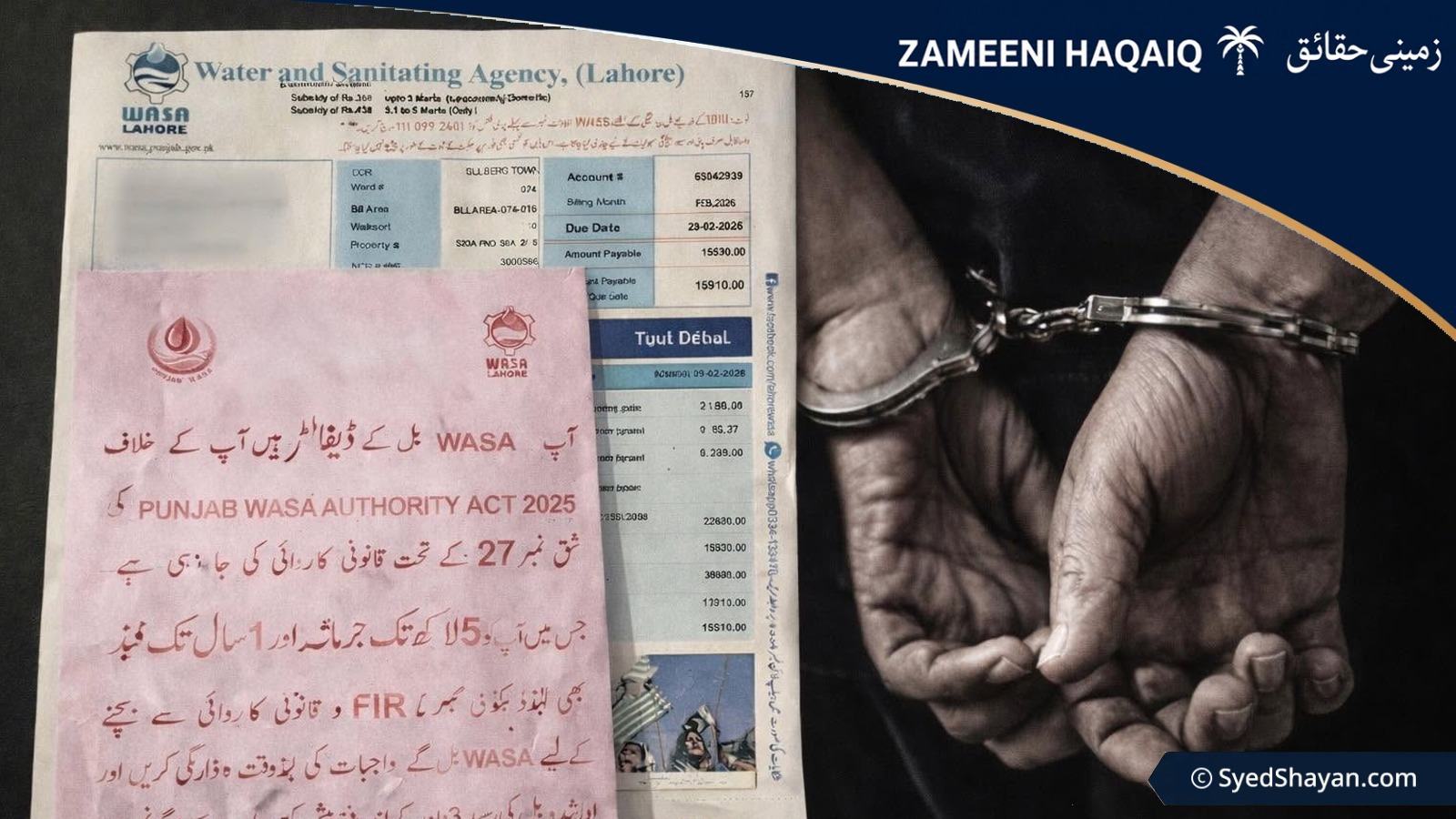
Take a look at this FIR-related notice attached to a WASA bill, informing consumers about the possibility of an FIR being registered against them.
The notice reads approximately as follows:
“You are a defaulter of WASA bills. Legal proceedings are being initiated against you under Section 27 of the Punjab WASA Authority Act 2025.
You may face a fine of up to Rs500,000 and imprisonment of up to one year. To avoid an FIR and legal proceedings, pay your outstanding WASA dues on time and submit the paid bill receipt to the office within three days or send it via WhatsApp to the given number.”
It is important to note that this notice was attached to what appears to be a routine water bill covering only a few months of outstanding dues.
From a legal perspective, a utility bill generally arises from a service relationship: a consumer uses electricity, gas or water and is required to pay for that service. In cases of non-payment, a utility provider may disconnect the service, impose late-payment charges or pursue recovery through the mechanisms available under law. Turning a relatively small domestic arrear into an apparently criminal matter, however, can create unnecessary fear and anxiety among citizens.
Non-payment of utility bills is generally treated differently from offences involving theft, meter tampering, fraud or illegal connections, where criminal proceedings may arise under applicable laws. For this reason, the use of FIR-related language over ordinary outstanding dues is being viewed by some as disproportionate.
A fundamental legal question also arises: on what legal basis and under what definition can a citizen be declared a “defaulter” merely because a bill remains unpaid for two months?
Does the Punjab WASA Authority Act 2025 contain a clear and specific definition of a defaulter?
Ordinarily, the term defaulter is understood to refer to someone who fails or refuses to fulfil a payment obligation, particularly after reminders or formal notices. But what happens if a citizen is abroad, facing temporary financial difficulty, or disputes the amount charged on the bill?
Would it be fair to classify such a person as a defaulter without first giving them an opportunity to explain their position?
Does WASA have a formal assessment, review or hearing mechanism through which a consumer’s case is considered before they are formally treated as a defaulter?
When a utility bill carries language that gives an immediate impression of arrest, an FIR or criminal action, its impact in Pakistani society is not merely legal; it can also be psychological.
In Pakistan’s joint-family system, elderly people, women and children often live under the same roof. A notice of this nature can cause anxiety and fear throughout an entire household, even if the issue relates only to one or two months of unpaid water bills.
In our society, the term “FIR” is not understood merely as a legal expression. It is often associated with social stigma, police visits, court proceedings and uncertainty. For an ordinary citizen, therefore, such a notice may generate fear, distress and a sense of harassment.
Public-service institutions around the world are generally expected to communicate with citizens in a manner that respects their dignity and takes social sensitivities into account. Unnecessarily harsh or criminal-style language is often considered inappropriate, particularly where the alleged violation is minor and the consumer is otherwise a responsible citizen.
This raises another important question: is this bureaucratic approach actually beneficial for Maryam Nawaz’s governance strategy?
From a political perspective, Maryam Nawaz has sought to project herself as a leader focused on softer governance, efficient public-service delivery and a more citizen-friendly style of administration.
However, at the grassroots level, an aggressive or threatening approach by institutions such as WASA risks creating public unease.
A rigid, police-style administrative culture within government departments does not appear consistent with the softer governance narrative that the provincial government wants to present as part of its identity. This contradiction can ultimately weaken the government’s broader political message on governance.
Public-service institutions such as WASA should therefore consider adopting a more dignified and professional approach instead of relying heavily on FIR-related warnings and threatening language.
Consumers could be given clear notices, convenient instalment plans for outstanding dues, a fast digital system for correcting incorrect bills, and transparent metering based on actual water consumption.
If these mechanisms are put in place, citizens may be more likely to view timely payment not as something extracted through pressure, but as their own civic responsibility.
The success of public institutions should not be measured only by recoveries, but also by the level of public trust they are able to earn.







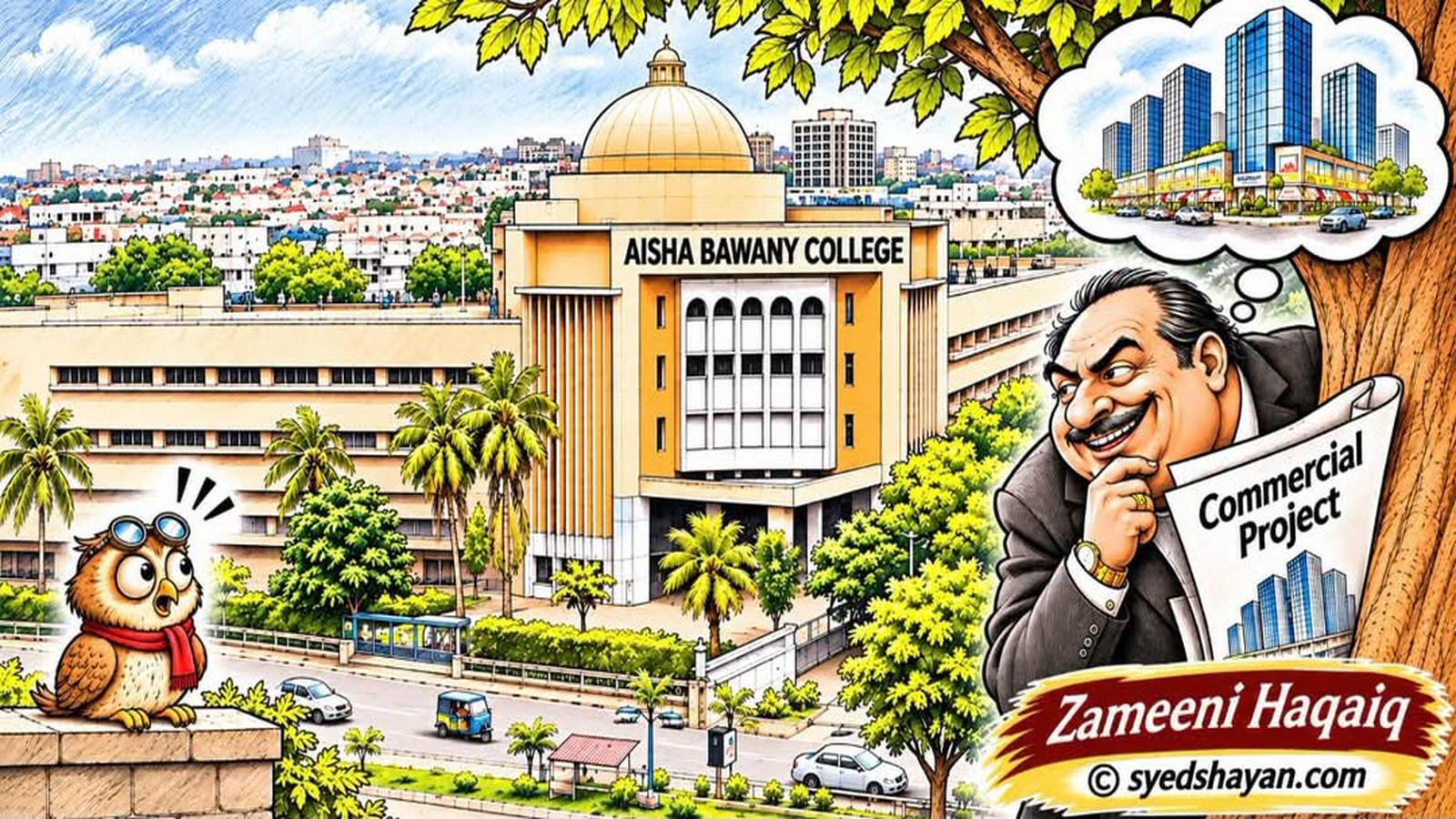




People who cannot pay small utility bills should not be scared with jail threats. This creates fear and pressure at home. It would be better to offer flexible payment plans and proper communication.