
▫
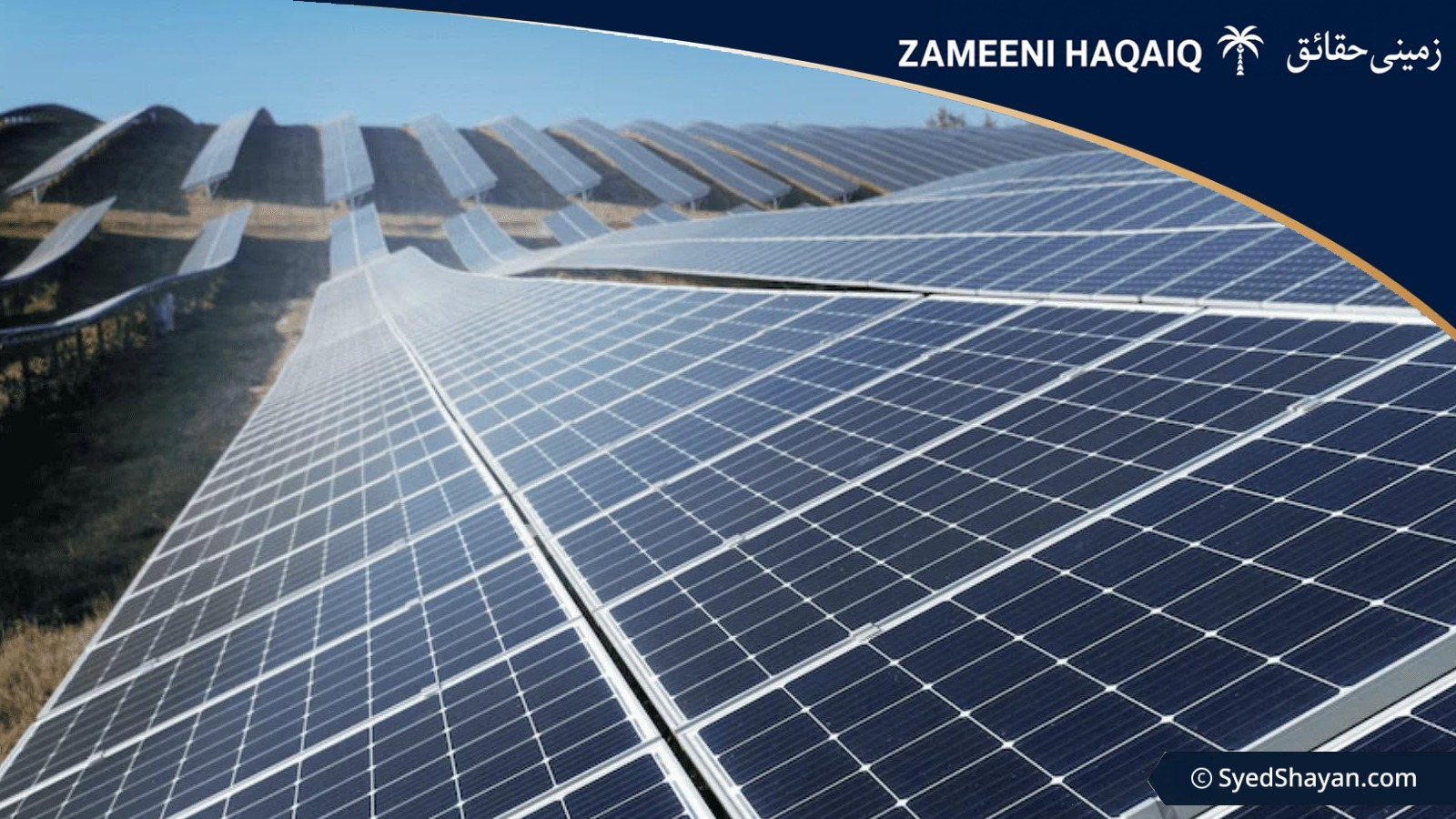
NEPRA Announces Existing Solar Consumers’ Agreements Will Continue Under Original Terms Until Their Expiry
The government has invited public suggestions on the proposed changes to the solar policy. You can also submit your recommendations during the consultation process.
NEPRA, the National Electric Power Regulatory Authority, has clarified that agreements already entered into with existing net metering consumers will continue under their original terms and for their prescribed duration.
Accordingly, existing consumers will continue to be treated under the applicable rate and settlement mechanism provided in their agreements until those agreements expire.
At the same time, NEPRA has opened the proposed changes to the Prosumer Regulations 2026 for public and stakeholder consultation before a final decision is taken. NEPRA’s official record confirms that the Prosumer Regulations 2026 were notified in February 2026 and that amendments were subsequently published for public opinion.
On behalf of my think tank, I have prepared a brief Policy Brief that I intend to submit to NEPRA.
If you have a serious, reasoned and evidence based opinion on this issue, I encourage you to share it. Suitable recommendations can be incorporated to make the policy position more comprehensive.
My proposed submission to NEPRA is reproduced below.
To
The Chairman
National Electric Power Regulatory Authority (NEPRA)
Islamabad
Subject
Principled Position and Policy Recommendations on the Proposed Changes to the Solar Regulations 2026
Dear Sir,
We welcome NEPRA’s assurance regarding the protection of agreements already entered into with existing solar consumers.
However, with regard to the proposed changes to the solar regulatory framework for 2026, our think tank would like to present the following technical and economic observations and recommendations.
⭕️ 1. Impact of Policy Changes on Banks and Borrowers
▫
Position
Policy Consistency is extremely important whenever a regulatory framework is changed.
An abrupt transition from Net Metering to Net Billing would not affect solar consumers alone. It could also have consequences for banks and other financial institutions.
Over the past several years, many consumers have installed solar systems through bank financing or instalment arrangements. Their investment decisions were based on calculations of how much financial return or savings they could expect under a particular settlement rate.
If the export rate is suddenly reduced, their payback period would increase, pressure from instalment payments would rise, and in some cases repayment of financing could become more difficult.
This could affect both existing and pending solar financing portfolios of banks and create unnecessary uncertainty within the financial system.
▫
Example
Suppose a consumer has borrowed Rs 1.5 million from a bank to install a solar system, with the financing spread over five to seven years, and the monthly instalment structure has been calculated on the basis of the existing net metering return.
If the payback period doubles, the consumer’s cash flow structure would be affected, the risk of default could increase, and banks may begin classifying solar financing as a high risk category in the future.
This would not only slow new financing but could also place existing portfolios under pressure.
▫
Recommendation
Before implementing any major policy change, NEPRA and the State Bank of Pakistan should jointly publish an assessment covering:
The total volume of solar financing in Pakistan
The banking sector’s overall exposure
An estimate of the potential default risk
If a policy change is still considered necessary, systems already installed through bank financing should be protected so that unnecessary financial instability is not created for consumers.
⭕️ 2. Private Solar Investment Should Become Part of National Energy Planning
▫
Position
Over the past several years, a very large number of solar systems have been imported and installed across Pakistan.
Billions of dollars in private investment have already been committed, while thousands of megawatts of solar capacity have entered the system in both grid connected and off grid forms.
This is no longer simply a decision taken by a few individual households.
People across the country have invested their personal savings in solar systems in an effort to reduce their dependence on the electricity system.
The government must recognise this reality and treat private solar investment as an integral part of national energy policy.
▫
Example
If Pakistan’s total electricity demand is around 30,000 megawatts, and a significant proportion of that demand is increasingly being met through private solar generation, this capacity cannot be ignored in future energy planning.
At the same time, it is also true that solar does not provide an equal amount of electricity at all times.
Grid stability, battery storage and load management must therefore be developed alongside solar expansion.
▫
Recommendation
NEPRA should publish a clear and authoritative national report that:
Verifies the total installed solar capacity in the country
Separately identifies grid connected and off grid solar capacity
Formally incorporates this private investment into national energy planning
This would ensure that future policy reflects ground realities while also preserving investor confidence.
⭕️ 3. Who Will Pay Grid Costs, and How Should the Burden Be Distributed Fairly?
▫
Position
One of the main arguments being presented for a transition from Net Metering to Net Billing is the need for a fairer distribution of grid costs.
However, before introducing any policy change, it is essential to clearly establish the actual burden associated with fixed grid costs, capacity payments, transmission costs and distribution losses.
If the main causes of financial stress are capacity payments, line losses and failure to recover electricity bills, targeting net metering consumers alone will not solve the underlying problem.
▫
Example
If a substantial proportion of the electricity sector’s costs arises from payments to power plants and from line losses, reducing the rate paid to a relatively small percentage of solar consumers will not resolve the overall financial problem.
It will neither eliminate the deficit nor bring the system into balance.
Instead, people may become reluctant to make new investments, solar adoption could slow, and in the future a larger electricity burden could once again fall on both the government and consumers.
▫
Recommendation
NEPRA should first place complete and transparent data before the public.
It should clearly explain:
The actual fixed cost of the electricity system
How much solar consumers contribute towards these costs
The financial burden created by capacity payments and line losses
Once the figures are publicly available, the reasoning behind the policy will also become easier to understand.
If recovery of grid costs is genuinely necessary, a balanced mechanism should be developed.
For example, an appropriate fixed grid fee could be considered.
Simply reducing the value of exported solar electricity abruptly is not a complete solution and could instead create greater uncertainty.
In conclusion, we wish to make it clear that our position supports a balanced and transparent policy framework.
Any transition from Net Metering to Net Billing should be implemented on the basis of reliable data, transparent analysis and a phased strategy so that the confidence of consumers, investors and financial institutions is maintained.
We also believe that the government should consider whether the buyback rate should be determined solely on the basis of fuel cost or Avoided Cost.
Environmental benefits and reductions in carbon emissions should also be taken into account.
Furthermore, thousands of small and medium enterprises (SMEs) across Pakistan are associated with the solar installation industry.
A sudden policy change could place these companies under severe financial pressure and could threaten the employment of a very large number of technicians and other workers associated with the sector.
We hope that NEPRA will give serious consideration to the public consultation process and develop a policy that ensures stability, transparency and long term sustainability in Pakistan’s energy sector.
Our think tank also remains available to provide further technical assistance or a detailed policy briefing.
Yours sincerely