

How Can There Be a Loss Despite Earning So Much?
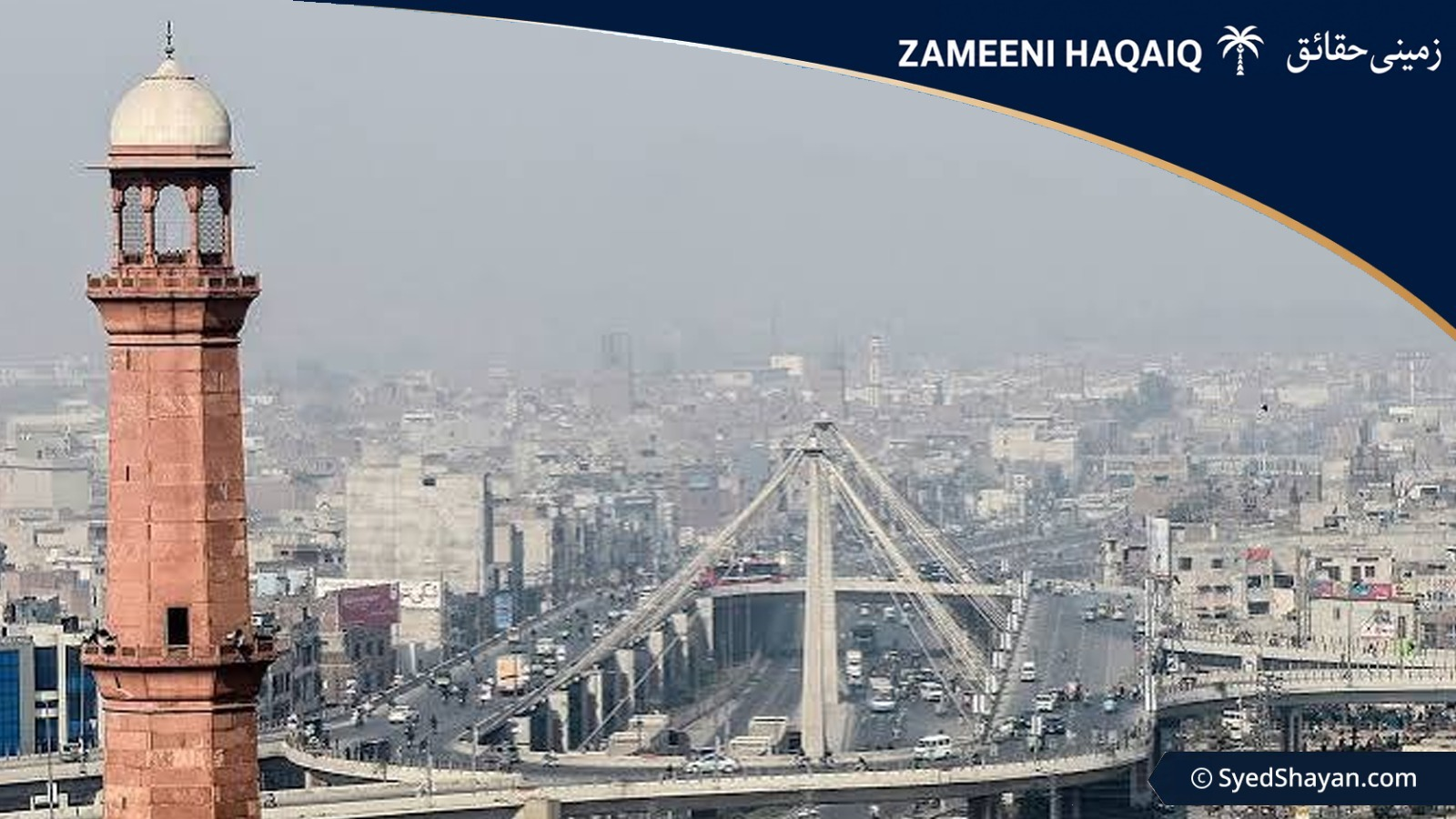
Traffic volumes at a major gateway such as the Lahore Motorway Interchange can be substantial, which means toll collection there could also run into tens of millions of rupees a day.
If, for the sake of estimation, an average of 40,000 to 50,000 vehicles passes through each day and the average toll per vehicle is assumed to be between Rs 500 and Rs 700, daily revenue could amount to around Rs 20 million to Rs 30 million, or potentially even more.
If we take a cautious assumption that the Lahore Motorway Interchange alone collects an average of around Rs 25 million to Rs 30 million per day, monthly collection could reach approximately Rs 750 million to Rs 900 million.
If daily revenue were close to Rs 35 million, monthly collection could exceed Rs 1 billion.
At a meeting of a Senate Standing Committee, the National Highway Authority, or NHA, stated during a briefing that it had 211 operational toll plazas, including 100 on national highways and 111 on motorways. The precise number at any particular time, however, should ultimately be confirmed through official records.
This made me think that I should present my readers with a hypothetical analysis, structured purely as an exercise in brainstorming and as an initial working hypothesis.
The purpose is not to make a definitive claim, but to establish a reasonable framework on the basis of available information so that public forums such as the National Assembly, Senate or major think tanks can later examine the issue more thoroughly using authenticated data, audits and official reports.
The number of operational NHA toll plazas has been reported at approximately 211. There may be a slight variation in the actual number, but for the purpose of this brainstorming exercise, we will use 211 as the basis for a hypothetical estimate in order to understand the broader financial picture.
For this purpose, I have divided the toll plazas into three categories.
The first category consists of mega city gateways and other major entry points, such as Lahore, Karachi, Islamabad, Rawalpindi and a few extremely busy interchanges, where traffic remains consistently high and revenue is likely to be relatively stable.
The second category consists of major industrial and commercial corridors, including toll plazas located near Faisalabad, Gujranwala, Sialkot, Multan, Peshawar, Hyderabad, Sukkur and Quetta, or along their principal routes, where both passenger and freight traffic contribute to toll collection.
The third category covers the remaining toll plazas on lower traffic or rural corridors, where revenue may be comparatively lower but remains continuous.
The purpose of this classification is to separate the relatively stronger revenue potential of major urban gateways and then assign cautious averages to the remaining toll plazas, allowing us to construct a more balanced hypothetical estimate.
This kind of framework is useful in preliminary financial modelling: first, a logical model is developed, and later its assumptions can be tested against authenticated data.
Now suppose we make a highly cautious assumption that 15 toll plazas in the first category generate an average of Rs 20 million per day each.
That would amount to:
15 × Rs 20 million = Rs 300 million per day
or Rs 30 crore per day.
If 40 toll plazas in the second category generate an average of Rs 6 million per day each, the total would be:
40 × Rs 6 million = Rs 240 million per day
or Rs 24 crore per day.
And if the remaining 156 toll plazas in the third category generate an average of Rs 1.5 million per day each, their combined revenue would be:
156 × Rs 1.5 million = Rs 234 million per day
or Rs 23.4 crore per day.
Under this hypothetical model, total daily toll collection would therefore be approximately:
Rs 30 crore + Rs 24 crore + Rs 23.4 crore = Rs 77.4 crore per day.
If we make the assumptions even more conservative and reduce the first category to Rs 15 million per toll plaza per day, the second category to Rs 5 million, and the third category to Rs 1 million, the calculation becomes:
15 × Rs 15 million = Rs 22.5 crore
40 × Rs 5 million = Rs 20 crore
156 × Rs 1 million = Rs 15.6 crore
This gives a total of approximately:
Rs 58.1 crore per day.
If we use a relatively higher hypothetical scenario — Rs 25 million for each first category toll plaza, Rs 7 million for each second category toll plaza and Rs 2 million for each third category toll plaza — the calculation becomes:
15 × Rs 25 million = Rs 37.5 crore
40 × Rs 7 million = Rs 28 crore
156 × Rs 2 million = Rs 31.2 crore
The total would therefore be approximately:
Rs 96.7 crore per day.
In other words, under this hypothetical model, daily toll collection from NHA’s 211 toll plazas could fall within a broad estimated range of approximately Rs 58.1 crore to Rs 96.7 crore, while the middle estimate works out at approximately Rs 77.4 crore per day.
If we annualise the middle estimate of Rs 77.4 crore per day over 365 days, the figure becomes:
Rs 28,251 crore per year
which is equal to approximately:
Rs 282.51 billion annually.
In simple terms, according to this hypothetical calculation, NHA could theoretically generate around Rs 28,251 crore, or Rs 282.51 billion annually, from vehicle tolls alone.
But according to the Federal Government’s Aggregate Annual Report on State Owned Enterprises for FY2025, released by the Finance Division in February 2026, the National Highway Authority emerged as the largest loss making state owned entity. The reported loss for FY2024-25 was approximately Rs 294.9 billion.
Our cautious hypothetical middle estimate puts annual toll revenue at around Rs 28,251 crore, or Rs 282.51 billion, while the Finance Division’s State Owned Enterprises report records an NHA loss of approximately Rs 295 billion for FY2024-25.
The real question lies in the gap between these two figures.
Wallahu A‘lam bis Sawab — Allah knows best what the correct reality is.








.jpg)




h