
Beware! Think 100 Times Before Buying a Home
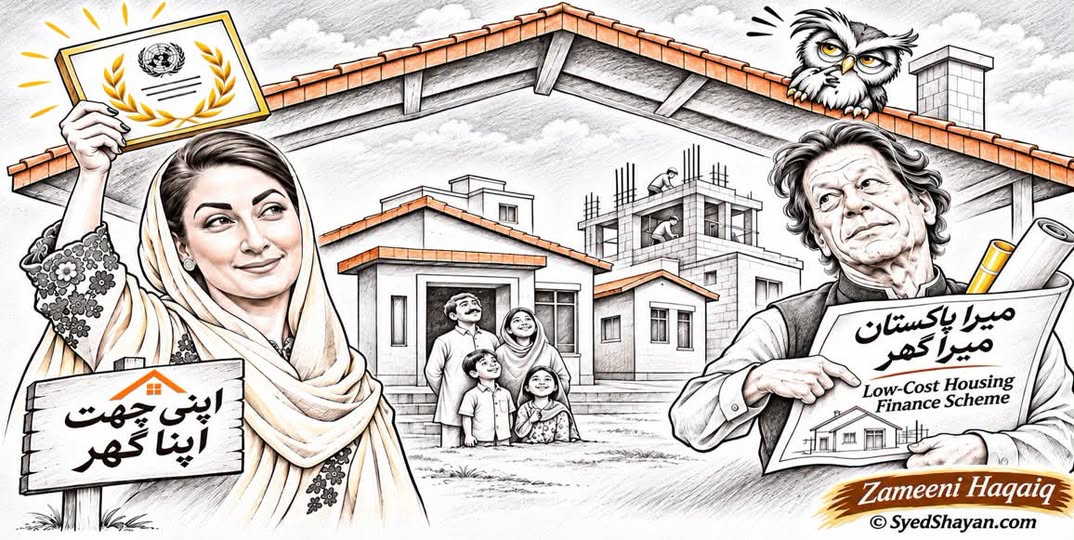
The Prime Minister’s “Apna Ghar Programme” may appear to offer an ordinary citizen a golden opportunity to own a home. But what are the actual facts? Let us examine them carefully.
Zameeni Haqaiq: A Column by Syed Shayan
The real story behind the Prime Minister’s “Apna Ghar Programme” begins with a seemingly attractive offer from the government. If you have Rs1 million, you can purchase a house worth Rs10 million. The remaining Rs9 million will be provided by a bank as a loan, which you can repay through affordable monthly instalments over the next 20 years.
However, the Zameeni Haqaiq tells a different story.
If you take a loan for 20 years, you will initially have to pay approximately Rs59,400 per month to the bank for the first 10 years, calculated at an annual markup rate of 5 percent.
Over these first 10 years, you will have paid the bank a total of approximately Rs7.128 million. This amount will include around Rs3.727 million in markup and approximately Rs3.4 million in repayment of the original loan.
The important point is that even after paying more than Rs7.1 million over 10 years, you will still owe the bank approximately Rs5.6 million.
And this is where the real financial test for the borrower begins.
From the eleventh year onward, the government’s subsidised markup rate of 5 percent will have expired. A new interest rate will then apply to your remaining loan of approximately Rs5.6 million, determined on the basis of KIBOR in the banking system.
KIBOR, or the Karachi Interbank Offered Rate, is a benchmark interest rate used in lending between banks. This rate fluctuates over time depending on market conditions.
For example, today is 15 October 2026. According to the figures for yesterday, 14 October, the one-year KIBOR stood at 12.74 percent.
If we add the bank’s additional margin of 3 percent, the total interest rate on the housing loan becomes 15.74 percent, or approximately 16 percent.
Now consider this carefully.
If, 10 years from today, KIBOR remains at approximately the same level as it is today, an annual markup rate of around 16 percent will apply to your remaining loan of approximately Rs5.6 million.
Under this calculation, your monthly instalment, which was previously Rs59,400, will increase to approximately Rs94,000.
In other words, you will have to pay approximately Rs34,600 more every month.
And if KIBOR remains at the same level throughout the following 10 years, and you continue paying approximately Rs94,000 per month, you will pay the bank another Rs11.28 million during that period.
Adding the approximately Rs7.128 million paid during the first 10 years, your total repayment to the bank over 20 years will reach approximately Rs18.408 million.
Yet the original loan you received was only Rs9 million.
And remember, this calculation does not include the initial Rs1 million that you paid from your own savings.
It is also extremely important to understand that this calculation will only hold true if interest rates 10 years from now remain approximately at their current level.
The real question is this: when nobody knows what KIBOR will be 10 years from now, what guarantees has the government provided to protect borrowing families against an extraordinary increase in interest rates?
To examine this issue, I calculated the annual average KIBOR rates for 20 financial years, from 2006 to 2025, using historical records published by the State Bank of Pakistan.
According to the available records, the average one-year KIBOR stood at 9.69 percent in 2006.
By 2009, it had increased to 14.75 percent.
The rate subsequently continued to fluctuate, eventually declining to an annual average of 6.40 percent in 2017.
However, economic conditions changed again.
In 2023, the annual average KIBOR reached 18.65 percent, rising further to 21.87 percent in 2024.
In 2025, it declined to 13.70 percent.
If we add together all 20 annual averages and calculate their arithmetic mean, the resulting average KIBOR is approximately 11.57 percent.
Adding the bank’s 3 percent margin brings the total interest rate to approximately 14.57 percent.
Now let us apply this historical average to the Prime Minister’s housing loan programme.
A citizen purchases a house worth Rs10 million, pays Rs1 million from personal savings and obtains the remaining Rs9 million as a bank loan for 20 years.
During the first 10 years, under the government’s subsidised rate of 5 percent, the monthly instalment will be approximately Rs59,396.
Even after making every instalment regularly for those 10 years, approximately Rs5.6 million of the original loan will remain outstanding
.
Now suppose that, after the initial 10-year subsidised period ends, the interest rate rises to the historical 20-year average of 14.57 percent, including KIBOR and the bank’s margin, and remains at that level for the rest of the loan term.
In that case, the borrower’s monthly instalment will increase to approximately Rs88,869.
This means an additional monthly payment of approximately Rs29,473.
But what if interest rates rise to the exceptionally high levels recorded in 2024?
During that year, the annual average KIBOR was approximately 21.87 percent.
After adding the bank’s 3 percent margin, the total interest rate would become 24.87 percent.
Under such circumstances, the monthly instalment for the remaining 10 years could increase to approximately Rs126,882.
The fundamental question here is not what the interest rate will definitely be over the next 10 years, because nobody can predict that with certainty.
The real question is whether the government, while informing homebuyers about the attractive initial subsidised instalment, has also clearly explained how much their monthly payments could increase after the subsidy ends, based on historical interest rates.
Because for a middle-income family, paying Rs59,000 per month, Rs89,000 per month and Rs127,000 per month represents three entirely different financial realities.
And this is precisely the aspect of the entire housing scheme that should be clearly explained to every prospective borrower before they sign a loan agreement.
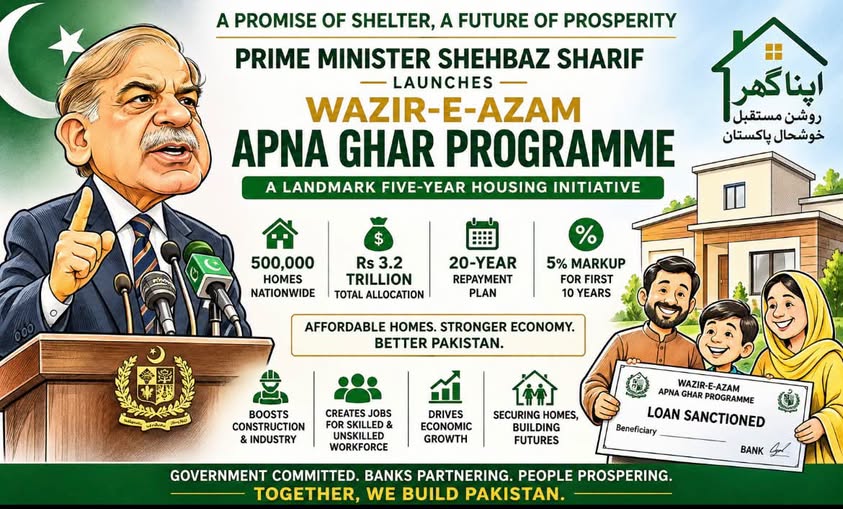
For the attention of my readers, government representatives and policymakers, I am publishing an advertisement for the Prime Minister’s “Apna Ghar Programme”, which I obtained from the official government website.
The advertisement presents the provision of 500,000 homes, Rs3.2 trillion in financing, repayment over 20 years and a 5 percent interest rate for the first 10 years in a highly attractive manner.
However, it does not explain what will happen to borrowing families after those first 10 years.
The government’s website merely states that market interest rates will apply after the initial 10-year period.
But it does not clearly explain how significantly the monthly instalments could increase or how an ordinary family would be expected to bear that additional financial burden.
The question is whether the government has also assessed the financial risks associated with the following 10 years.
Does it have any estimate of how many families may become unable to pay the increased instalments and consequently face the risk of losing their homes?
Why is it that governments prominently advertise the benefits of such schemes but do not explain their potential disadvantages to the public with the same level of clarity?
Is this the result of inadequate planning, or is there a deliberate attempt to highlight only the attractive aspects of the programme?
A family purchasing a home is not engaging in a business venture.
It is putting its lifetime savings and the income it expects to earn over the next 20 years at stake.
The government’s responsibility should not end with helping people purchase homes.
It must also establish safeguards to protect those families from losing their homes through foreclosure or auction because of financial difficulties.
The Prime Minister’s “Apna Ghar Programme” may appear to offer an ordinary citizen a golden opportunity to own a home. But what are the actual facts? Let us examine them carefully.
Zameeni Haqaiq: A Column by Syed Shayan
The real story behind the Prime Minister’s “Apna Ghar Programme” begins with a seemingly attractive offer from the government. If you have Rs1 million, you can purchase a house worth Rs10 million. The remaining Rs9 million will be provided by a bank as a loan, which you can repay through affordable monthly instalments over the next 20 years.
However, the Zameeni Haqaiq tells a different story.
If you take a loan for 20 years, you will initially have to pay approximately Rs59,400 per month to the bank for the first 10 years, calculated at an annual markup rate of 5 percent.
Over these first 10 years, you will have paid the bank a total of approximately Rs7.128 million. This amount will include around Rs3.727 million in markup and approximately Rs3.4 million in repayment of the original loan.
The important point is that even after paying more than Rs7.1 million over 10 years, you will still owe the bank approximately Rs5.6 million.
And this is where the real financial test for the borrower begins.
From the eleventh year onward, the government’s subsidised markup rate of 5 percent will have expired. A new interest rate will then apply to your remaining loan of approximately Rs5.6 million, determined on the basis of KIBOR in the banking system.
KIBOR, or the Karachi Interbank Offered Rate, is a benchmark interest rate used in lending between banks. This rate fluctuates over time depending on market conditions.
For example, today is 15 October 2026. According to the figures for yesterday, 14 October, the one-year KIBOR stood at 12.74 percent.
If we add the bank’s additional margin of 3 percent, the total interest rate on the housing loan becomes 15.74 percent, or approximately 16 percent.
Now consider this carefully.
If, 10 years from today, KIBOR remains at approximately the same level as it is today, an annual markup rate of around 16 percent will apply to your remaining loan of approximately Rs5.6 million.
Under this calculation, your monthly instalment, which was previously Rs59,400, will increase to approximately Rs94,000.
In other words, you will have to pay approximately Rs34,600 more every month.
And if KIBOR remains at the same level throughout the following 10 years, and you continue paying approximately Rs94,000 per month, you will pay the bank another Rs11.28 million during that period.
Adding the approximately Rs7.128 million paid during the first 10 years, your total repayment to the bank over 20 years will reach approximately Rs18.408 million.
Yet the original loan you received was only Rs9 million.
And remember, this calculation does not include the initial Rs1 million that you paid from your own savings.
It is also extremely important to understand that this calculation will only hold true if interest rates 10 years from now remain approximately at their current level.
The real question is this: when nobody knows what KIBOR will be 10 years from now, what guarantees has the government provided to protect borrowing families against an extraordinary increase in interest rates?
To examine this issue, I calculated the annual average KIBOR rates for 20 financial years, from 2006 to 2025, using historical records published by the State Bank of Pakistan.
According to the available records, the average one-year KIBOR stood at 9.69 percent in 2006.
By 2009, it had increased to 14.75 percent.
The rate subsequently continued to fluctuate, eventually declining to an annual average of 6.40 percent in 2017.
However, economic conditions changed again.
In 2023, the annual average KIBOR reached 18.65 percent, rising further to 21.87 percent in 2024.
In 2025, it declined to 13.70 percent.
If we add together all 20 annual averages and calculate their arithmetic mean, the resulting average KIBOR is approximately 11.57 percent.
Adding the bank’s 3 percent margin brings the total interest rate to approximately 14.57 percent.
Now let us apply this historical average to the Prime Minister’s housing loan programme.
A citizen purchases a house worth Rs10 million, pays Rs1 million from personal savings and obtains the remaining Rs9 million as a bank loan for 20 years.
During the first 10 years, under the government’s subsidised rate of 5 percent, the monthly instalment will be approximately Rs59,396.
Even after making every instalment regularly for those 10 years, approximately Rs5.6 million of the original loan will remain outstanding
.
Now suppose that, after the initial 10-year subsidised period ends, the interest rate rises to the historical 20-year average of 14.57 percent, including KIBOR and the bank’s margin, and remains at that level for the rest of the loan term.
In that case, the borrower’s monthly instalment will increase to approximately Rs88,869.
This means an additional monthly payment of approximately Rs29,473.
But what if interest rates rise to the exceptionally high levels recorded in 2024?
During that year, the annual average KIBOR was approximately 21.87 percent.
After adding the bank’s 3 percent margin, the total interest rate would become 24.87 percent.
Under such circumstances, the monthly instalment for the remaining 10 years could increase to approximately Rs126,882.
The fundamental question here is not what the interest rate will definitely be over the next 10 years, because nobody can predict that with certainty.
The real question is whether the government, while informing homebuyers about the attractive initial subsidised instalment, has also clearly explained how much their monthly payments could increase after the subsidy ends, based on historical interest rates.
Because for a middle-income family, paying Rs59,000 per month, Rs89,000 per month and Rs127,000 per month represents three entirely different financial realities.
And this is precisely the aspect of the entire housing scheme that should be clearly explained to every prospective borrower before they sign a loan agreement.
For the attention of my readers, government representatives and policymakers, I am publishing an advertisement for the Prime Minister’s “Apna Ghar Programme”, which I obtained from the official government website.
The advertisement presents the provision of 500,000 homes, Rs3.2 trillion in financing, repayment over 20 years and a 5 percent interest rate for the first 10 years in a highly attractive manner.
However, it does not explain what will happen to borrowing families after those first 10 years.
The government’s website merely states that market interest rates will apply after the initial 10-year period.
But it does not clearly explain how significantly the monthly instalments could increase or how an ordinary family would be expected to bear that additional financial burden.
The question is whether the government has also assessed the financial risks associated with the following 10 years.
Does it have any estimate of how many families may become unable to pay the increased instalments and consequently face the risk of losing their homes?
Why is it that governments prominently advertise the benefits of such schemes but do not explain their potential disadvantages to the public with the same level of clarity?
Is this the result of inadequate planning, or is there a deliberate attempt to highlight only the attractive aspects of the programme?
A family purchasing a home is not engaging in a business venture.
It is putting its lifetime savings and the income it expects to earn over the next 20 years at stake.
The government’s responsibility should not end with helping people purchase homes.
It must also establish safeguards to protect those families from losing their homes through foreclosure or auction because of financial difficulties.