Find What You Need

Logo

From Real Estate History

30 December

Home

Disasters

Damghan The Deadliest Earthquake in Human History Claiming Two Hundred Thousand Lives

Damghan The Deadliest Earthquake in Human History Claiming Two Hundred Thousand Lives

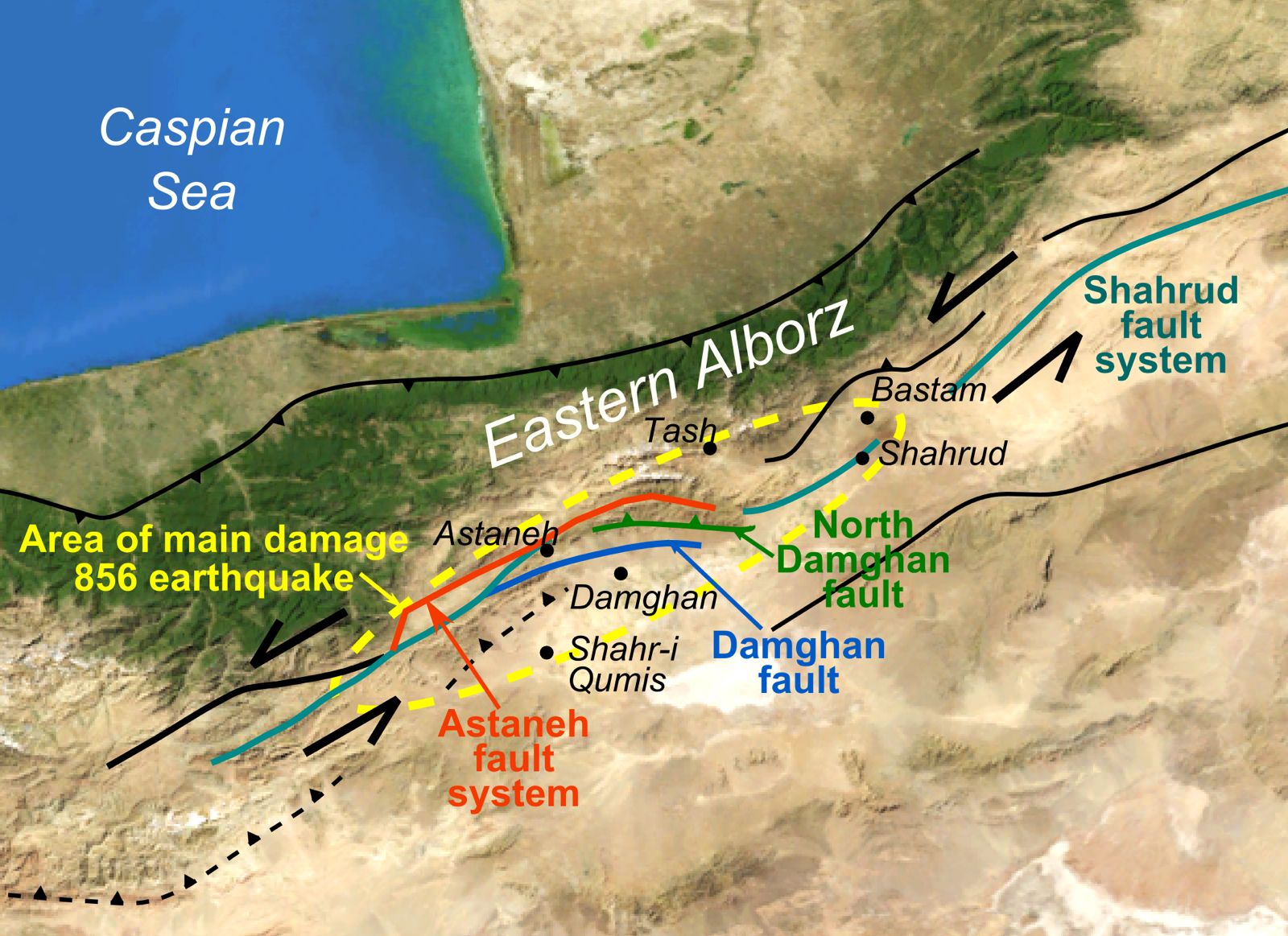
Approximately 1,169 years ago, on 22 December 856 AD, a devastating earthquake struck the city of Damghan and its surrounding areas in the northern region of Qumis in Persia, present day Iran. Contemporary historical accounts and later scholarly records agree that this earthquake ranks among the most destructive natural disasters in human history in terms of both intensity and loss of life. According to historical estimates, the earthquake reached a magnitude of approximately 7.9 on the Richter scale. The death toll is commonly cited at around two hundred thousand people. Although systematic population censuses did not exist in the ninth century, early Islamic and Persian historical sources consistently describe the scale of human loss as extraordinarily high, leaving little doubt about the severity of the catastrophe. At the time, Damghan was an important commercial centre under Abbasid administration and one of the most densely populated cities of ancient Iran. The earthquake caused widespread destruction across the city. Residential quarters, mosques, fortifications, and public buildings collapsed almost entirely, while many nearby settlements disappeared altogether. Historical narratives report that aftershocks continued for several days, deepening fear and instability among the surviving population and compounding the humanitarian crisis. In later centuries, with the emergence of modern historiography and scientific research approximately between 1880 and 1930 AD, scholars undertook systematic efforts to convert dates recorded in the lunar calendar into the Christian calendar using astronomical calculations. Through this process, the date of the Damghan earthquake was established as 22 December 856 AD, a conclusion that is now widely accepted in international academic and scientific records. The Damghan disaster represents more than a natural calamity. It marked a profound turning point in human settlement patterns and construction practices across the region. In the aftermath of the earthquake, greater attention was given to safer locations for habitation. Communities increasingly moved away from unstable mountainous zones toward comparatively secure plains, and the relationship between human settlement and natural risk began to be taken seriously for the first time.

Read More >
logo

Our Members

User User User User

Registered members who share their full profile and are part of our core community.

By joining you get a member profile, community access, and invitations to special projects.

Members also enjoy exclusive resources, direct participation in community initiatives, early access to reports and updates, and the ability to share their opinion in our ThinkTank surveys conducted from time to time.

© We pass through land, not the other
way around - Syed Shayan.